Giant Caecilian
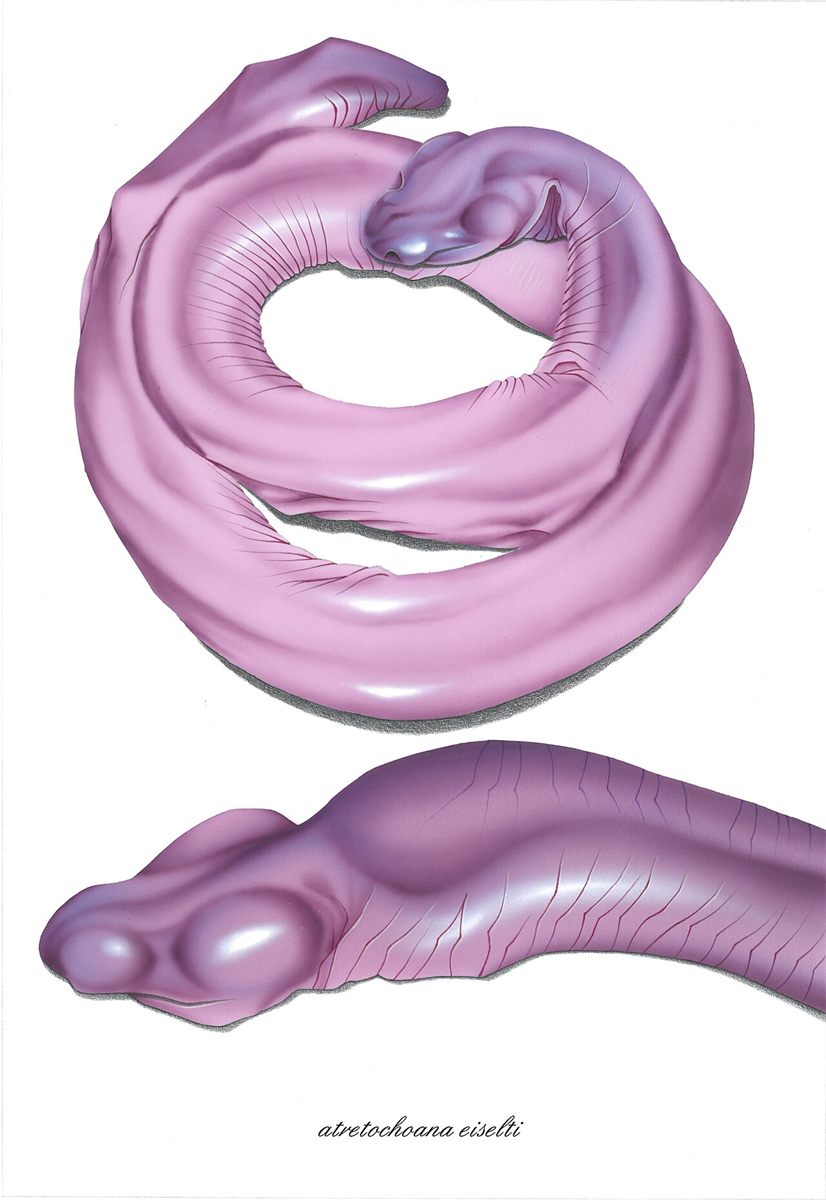
The giant caecilian (Atretochoana eiselti) is a large, lungless caecilian from the Amazon basin of Brazil. Reaching about 80 centimeters, it is the largest known tetrapod with no lungs.
The giant caecilian (Atretochoana eiselti) is a large, lungless caecilian from the Amazon basin of Brazil. Reaching about 80 centimeters, it is the largest known tetrapod with no lungs.
🧬 Field Guide Specimen: Open Giant Caecilian in the CRV Science Field Guide to log the specimen, see its place among the Tetrapoda lineages in the Cladogram Explorer, and test your recall in the Red List conservation game.
Breathing Without Lungs
Lungless salamanders are common, but a lungless caecilian this large is remarkable. It breathes through its skin and the lining of its mouth, and its flattened, ridged body may help with gas exchange in fast, oxygen-rich water.
A Rare Find
For decades the species was known from only a few preserved specimens. A large number of animals appeared in the turbines of dams on the Madeira River in the 2000s, and live specimens were later described.
Conservation
The 2023 IUCN assessment lists it as Least Concern, but its habits are still poorly known, and dam construction in the Amazon could alter its river habitat.
Giant Caecilian at a Glance
| Property | Value |
|---|---|
| Scientific name | Atretochoana eiselti |
| Kingdom | Animalia |
| Phylum | Chordata |
| Class | Amphibia |
| Order | Gymnophiona |
| Family | Typhlonectidae |
| Field Guide group | Tetrapoda: Amphibia (Frogs, Salamanders & Caecilians) |
| Diagnostic feature (Field Guide) | Largest known tetrapod lacking lungs, aquatic serpentine body with broad paddle-like dorsal fin, highly vascularized skin. |
| IUCN Red List status | Least Concern (LC), assessed 2023 |
| Lungs | None |
| Length | About 80 centimeters |
See Also
- Ringed Caecilian — a burrowing relative
- Hellbender — an amphibian that breathes through skin