Hellbender
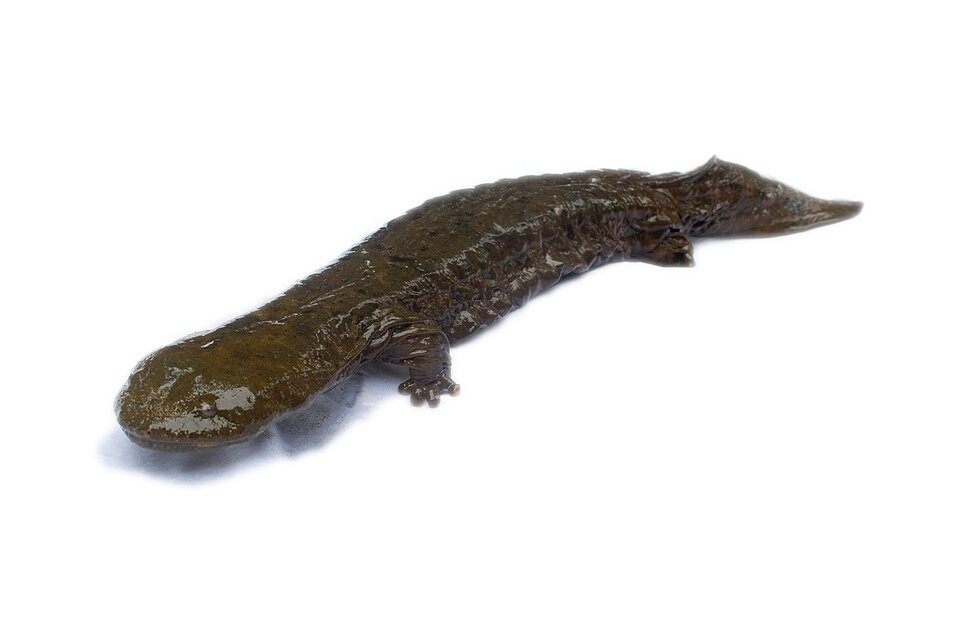
The hellbender (Cryptobranchus alleganiensis) is a large aquatic salamander of clear, fast streams in the eastern United States, growing up to about 70 centimeters. Its wrinkled, flattened body helps it live under rocks in cold, oxygen-rich water.
The hellbender (Cryptobranchus alleganiensis) is a large aquatic salamander of clear, fast streams in the eastern United States, growing up to about 70 centimeters. Its wrinkled, flattened body helps it live under rocks in cold, oxygen-rich water.
🧬 Field Guide Specimen: Open Hellbender in the CRV Science Field Guide to log the specimen, see its place among the Tetrapoda lineages in the Cladogram Explorer, and test your recall in the Red List conservation game.
Breathing Through Skin Folds
Hellbenders take up most of their oxygen through wrinkled folds of skin along the sides, which increase surface area for gas exchange. They need cold, well-oxygenated, silt-free water, so they are good indicators of stream quality.
A Declining Giant
Dams, siltation from land clearing, pollution, collection and disease have caused declines across the range, and nest sites under flat rocks are easily destroyed. Males guard the eggs, which hatch in a few months.
Conservation
Zoos raise young hellbenders to release into streams, and landowners restore stream banks. The Ozark subspecies is federally listed as endangered in the United States.
Hellbender at a Glance
| Property | Value |
|---|---|
| Scientific name | Cryptobranchus alleganiensis |
| Kingdom | Animalia |
| Phylum | Chordata |
| Class | Amphibia |
| Order | Urodela |
| Family | Cryptobranchidae |
| Field Guide group | Tetrapoda: Amphibia (Frogs, Salamanders & Caecilians) |
| Diagnostic feature (Field Guide) | Extremely flattened body and head, prominent lateral frilled skin folds for cutaneous respiration in cold swift streams. |
| IUCN Red List status | Vulnerable (VU), assessed 2022 |
| Maximum length | About 70 centimeters |
| Respiration | Mainly through skin |