Chinese Giant Salamander
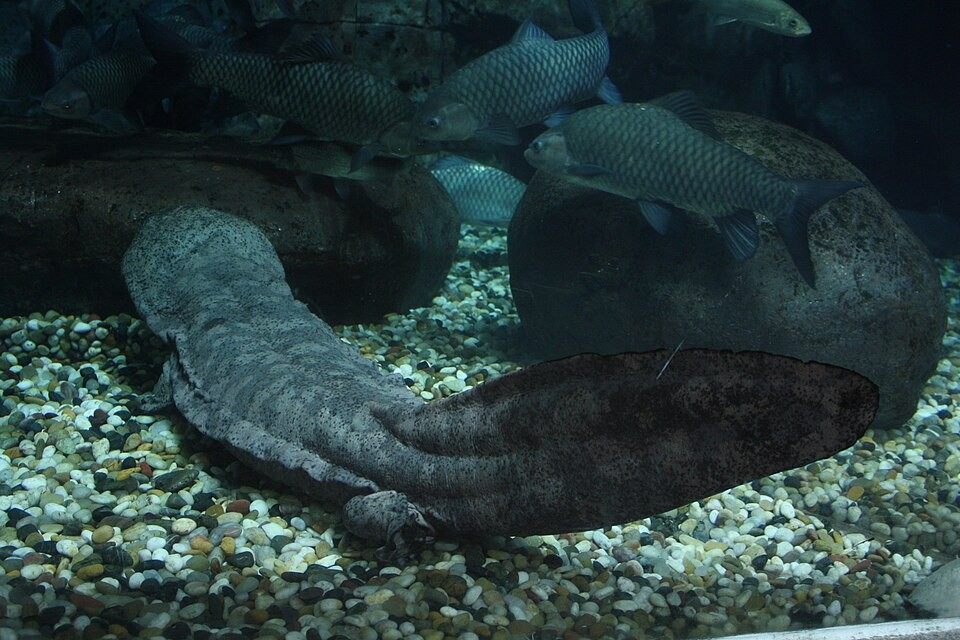
The Chinese giant salamander (Andrias davidianus) is the largest amphibian, historically reaching about 1.8 meters. It lives in cold mountain streams of China and is listed as Critically Endangered after decades of hunting and habitat loss.
The Chinese giant salamander (Andrias davidianus) is the largest amphibian, historically reaching about 1.8 meters. It lives in cold mountain streams of China and is listed as Critically Endangered after decades of hunting and habitat loss.
🧬 Field Guide Specimen: Open Chinese Giant Salamander in the CRV Science Field Guide to log the specimen, see its place among the Tetrapoda lineages in the Cladogram Explorer, and test your recall in the Red List conservation game.
Giant, Ancient and Slimy
The salamander is nocturnal and has tiny eyes, relying on sensory cells in its skin to detect water movement from prey. Its lineage dates back some 170 million years. Its skin secretes a sticky white substance when threatened.
A Collapse Driven by Farming and Hunting
Wild populations dropped by more than 80 percent as the animal was caught for food. Large numbers are farmed, but many farmed animals were released and are genetically mixed with wild stocks, which may harm conservation.
Cryptic Species
Genetic studies suggest that what was called one species may be several distinct lineages. Disease, including ranavirus, also threatens the animal.
Chinese Giant Salamander at a Glance
| Property | Value |
|---|---|
| Scientific name | Andrias davidianus |
| Kingdom | Animalia |
| Phylum | Chordata |
| Class | Amphibia |
| Order | Urodela |
| Family | Cryptobranchidae |
| Field Guide group | Tetrapoda: Amphibia (Frogs, Salamanders & Caecilians) |
| Diagnostic feature (Field Guide) | Largest living amphibian on Earth (up to 1.8 m), wrinkled mottled skin, tiny lidless eyes, sensory tubercles along lateral lines. |
| IUCN Red List status | Critically Endangered (CR), assessed 2023 |
| Maximum length | About 1.8 meters |