Japanese Giant Salamander
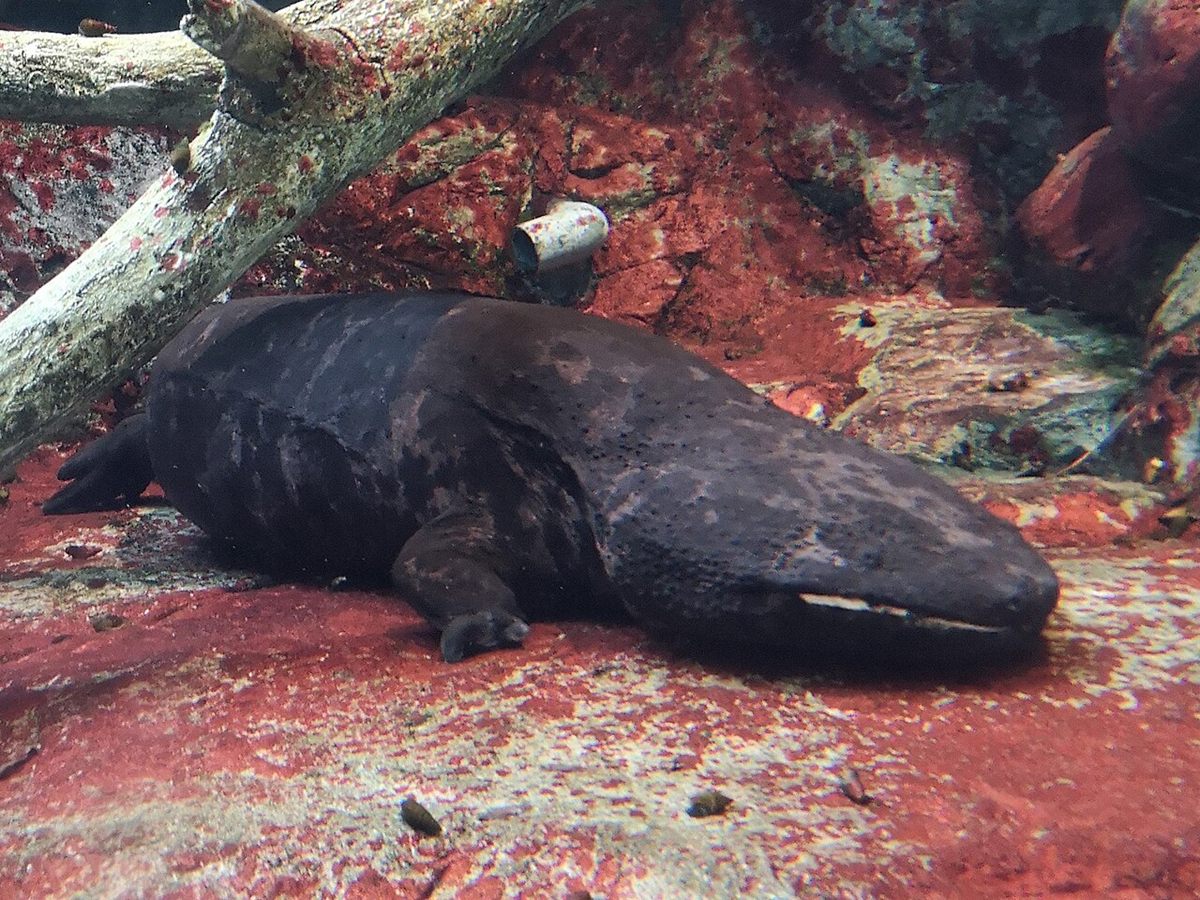
The Japanese giant salamander (Andrias japonicus) is a huge, aquatic salamander of the cool, clear mountain streams of Japan, up to about 1.5 meters long. It is a protected natural monument.
The Japanese giant salamander (Andrias japonicus) is a huge, aquatic salamander of the cool, clear mountain streams of Japan, up to about 1.5 meters long. It is a protected natural monument.
🧬 Field Guide Specimen: Open Japanese Giant Salamander in the CRV Science Field Guide to log the specimen, see its place among the Tetrapoda lineages in the Cladogram Explorer, and test your recall in the Red List conservation game.
Slow and Old
The salamander has wrinkled skin, tiny eyes and a flat head. It lies in wait to snap at fish, crabs and frogs that pass by, sensing movement with skin sensors. It can live for decades, even more than fifty years.
Hybrids from an Introduced Cousin
Chinese giant salamanders were brought to Japan and have interbred with the native species, threatening its genetic integrity. See Chinese Giant Salamander.
Stream Guardians
Dams and concrete river channels block migrations. Fathers guard the eggs in burrows. See Hellbender.
Japanese Giant Salamander at a Glance
| Property | Value |
|---|---|
| Scientific name | Andrias japonicus |
| Kingdom | Animalia |
| Phylum | Chordata |
| Class | Amphibia |
| Order | Urodela |
| Family | Cryptobranchidae |
| Field Guide group | Tetrapoda: Amphibia (Frogs, Salamanders & Caecilians) |
| Diagnostic feature (Field Guide) | Nocturnal cold-stream giant of Honshu and Kyushu up to 1.5 meters long, with mottled brown-and-black wrinkled skin folds that absorb dissolved oxygen, tiny lidless eyes, and lateral-line vibration sensors. |
| IUCN Red List status | Vulnerable (VU), assessed 2022 |
| Maximum length | About 1.5 meters |
| Legal status | Special natural monument in Japan |