Giant Sequoia
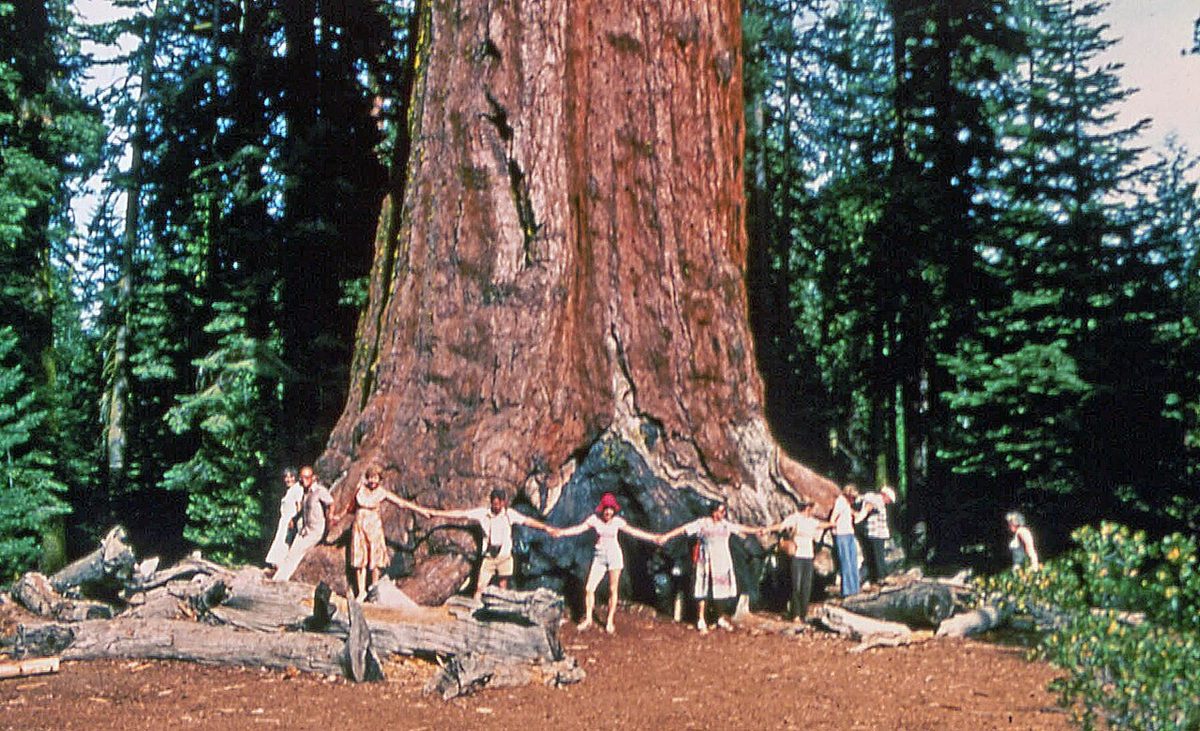
The giant sequoia (Sequoiadendron giganteum) is the most massive tree on Earth by volume, growing on the western slopes of California's Sierra Nevada. Some trees are over 3,000 years old. It is listed as Endangered.
The giant sequoia (Sequoiadendron giganteum) is the most massive tree on Earth by volume, growing on the western slopes of California's Sierra Nevada. Some trees are over 3,000 years old. It is listed as Endangered.
🧬 Field Guide Specimen: Open Giant Sequoia in the CRV Science Field Guide to log the specimen, see its place among the Diaphoretickes lineages in the Cladogram Explorer, and test your recall in the Red List conservation game.
The Largest Living Thing by Volume
The General Sherman tree is about 84 meters tall and holds an estimated 1,500 cubic meters of wood. The trunk is thick with fire-resistant bark, which can be over half a meter deep.
Fire Dependent
Heat from fires opens the cones to release seeds, and fire clears the forest floor to give seedlings light and bare soil. A century of fire suppression allowed fuel to build up, and in the extreme fires of 2020 and 2021 thousands of large sequoias were killed.
Only in a Narrow Range
The trees grow in about 75 groves, and warming and drought make them more vulnerable. See Coast Redwood and Wildfire.
Giant Sequoia at a Glance
| Property | Value |
|---|---|
| Scientific name | Sequoiadendron giganteum |
| Kingdom | Plantae |
| Phylum | Tracheophyta |
| Class | Pinopsida |
| Order | Cupressales |
| Family | Cupressaceae |
| Field Guide group | Diaphoretickes: Plants & Algae |
| Diagnostic feature (Field Guide) | Earth's most massive living single-trunked tree by volume, native to the western Sierra Nevada, with fibrous cinnamon-red fire-resistant bark up to 60 cm thick, awl-shaped evergreen leaves, and woody cones. |
| IUCN Red List status | Endangered (EN), assessed 2013 |
| Maximum age | More than 3,000 years |
See Also
- Coast Redwood — the tallest tree
- Wildfire — fire and sequoias