Gila Monster
The Gila monster (Heloderma suspectum) is a heavy, slow venomous lizard of the Sonoran and Mojave deserts of the southwestern United States and northwestern Mexico. It is listed as Near Threatened.
The Gila monster (Heloderma suspectum) is a heavy, slow venomous lizard of the Sonoran and Mojave deserts of the southwestern United States and northwestern Mexico. It is listed as Near Threatened.
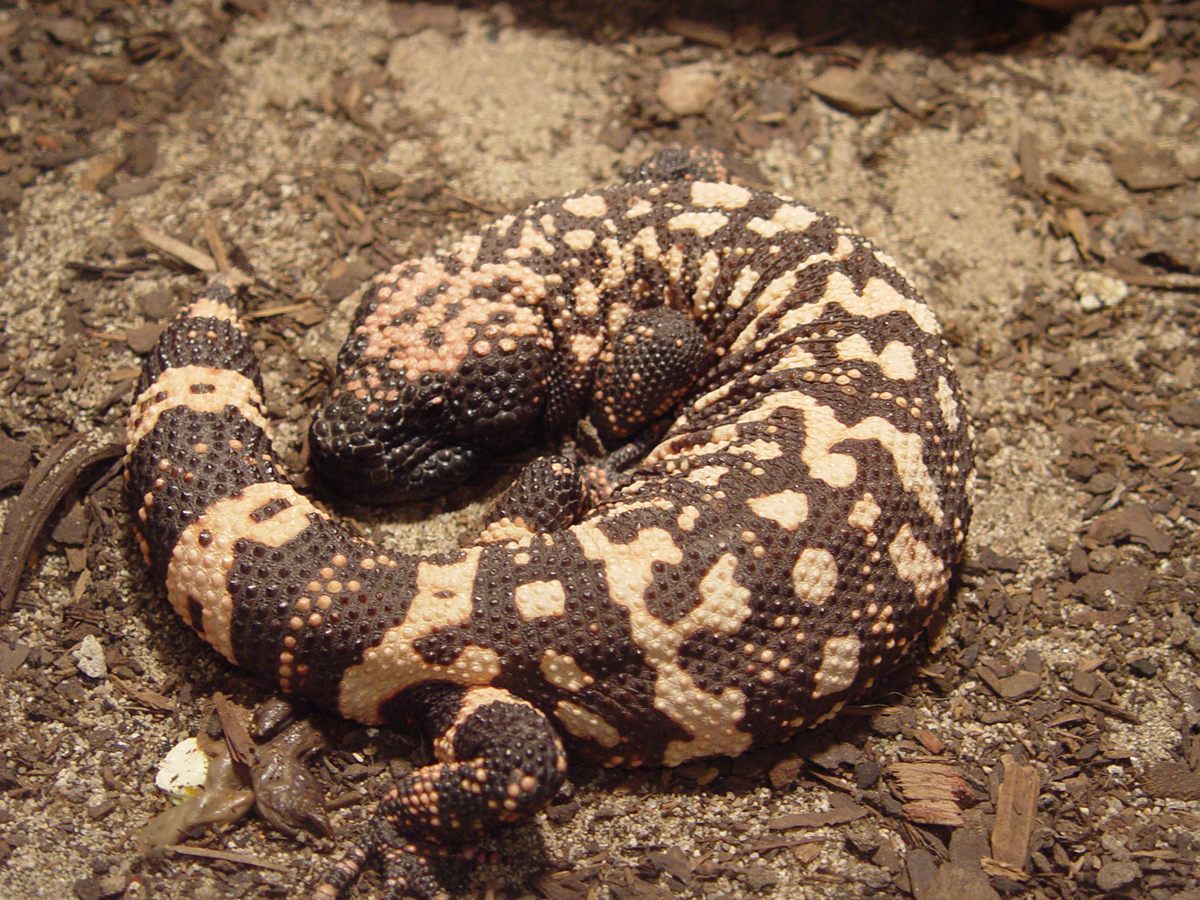
🧬 Field Guide Specimen: Open Gila Monster in the CRV Science Field Guide to log the specimen, see its place among the Reptilia lineages in the Cladogram Explorer, and test your recall in the Red List conservation game.
Venom That Became a Drug
A protein in the saliva, exendin-4, mimics the human hormone GLP-1, which stimulates insulin release. A synthetic version, exenatide, was approved in 2005 to treat type 2 diabetes, and the discovery helped lead to later GLP-1 drugs.
A Chewing Bite
Unlike snakes, helodermatid lizards deliver venom from glands in the lower jaw. The animal holds on and chews, letting venom flow into the wound along grooved teeth. Its bite is painful to people but rarely fatal.
Life Underground
The lizard spends most of its time in burrows, storing fat in the tail for lean periods, and emerges in spring to eat bird and reptile eggs and nestlings. Habitat loss and collection are threats.
Gila Monster at a Glance
| Property | Value |
|---|---|
| Scientific name | Heloderma suspectum |
| Kingdom | Animalia |
| Phylum | Chordata |
| Class | Reptilia |
| Order | Squamata |
| Clade | Anguimorpha |
| Field Guide group | Reptilia (Reptiles) |
| Diagnostic feature (Field Guide) | Beaded osteoderm scales, grooved lower teeth with venom glands, forked sensory tongue. |
| IUCN Red List status | Near Threatened (NT), assessed 2007 |
| Notable molecule | Exendin-4 (source of exenatide) |