Geography Cone Snail
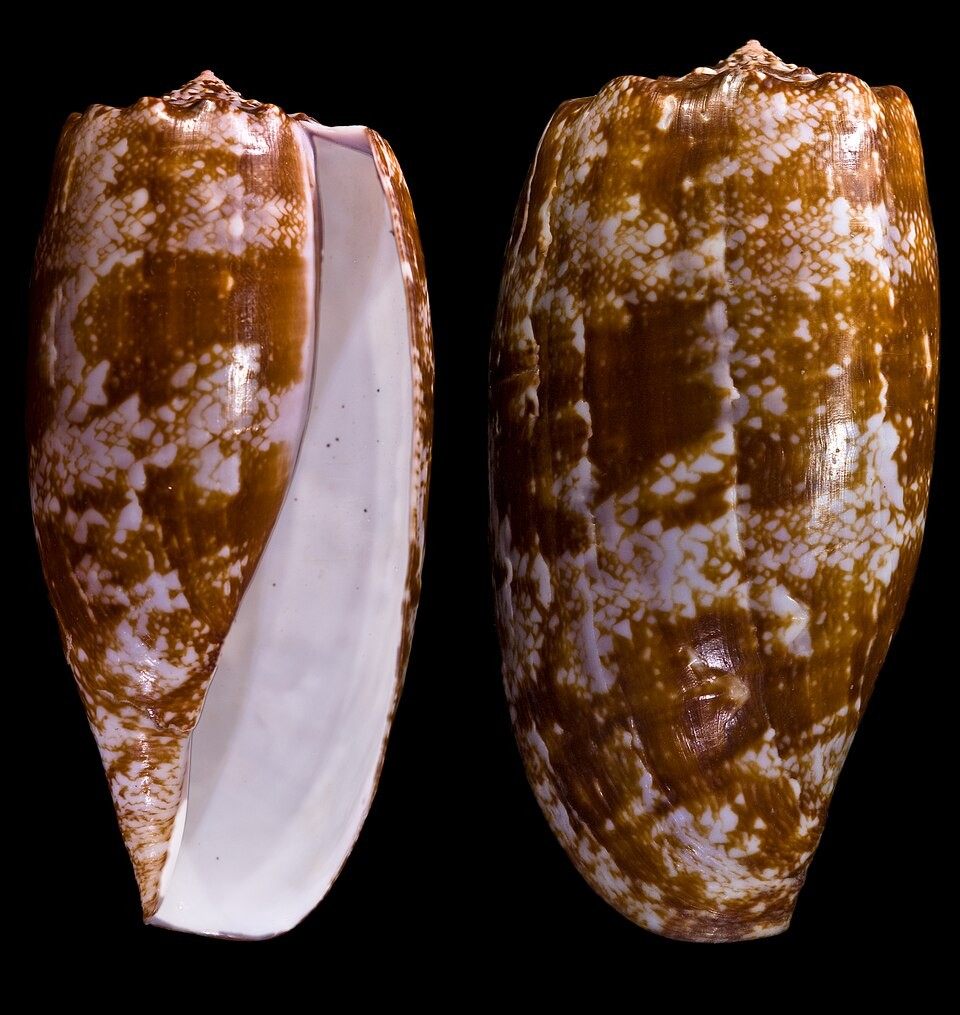
The geography cone snail (Conus geographus) is a predatory sea snail of Indo-Pacific reefs that hunts fish with a harpoon-like tooth and an extremely potent venom. It is one of the few mollusks dangerous to people.
The geography cone snail (Conus geographus) is a predatory sea snail of Indo-Pacific reefs that hunts fish with a harpoon-like tooth and an extremely potent venom. It is one of the few mollusks dangerous to people.
🧬 Field Guide Specimen: Open Geography Cone Snail in the CRV Science Field Guide to log the specimen, see its place among the Lophotrochozoa lineages in the Cladogram Explorer, and test your recall in the Red List conservation game.
Harpoon and Net: How Does the Snail Catch Fish?
The snail extends a long proboscis and fires a hollow, venom-filled radula tooth into a fish. Its venom contains hundreds of peptides (conotoxins) that block ion channels and receptors. A group of them paralyzes the fish quickly, others "net" the fish by inducing sensory overload. A related group of toxins mimics insulin and causes the fish to go into hypoglycemic shock.
From Venom to Medicine
Conotoxins are highly selective, so they are valuable as research tools and drug leads. Ziconotide, derived from a related cone snail, was approved in 2004 as an injected painkiller for severe chronic pain. See Gila Monster.
Dangerous to Divers
Stings by the geography cone have caused human deaths, with no antivenom. Shell collectors are warned never to pick up live cones.
Geography Cone Snail at a Glance
| Property | Value |
|---|---|
| Scientific name | Conus geographus |
| Kingdom | Animalia |
| Phylum | Mollusca |
| Class | Gastropoda |
| Order | Neogastropoda |
| Family | Conidae |
| Field Guide group | Lophotrochozoa: Mollusca (Mollusks) |
| Diagnostic feature (Field Guide) | Intricately patterned marbled shell, eversible proboscis wielding a disposable hollow venomous harpoon radula tooth. |
| IUCN Red List status | Least Concern (LC), assessed 2013 |
| Prey | Fish |
| Venom | Conotoxins, including an insulin-like peptide |