Common Whelk
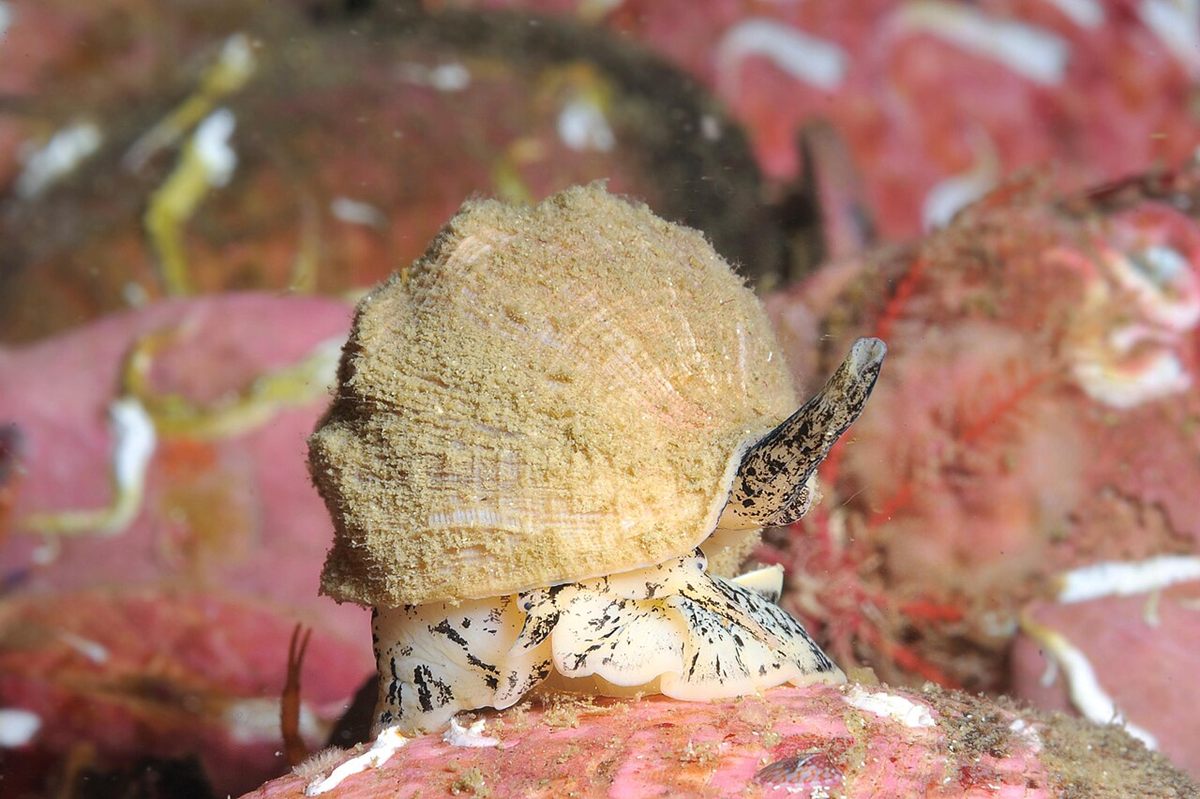
The common whelk (Buccinum undatum) is a large sea snail of the North Atlantic with a spiral shell up to about 10 centimeters. It is a predator and scavenger on sandy and muddy seafloors and is fished for food.
The common whelk (Buccinum undatum) is a large sea snail of the North Atlantic with a spiral shell up to about 10 centimeters. It is a predator and scavenger on sandy and muddy seafloors and is fished for food.
🧬 Field Guide Specimen: Open Common Whelk in the CRV Science Field Guide to log the specimen, see its place among the Lophotrochozoa lineages in the Cladogram Explorer, and test your recall in the Red List conservation game.
A Keen Sense of Smell
The whelk detects food from a distance with a chemical sensor (osphradium) and a siphon that sweeps the water. It feeds on worms, bivalves and carrion and can drill or pry open shells.
Sea Wash Balls
Female whelks lay egg masses made of clusters of leathery capsules, which wash up on beaches as spongy lumps known as sea wash balls or sea wash. Only some eggs develop; the others are eaten by the first hatchlings.
Fisheries
Whelks are caught in baited pots, especially in Europe and eastern Canada. See Common Periwinkle.
Common Whelk at a Glance
| Property | Value |
|---|---|
| Scientific name | Buccinum undatum |
| Kingdom | Animalia |
| Phylum | Mollusca |
| Class | Gastropoda |
| Order | Neogastropoda |
| Family | Buccinidae |
| Field Guide group | Lophotrochozoa: Worms, Shells & Allies |
| Diagnostic feature (Field Guide) | Large ribbed spiral shell; a long siphon tube sniffs out carrion on the seafloor, and empty egg masses wash ashore as 'sea wash balls'. |
| Class | Gastropoda |
| Egg masses | Sea wash balls |
See Also
- Common Periwinkle — a grazing sea snail
- Geography Cone Snail — a predatory sea snail