Common Periwinkle
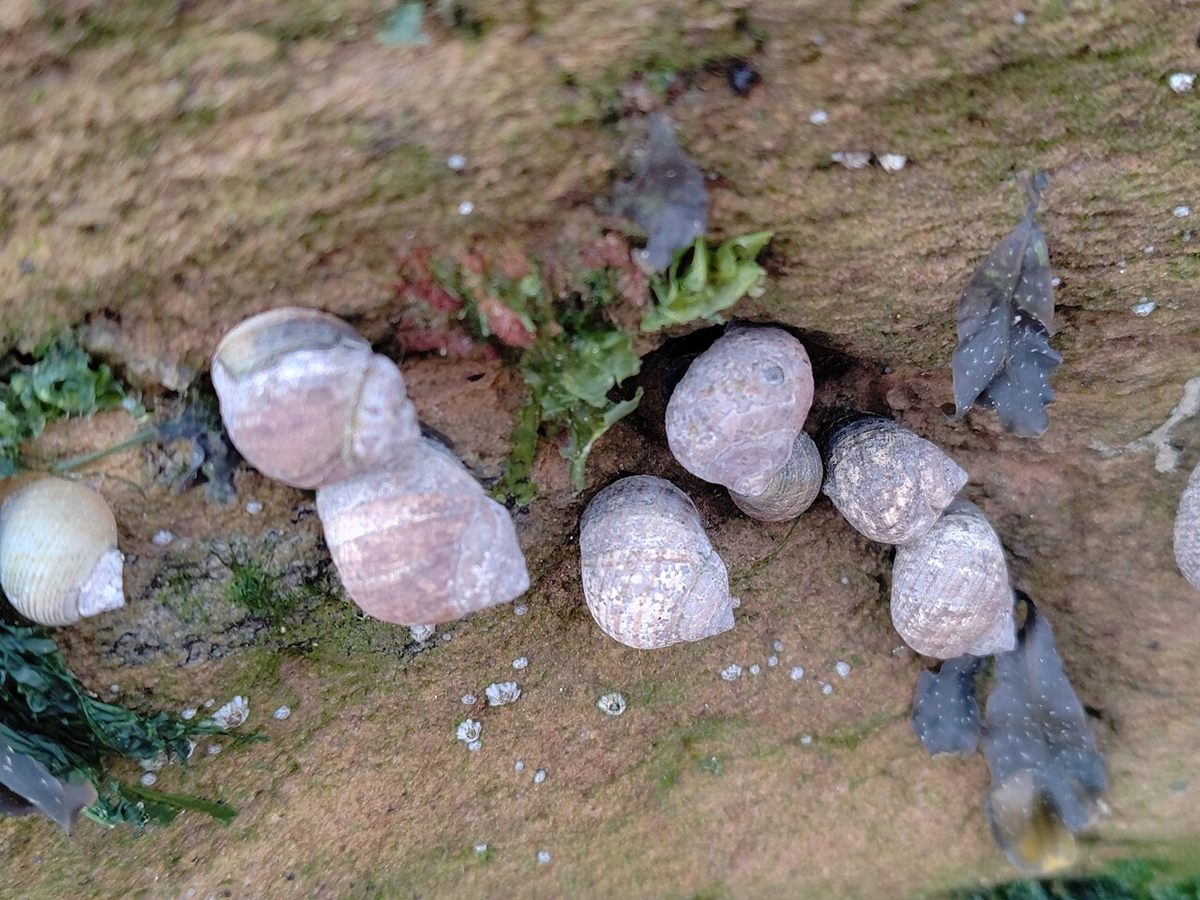
The common periwinkle (Littorina littorea) is a small, dark sea snail that grazes algae on rocky shores of the North Atlantic. It is native to Europe and has been spread to North America, where it has changed shore communities.
The common periwinkle (Littorina littorea) is a small, dark sea snail that grazes algae on rocky shores of the North Atlantic. It is native to Europe and has been spread to North America, where it has changed shore communities.
🧬 Field Guide Specimen: Open Common Periwinkle in the CRV Science Field Guide to log the specimen, see its place among the Lophotrochozoa lineages in the Cladogram Explorer, and test your recall in the Red List conservation game.
An Algae Grazer
Periwinkles scrape microscopic algae and seaweed from rocks. In dense numbers they can clear green algae from tide pools and influence which seaweeds grow. Their effect on shore communities has been a classic subject of ecological experiments.
Crossing the Atlantic
The snail was first recorded in Nova Scotia in the 1840s and spread down the American coast. It may have arrived on ship ballast rock or as a food item. See Blue Mussel.
Tough Snails
It tolerates exposure at low tide by closing its shell with a horny plate (operculum). It lays eggs in the plankton.
Common Periwinkle at a Glance
| Property | Value |
|---|---|
| Scientific name | Littorina littorea |
| Kingdom | Animalia |
| Phylum | Mollusca |
| Class | Gastropoda |
| Order | Littorinimorpha |
| Family | Littorinidae |
| Field Guide group | Lophotrochozoa: Worms, Shells & Allies |
| Diagnostic feature (Field Guide) | Small dark spiral cone on rocky shores; seals itself in with a horny trapdoor (operculum) at low tide and grazes algae with a toothed ribbon-tongue. |
| Class | Gastropoda |
| First North American record | 1840s |
See Also
- Blue Mussel — a shore neighbor
- Common Whelk — a predatory sea snail