Queen Conch
The queen conch (Aliger gigas) is a large sea snail of the Caribbean with a heavy, spiky shell lined in pink. It has been a key food and fishery of the region, and has been heavily overfished.
The queen conch (Aliger gigas) is a large sea snail of the Caribbean with a heavy, spiky shell lined in pink. It has been a key food and fishery of the region, and has been heavily overfished.
🧬 Field Guide Specimen: Open Queen Conch in the CRV Science Field Guide to log the specimen, see its place among the Lophotrochozoa lineages in the Cladogram Explorer, and test your recall in the Red List conservation game.
A Shell Used for Centuries
The shell has been used as a trumpet, tool and decoration, and the meat is a staple in Caribbean cooking. Its shell may reach 30 centimeters. The animal grazes on algae and seagrass detritus.
Overfishing
Conch populations have collapsed in many places because of overharvest. Reproduction needs dense adult aggregations, so when numbers fall below a threshold, females cannot find mates. Trade is regulated under CITES.
Eyes on Stalks
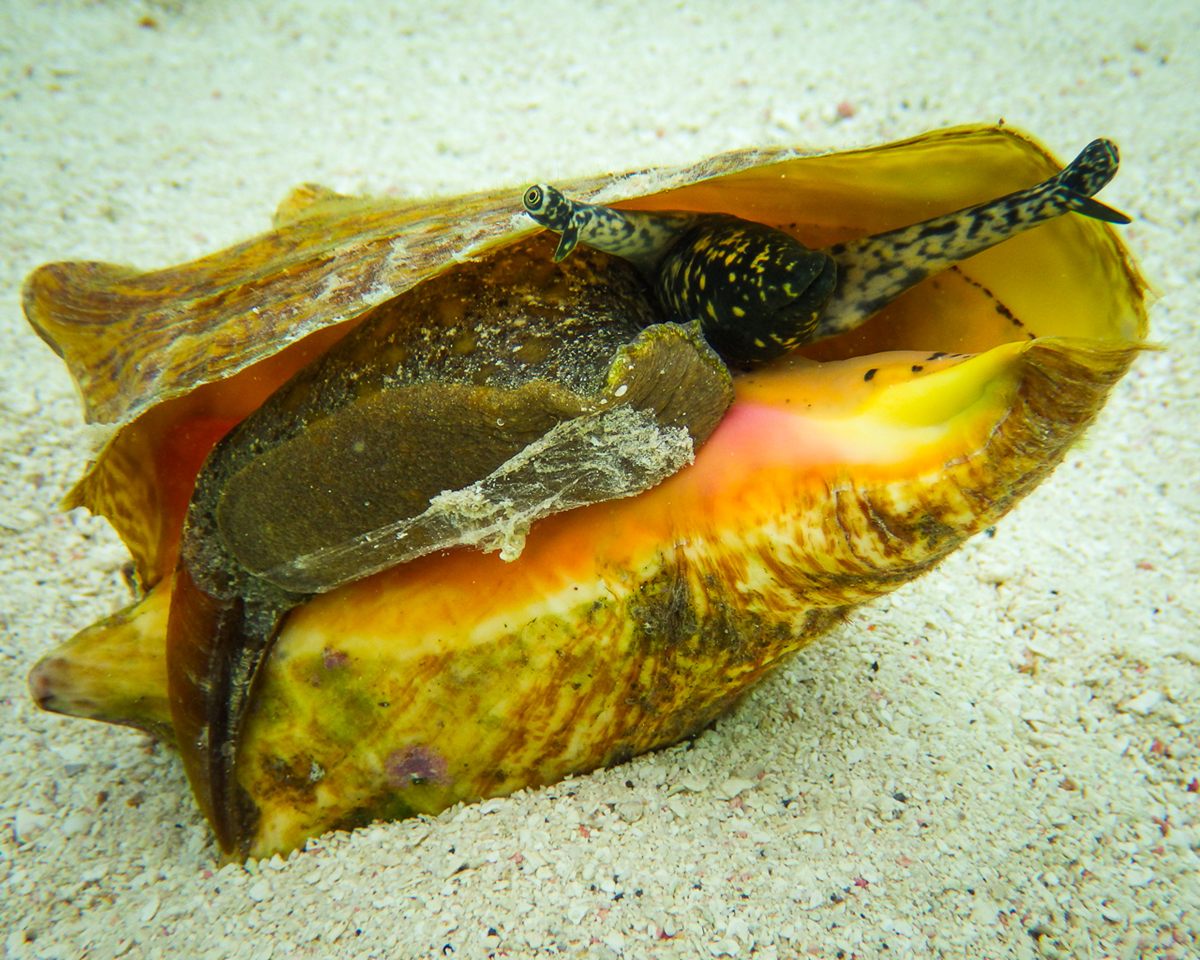
The conch has well-developed eyes on stalks, and moves in a series of leaps with its muscular foot, using the sharp claw-like operculum as a pole. See Neptune Grass.
Queen Conch at a Glance
| Property | Value |
|---|---|
| Scientific name | Aliger gigas |
| Kingdom | Animalia |
| Phylum | Mollusca |
| Class | Gastropoda |
| Order | Littorinimorpha |
| Family | Strombidae |
| Field Guide group | Lophotrochozoa: Mollusca (Mollusks) |
| Diagnostic feature (Field Guide) | Large Caribbean seagrass grazer housed in a heavy, whorl-spined spiral shell with a glossy pink-and-orange flared aperture, peering out with two long patterned eyestalks and hopping forward with a sickle-shaped operculum. |
| Class | Gastropoda |
| Trade status | CITES Appendix II |
See Also
- Neptune Grass — a seagrass habitat
- Common Whelk — another large sea snail