Neptune Grass
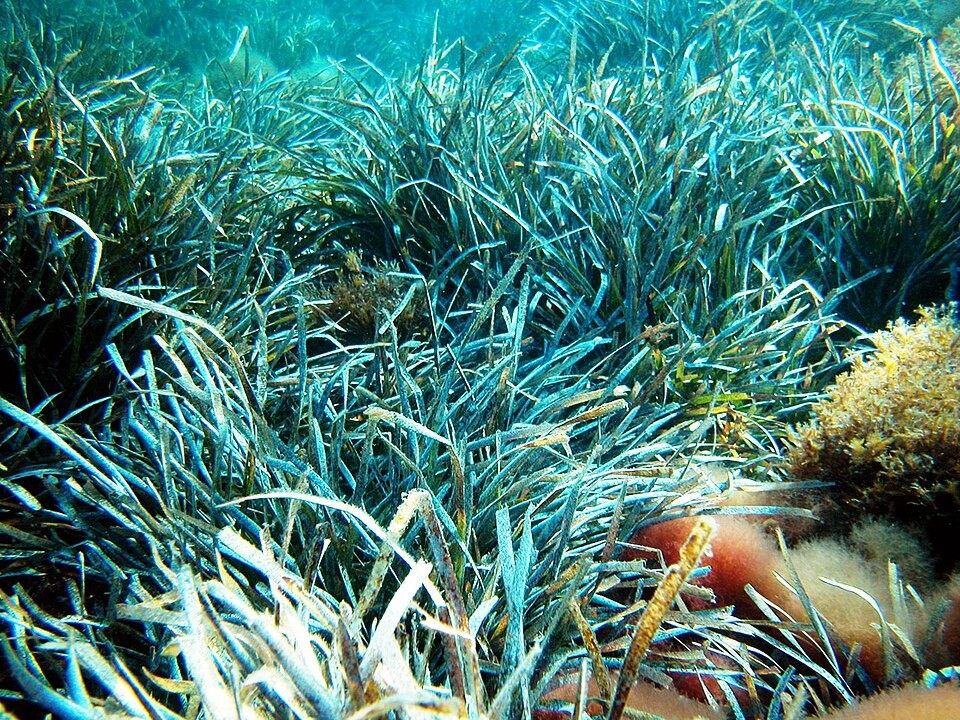
Neptune grass (Posidonia oceanica) is a seagrass found only in the Mediterranean. It forms dense underwater meadows that shelter fish, stabilize sediments, produce oxygen and store carbon. Seagrasses are flowering plants that returned to the sea.
Neptune grass (Posidonia oceanica) is a seagrass found only in the Mediterranean. It forms dense underwater meadows that shelter fish, stabilize sediments, produce oxygen and store carbon. Seagrasses are flowering plants that returned to the sea.
🧬 Field Guide Specimen: Open Neptune Grass in the CRV Science Field Guide to log the specimen, see its place among the Diaphoretickes lineages in the Cladogram Explorer, and test your recall in the Red List conservation game.
Flowering Plants Underwater
Seagrasses descend from land plants. Posidonia has roots, rhizomes, ribbon-like leaves and flowers pollinated by water currents. Its meadows are home to a huge number of species, including juvenile fish.
Carbon in the Mat
The roots and rhizomes build a thick mat that can accumulate for thousands of years, preserving carbon in oxygen-poor sediment. Destruction of meadows by anchoring, trawling and coastal development releases that carbon. See Carbon sink.
Giant, Ancient Clones
A single Posidonia clone off the Balearic Islands was reported to be about 8 kilometers across and possibly tens of thousands of years old, though the age estimates are uncertain. Growth is very slow, so loss is hard to reverse, and warming seas are a further threat.
Neptune Grass at a Glance
| Property | Value |
|---|---|
| Scientific name | Posidonia oceanica |
| Kingdom | Plantae |
| Phylum | Tracheophyta |
| Class | Liliopsida |
| Order | Alismatales |
| Family | Posidoniaceae |
| Field Guide group | Diaphoretickes: Plants & Algae |
| Diagnostic feature (Field Guide) | Submerged marine seagrass with ribbon-like leaves forming dense Mediterranean meadows; seeds ripen inside floating fruits; produces fiber balls (aegagropilae). |
| IUCN Red List status | Least Concern (LC), assessed 2016 |
| Distribution | Mediterranean (endemic) |
| Role | Carbon storage and nursery habitat |
See Also
- Carbon sink — blue carbon
- Marine heatwave — a threat to meadows
- Giant Kelp — another marine forest