Inflated Sea Biscuit
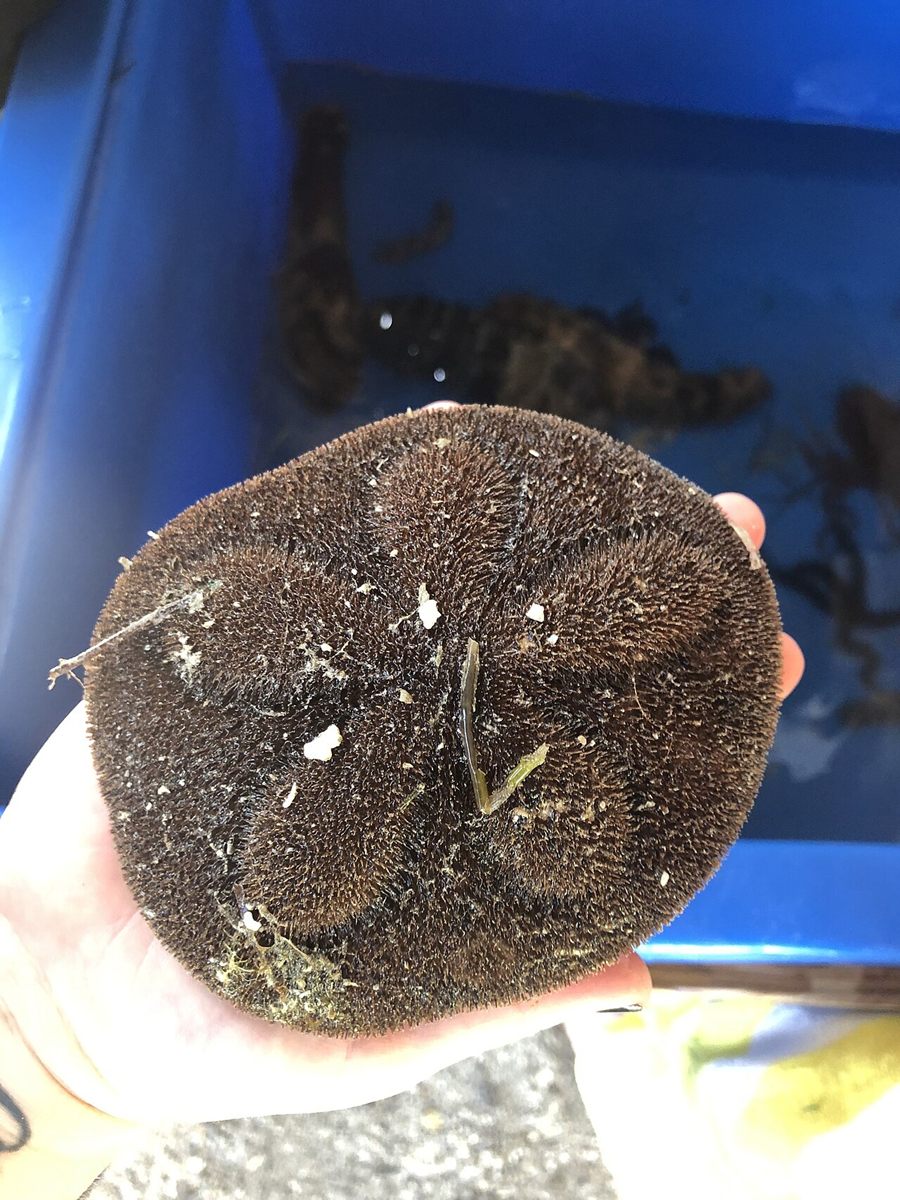
The inflated sea biscuit (Clypeaster rosaceus) is a large, domed sea urchin of the shallow sand and seagrass beds of the Caribbean and western Atlantic. It can reach about 20 centimeters, one of the largest sand dollar relatives.
The inflated sea biscuit (Clypeaster rosaceus) is a large, domed sea urchin of the shallow sand and seagrass beds of the Caribbean and western Atlantic. It can reach about 20 centimeters, one of the largest sand dollar relatives.
🧬 Field Guide Specimen: Open Inflated Sea Biscuit in the CRV Science Field Guide to log the specimen, see its place among the Deuterostomia lineages in the Cladogram Explorer, and test your recall in the Red List conservation game.
A Dome-Shaped Urchin
Sea biscuits are thicker than sand dollars and have a rounded, cushion-like test with a petal-shaped pattern of pores on top. Short spines covering the body form a brown fuzz in life.
Sand and Seagrass Feeding
The animal plows through the sediment, taking in sand grains and digesting the organic particles on them. It lives from shallow water to depths of several dozen meters.
Predators and Fossils
Large helmet snails prey on sea biscuits by boring through the test. The group has a rich fossil record, and clypeasteroids are common in Cenozoic rocks.
Inflated Sea Biscuit at a Glance
| Property | Value |
|---|---|
| Scientific name | Clypeaster rosaceus |
| Kingdom | Animalia |
| Phylum | Echinodermata |
| Class | Echinoidea |
| Order | Clypeasteroida |
| Family | Clypeasteridae |
| Field Guide group | Deuterostomia: Echinodermata (Sea Stars & Allies) |
| Diagnostic feature (Field Guide) | Thick, domed oval test with a large five-petal pattern, covered in short brown velvety spines; often carries debris on its back. |
| Class | Echinoidea |
| Maximum size | About 20 centimeters |
See Also
- Keyhole Sand Dollar — a flatter relative
- Neptune Grass — seagrass habitats