Reticulated Sea Biscuit
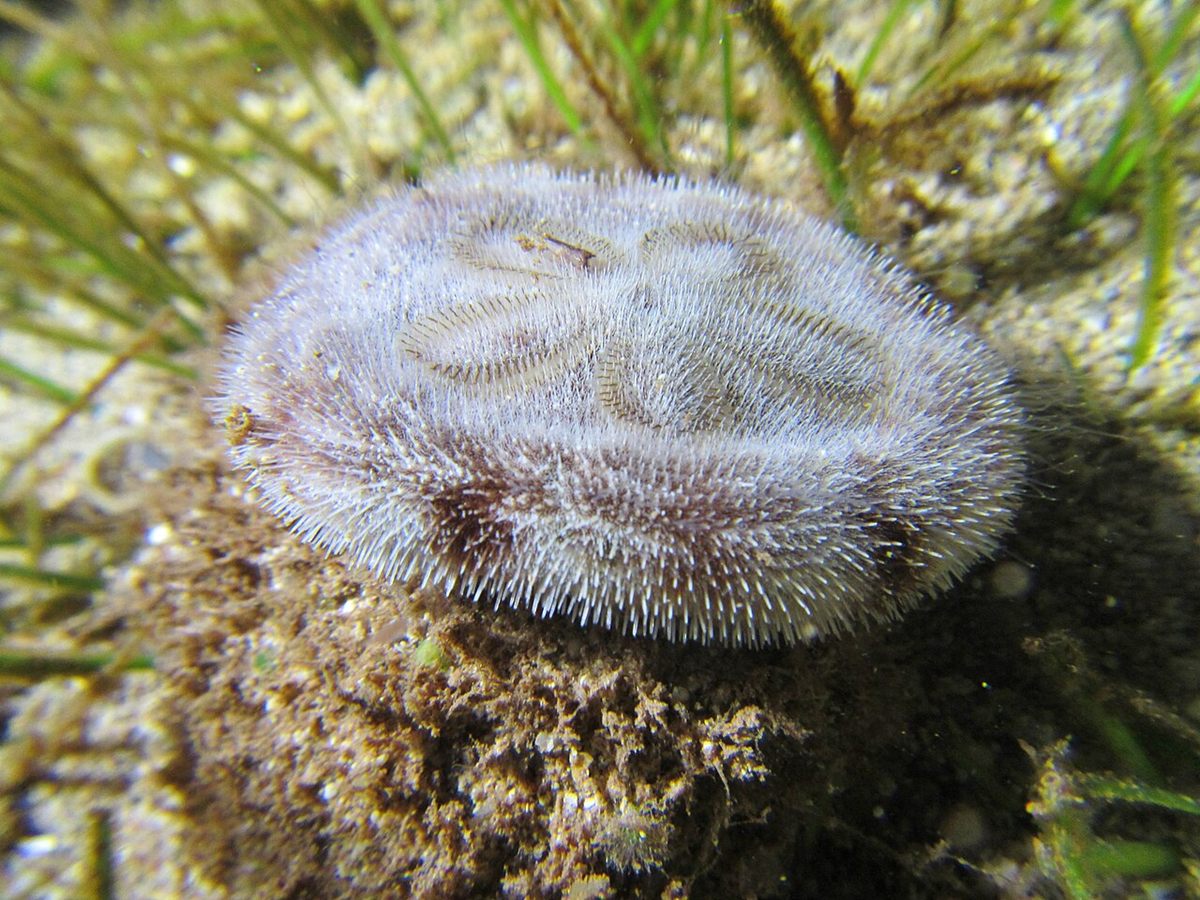
The reticulated sea biscuit (Clypeaster reticulatus) is a thick, domed, oval sea urchin of the Indo-Pacific. A net-like pattern of ridges covers its skeleton.
The reticulated sea biscuit (Clypeaster reticulatus) is a thick, domed, oval sea urchin of the Indo-Pacific. A net-like pattern of ridges covers its skeleton.
🧬 Field Guide Specimen: Open Reticulated Sea Biscuit in the CRV Science Field Guide to log the specimen, see its place among the Deuterostomia lineages in the Cladogram Explorer, and test your recall in the Red List conservation game.
A Net-Patterned Test
The bare test shows a raised, lattice-like pattern between the five petal-shaped bands where tube feet breathe. When alive the test is covered with short spines that give a velvety look.
Life Under the Sand
Sea biscuits plow through sand in shallow seas, swallowing sediment and digesting the organic matter in it. See Inflated Sea Biscuit.
Fossil Heritage
Clypeasteroids have a good fossil record, and sea biscuit tests are common in Cenozoic marine rocks. See Keyhole Sand Dollar.
Reticulated Sea Biscuit at a Glance
| Property | Value |
|---|---|
| Scientific name | Clypeaster reticulatus |
| Kingdom | Animalia |
| Phylum | Echinodermata |
| Class | Echinoidea |
| Order | Clypeasteroida |
| Family | Clypeasteridae |
| Field Guide group | Deuterostomia: Echinodermata (Sea Stars & Allies) |
| Diagnostic feature (Field Guide) | Oval, slightly domed test about 5 cm long covered in short pale velvety spines, with a five-petaled flower pattern on top; hides among Indo-Pacific coral rubble. |
| Class | Echinoidea |
| Test pattern | Net-like ridges |
See Also
- Inflated Sea Biscuit — a Caribbean sea biscuit
- Keyhole Sand Dollar — a related burrower