Keyhole Sand Dollar
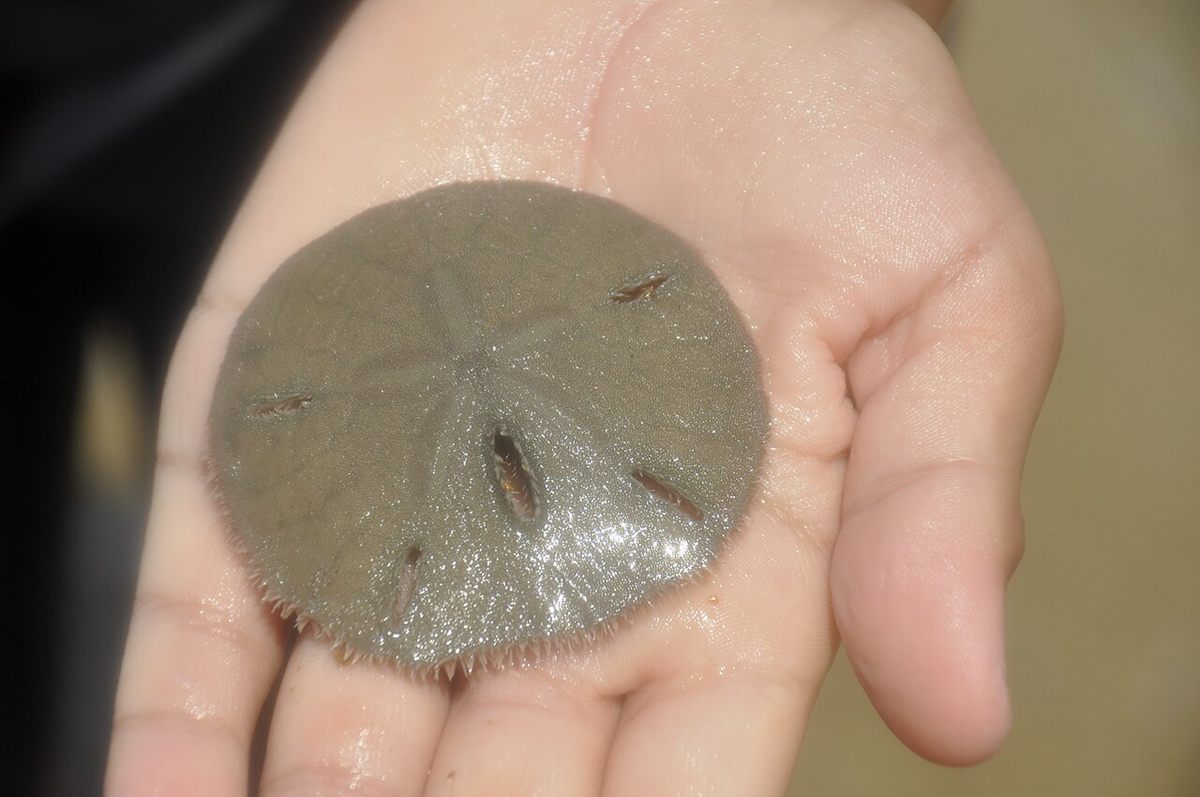
The keyhole sand dollar (Mellita quinquiesperforata) is a flat sea urchin of sandy shores of the western Atlantic and Caribbean. Its disc has five slits (lunules), which give it the 'keyhole' name.
The keyhole sand dollar (Mellita quinquiesperforata) is a flat sea urchin of sandy shores of the western Atlantic and Caribbean. Its disc has five slits (lunules), which give it the "keyhole" name.
🧬 Field Guide Specimen: Open Keyhole Sand Dollar in the CRV Science Field Guide to log the specimen, see its place among the Deuterostomia lineages in the Cladogram Explorer, and test your recall in the Red List conservation game.
Slots in the Disc: What Are Lunules For?
The lunules are thought to help the animal burrow through sand, to keep it from being lifted by currents, and to let food-laden water reach the underside. They develop as the animal grows.
Sand-Swimming Grazers
Thousands of tiny spines move the animal and sand grains across the surface. Cilia and tube feet carry diatoms and detritus along food grooves to the mouth in the center of the underside.
Skeleton on the Beach
The white test seen on beaches is an empty skeleton. The living animal is covered with a velvet of purplish spines. See Common Sand Dollar.
Keyhole Sand Dollar at a Glance
| Property | Value |
|---|---|
| Scientific name | Mellita quinquiesperforata |
| Kingdom | Animalia |
| Phylum | Echinodermata |
| Class | Echinoidea |
| Order | Clypeasteroida |
| Family | Mellitidae |
| Field Guide group | Deuterostomia: Echinodermata (Sea Stars & Allies) |
| Diagnostic feature (Field Guide) | Flat disc test pierced by five slot-like 'keyholes' (lunules) that help it burrow quickly and resist being flipped by waves. |
| Class | Echinoidea |
| Lunules | Five |
See Also
- Common Sand Dollar — a related sand dollar
- Eccentric Sand Dollar — a Pacific sand dollar