Eccentric Sand Dollar
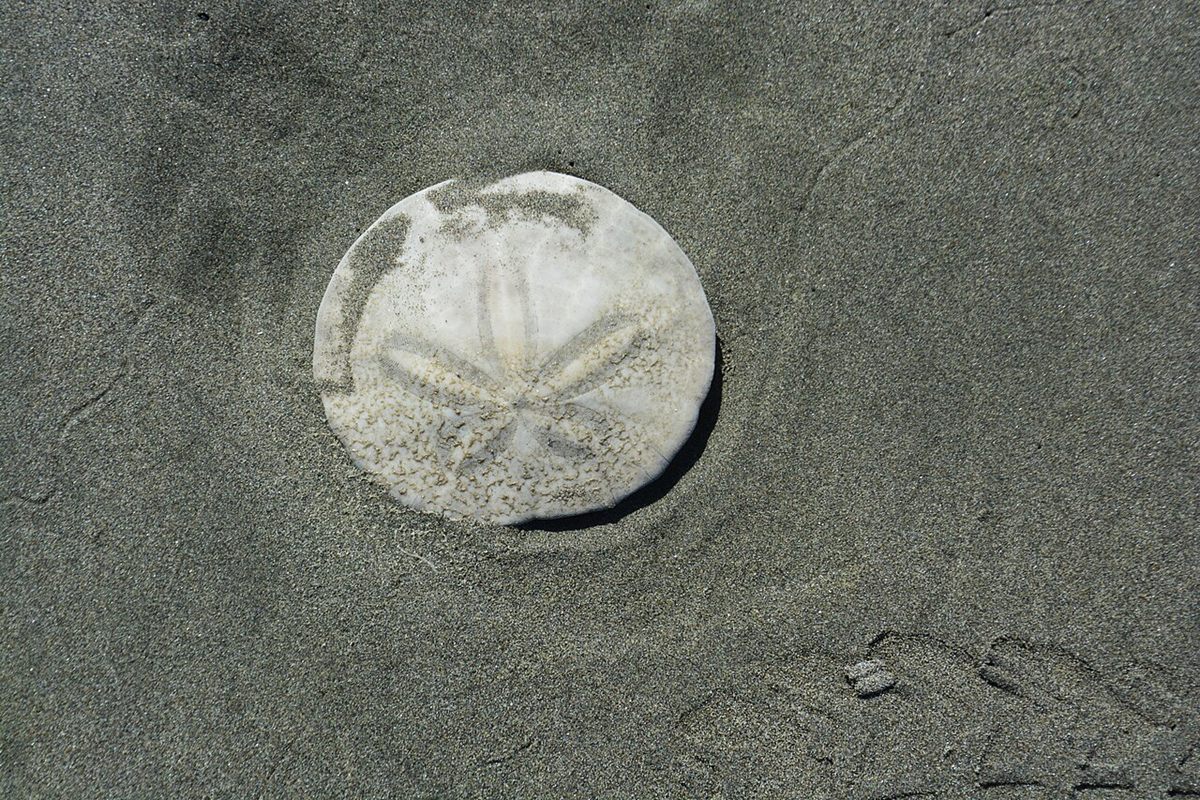
The eccentric sand dollar (Dendraster excentricus) is a sand dollar of the Pacific coast of North America that lives with a third of its disc buried upright in the sand, facing the current.
The eccentric sand dollar (Dendraster excentricus) is a sand dollar of the Pacific coast of North America that lives with a third of its disc buried upright in the sand, facing the current. It is known for the remarkable ability of its larvae to clone themselves.
🧬 Field Guide Specimen: Open Eccentric Sand Dollar in the CRV Science Field Guide to log the specimen, see its place among the Deuterostomia lineages in the Cladogram Explorer, and test your recall in the Red List conservation game.
Standing on Edge
Dense beds of upright sand dollars filter food from the water as it flows past, catching particles on the spines and tube feet. The eccentric position of its mouth, off-center, gives it its name.
Clone Defense
In 2008 researchers found that when sand dollar larvae detect mucus from a fish predator, they bud off a smaller clone of themselves, becoming smaller and so less visible to fish. It is a rare example of a larva that clones itself as a defense.
A Developmental Model
The species is used in studies of fertilization and early development, like other sea urchins. See Purple Sea Urchin.
Eccentric Sand Dollar at a Glance
| Property | Value |
|---|---|
| Scientific name | Dendraster excentricus |
| Kingdom | Animalia |
| Phylum | Echinodermata |
| Class | Echinoidea |
| Order | Clypeasteroida |
| Family | Dendrasteridae |
| Field Guide group | Deuterostomia: Echinodermata (Sea Stars & Allies) |
| Diagnostic feature (Field Guide) | Off-center petal pattern on a flat purple-gray disc; lives in dense beds standing half-buried on edge to filter food from currents. |
| Class | Echinoidea |
| Larval defense | Cloning in response to fish mucus |
See Also
- Keyhole Sand Dollar — an Atlantic sand dollar
- Purple Sea Urchin — a model sea urchin