Common Sand Dollar
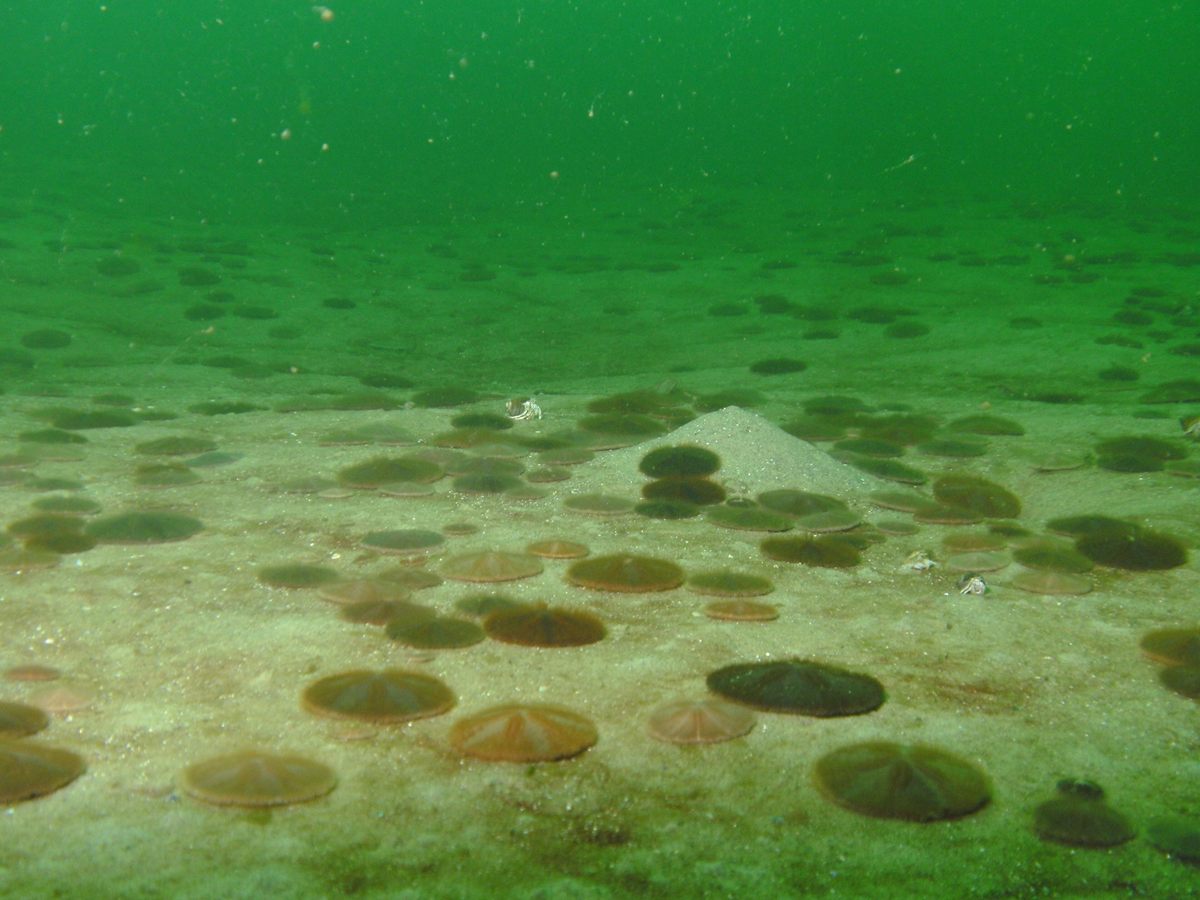
The common sand dollar (Echinarachnius parma) is a flat, disc-shaped sea urchin of cool sandy seabeds in the northern Atlantic and Pacific. The empty skeleton, called a test, washes up on beaches.
The common sand dollar (Echinarachnius parma) is a flat, disc-shaped sea urchin of cool sandy seabeds in the northern Atlantic and Pacific. The empty skeleton, called a test, washes up on beaches.
🧬 Field Guide Specimen: Open Common Sand Dollar in the CRV Science Field Guide to log the specimen, see its place among the Deuterostomia lineages in the Cladogram Explorer, and test your recall in the Red List conservation game.
A Flat Sea Urchin: How Is It Built?
The living animal is covered with tiny spines that look like velvet. The five-part petal pattern on the top marks the tube feet that breathe. The mouth is in the center of the underside, with a set of five jaw plates known as Aristotle's lantern.
Feeding in the Sand
Sand dollars live partly buried and move fine food particles, such as diatoms and detritus, along channels in the underside toward the mouth. Their flat form helps keep them from being swept away in currents.
Sand Dollar Legends
The test is white and brittle and has inspired a legend likening its markings to Christian symbols. The living animal is brown or purple.
Common Sand Dollar at a Glance
| Property | Value |
|---|---|
| Scientific name | Echinarachnius parma |
| Kingdom | Animalia |
| Phylum | Echinodermata |
| Class | Echinoidea |
| Order | Clypeasteroida |
| Family | Echinarachniidae |
| Field Guide group | Deuterostomia: Echinodermata (Sea Stars & Allies) |
| Diagnostic feature (Field Guide) | Extremely flattened circular disc test with conspicuous five-petal flower (petaloid) respiratory pore arrangement and velvety spines. |
| Class | Echinoidea |
| Jaw apparatus | Aristotle's lantern |
See Also
- Purple Sea Urchin — a regular sea urchin
- Common Brittle Star — another echinoderm of soft seabeds