Dwarf Seahorse
The dwarf seahorse (Hippocampus zosterae) is among the smallest seahorses, no more than about 2.5 centimeters tall, and lives in shallow seagrass beds off Florida, the Gulf of Mexico and the Bahamas. Like all seahorses, the males become pregnant.
The dwarf seahorse (Hippocampus zosterae) is among the smallest seahorses, no more than about 2.5 centimeters tall, and lives in shallow seagrass beds off Florida, the Gulf of Mexico and the Bahamas. Like all seahorses, the males become pregnant.
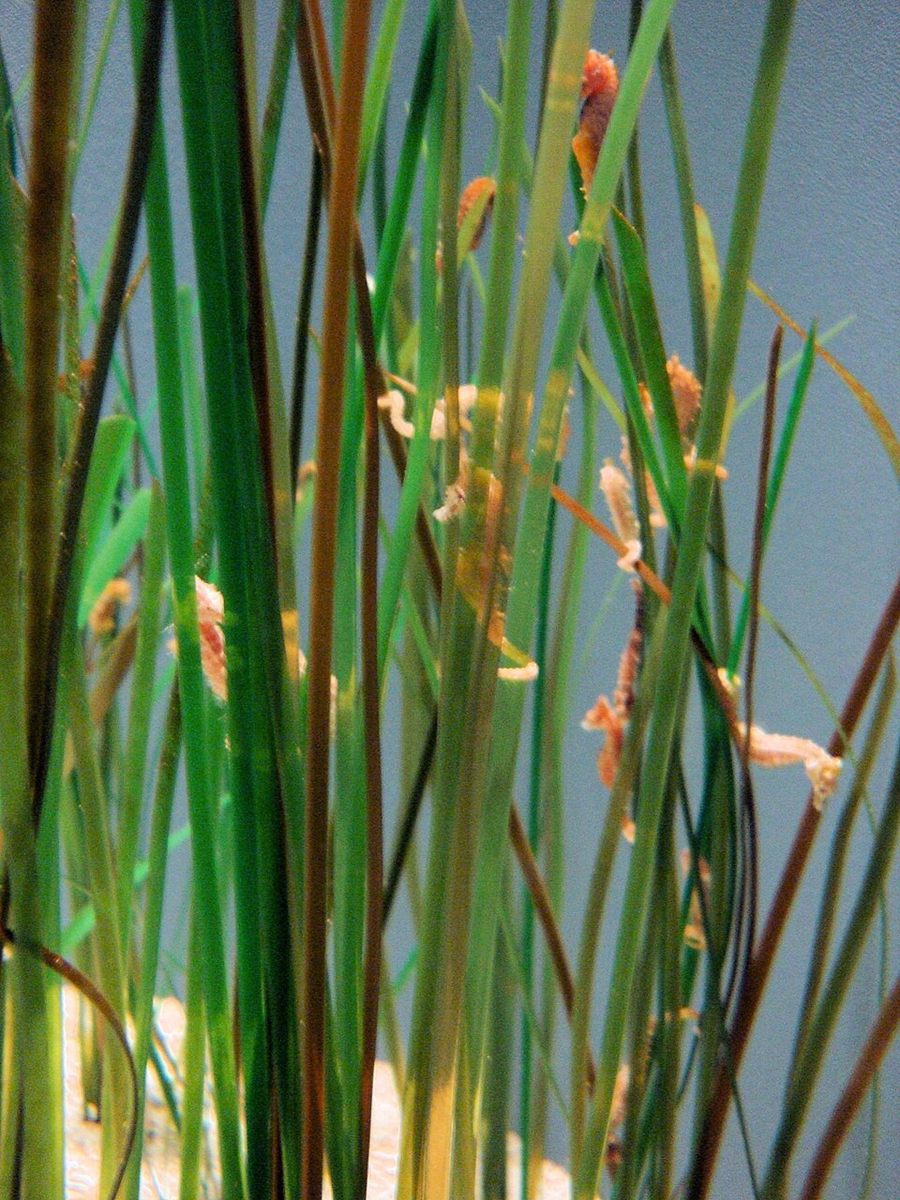
🧬 Field Guide Specimen: Open Dwarf Seahorse in the CRV Science Field Guide to log the specimen, see its place among the Vertebrates lineages in the Cladogram Explorer, and test your recall in the Red List conservation game.
Male Pregnancy: How Does It Work?
The female deposits her eggs in the male's brood pouch, where he fertilizes them and nourishes the embryos until they hatch. He then gives birth to fully formed miniatures. This reversal of roles is a favorite example in studies of sexual selection.
Daily Greetings
Pairs reunite each morning with a dance of color changes and tail-holding. Seahorses anchor themselves to seagrass with prehensile tails and wait for small crustaceans, which they suck up with their tube-like snouts.
Tied to Seagrass
Seagrass loss from coastal development and nutrient pollution removes the dwarf seahorse's home. See Neptune Grass for a Mediterranean seagrass.
Dwarf Seahorse at a Glance
| Property | Value |
|---|---|
| Scientific name | Hippocampus zosterae |
| Kingdom | Animalia |
| Phylum | Chordata |
| Class | Actinopterygii |
| Order | Syngnathiformes |
| Family | Syngnathidae |
| Field Guide group | Marine and Freshwater Fish |
| Diagnostic feature (Field Guide) | Prehensile tail, coronet crest, tubular snout, armored dermal bony rings, male brood pouch for brooding embryos. |
| IUCN Red List status | Least Concern (LC), assessed 2017 |
| Family | Syngnathidae |
| Pregnancy | Males carry the embryos |
See Also
- Neptune Grass — seagrass habitat
- Ocellaris Clownfish — another reef fish with unusual reproduction