Ocellaris Clownfish
The ocellaris clownfish (Amphiprion ocellaris) is a small orange reef fish with white bands that lives among the tentacles of sea anemones in the Indo-Pacific. It is the species popularized by the film Finding Nemo.
The ocellaris clownfish (Amphiprion ocellaris) is a small orange reef fish with white bands that lives among the tentacles of sea anemones in the Indo-Pacific. It is the species popularized by the film Finding Nemo.
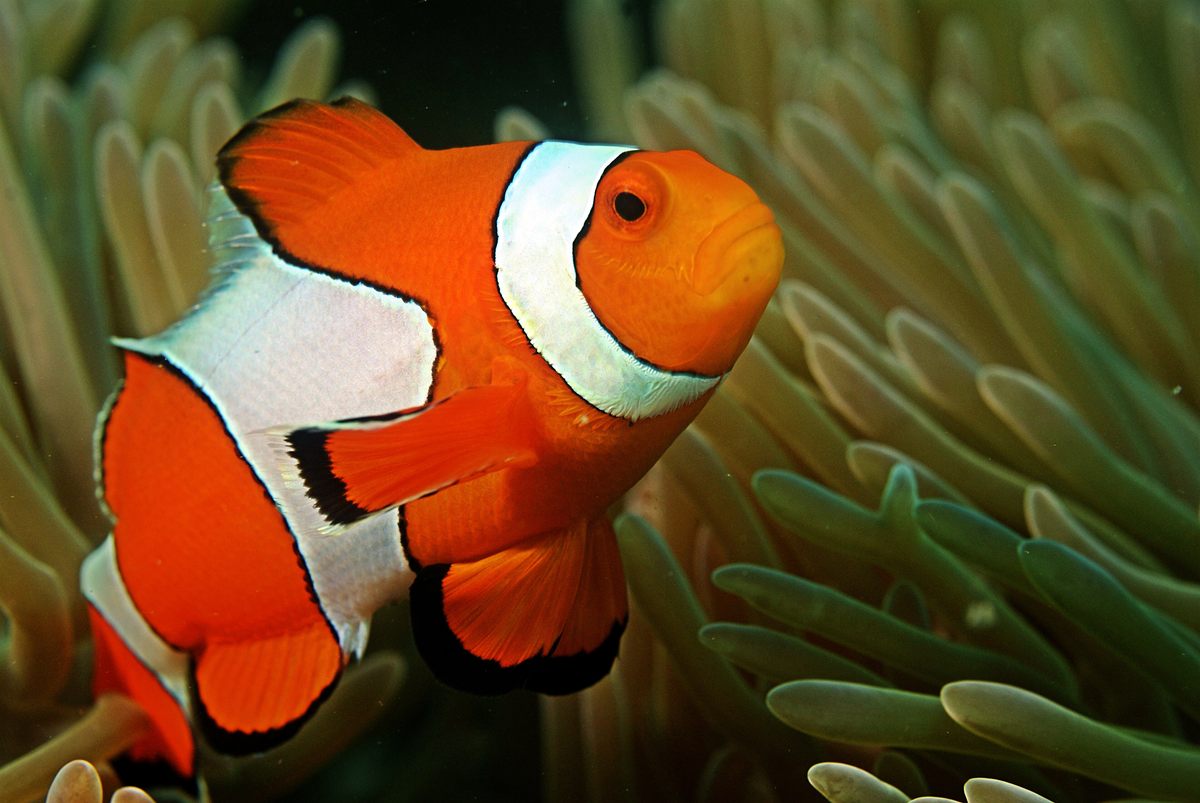
🧬 Field Guide Specimen: Open Ocellaris Clownfish in the CRV Science Field Guide to log the specimen, see its place among the Vertebrates lineages in the Cladogram Explorer, and test your recall in the Red List conservation game.
Living in a Stinging Home: Why Doesn't the Anemone Sting Them?
Clownfish acquire a coat of mucus that appears to mimic or mask the anemone's own chemical signature, which prevents the stinging cells from firing. The fish gain protection from predators, while the anemone gets cleaning, nutrients from fish waste and defense against some grazers.
Sex Change: Who Becomes the Female?
Each anemone hosts a social group ruled by a large breeding female, with a smaller breeding male and nonbreeding juveniles below. If the female dies, the male changes sex and becomes the new female, and the biggest juvenile becomes the male. This protandrous hermaphroditism means the real plot of the film would have turned out differently.
Aquarium Trade
Most clownfish in aquariums are now bred in captivity, which reduces pressure on wild populations. Reefs are threatened by bleaching, which also harms host anemones.
Ocellaris Clownfish at a Glance
| Property | Value |
|---|---|
| Scientific name | Amphiprion ocellaris |
| Kingdom | Animalia |
| Phylum | Chordata |
| Class | Actinopterygii |
| Infraclass | Teleostei |
| Field Guide group | Marine and Freshwater Fish |
| Diagnostic feature (Field Guide) | Vibrant orange bony fish with 3 white bars and spiny fins, protected by mucus from sea anemone stingers; can change sex from male to female. |
| IUCN Red List status | Least Concern (LC), assessed 2022 |
| Sex change | Male to female (protandrous) |
| Partner | Sea anemones |
See Also
- Coral bleaching — a threat to anemones and clownfish
- Natural selection — evolution of mutualism