Noble Pen Shell
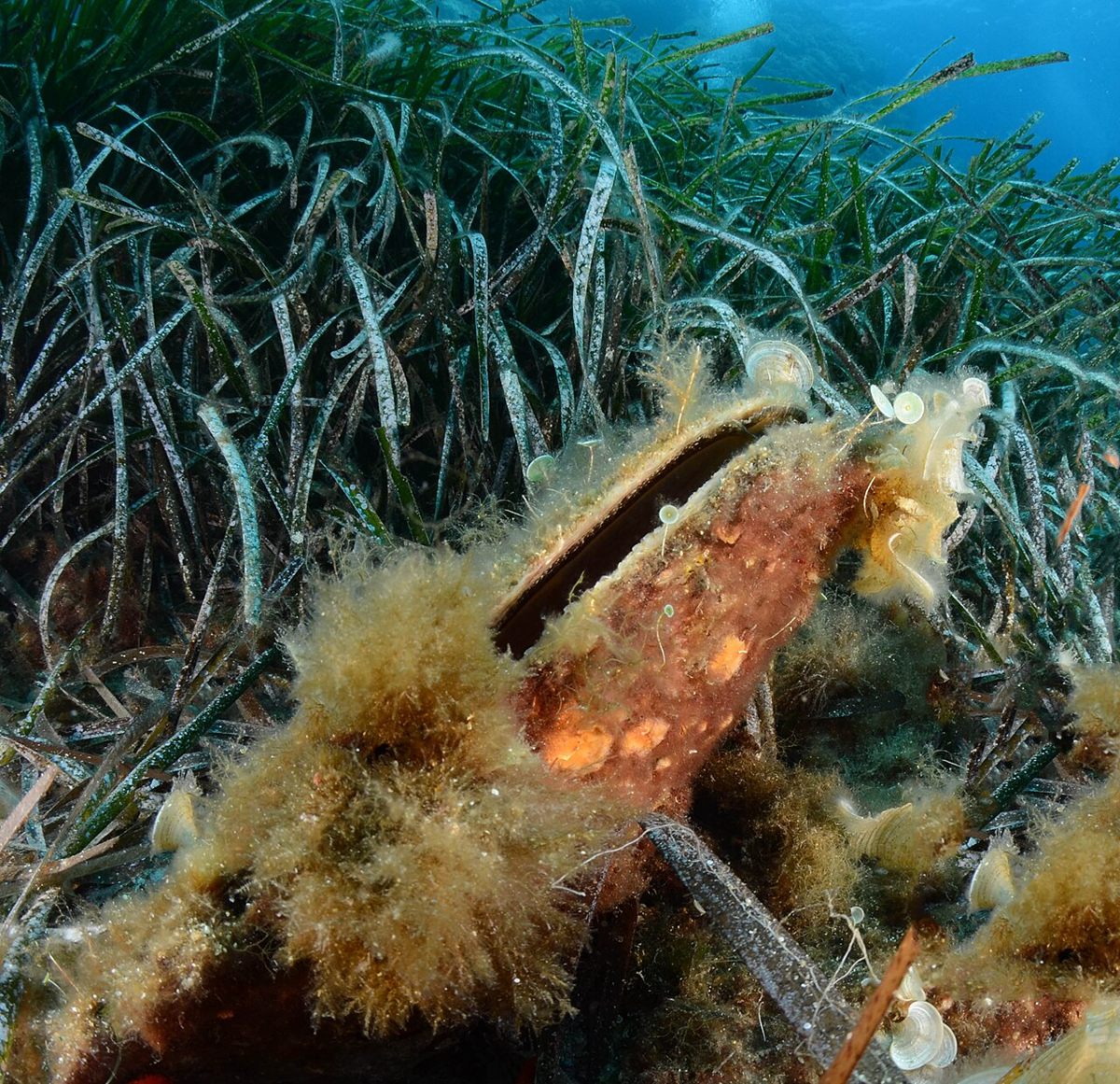
The noble pen shell (Pinna nobilis) is the largest bivalve of the Mediterranean, up to about 1.2 meters long, found in seagrass meadows. A parasite epidemic since 2016 has killed most populations, and it is listed as Critically Endangered.
The noble pen shell (Pinna nobilis) is the largest bivalve of the Mediterranean, up to about 1.2 meters long, found in seagrass meadows. A parasite epidemic since 2016 has killed most populations, and it is listed as Critically Endangered.
🧬 Field Guide Specimen: Open Noble Pen Shell in the CRV Science Field Guide to log the specimen, see its place among the Lophotrochozoa lineages in the Cladogram Explorer, and test your recall in the Red List conservation game.
Sea Silk
The mollusc anchors itself in sediment with a bundle of fine, strong threads (byssus). In antiquity these were spun and woven into rare "sea silk" cloth, one of the world's most expensive textiles.
A Mass Mortality
Since 2016, a protozoan parasite (Haplosporidium pinnae) has spread across the Mediterranean and killed more than 90 percent of pen shells in many areas. A few survivors in lagoons and estuaries are being protected. See Neptune Grass.
A Home in Seagrass
Pen shells live in beds of Posidonia, where they filter water. Anchoring by boats and the seagrass loss further threaten the species.
Noble Pen Shell at a Glance
| Property | Value |
|---|---|
| Scientific name | Pinna nobilis |
| Kingdom | Animalia |
| Phylum | Mollusca |
| Class | Bivalvia |
| Order | Ostreida |
| Family | Pinnidae |
| Field Guide group | Lophotrochozoa: Mollusca (Mollusks) |
| Diagnostic feature (Field Guide) | Giant fan-shaped shell up to 1.2 m standing half-buried in seagrass; anchored by golden byssus threads once woven into 'sea silk'. |
| IUCN Red List status | Critically Endangered (CR), assessed 2019 |
| Length | Up to about 1.2 meters |
See Also
- Neptune Grass — its habitat
- Giant Clam — another giant bivalve