Giant Kelp
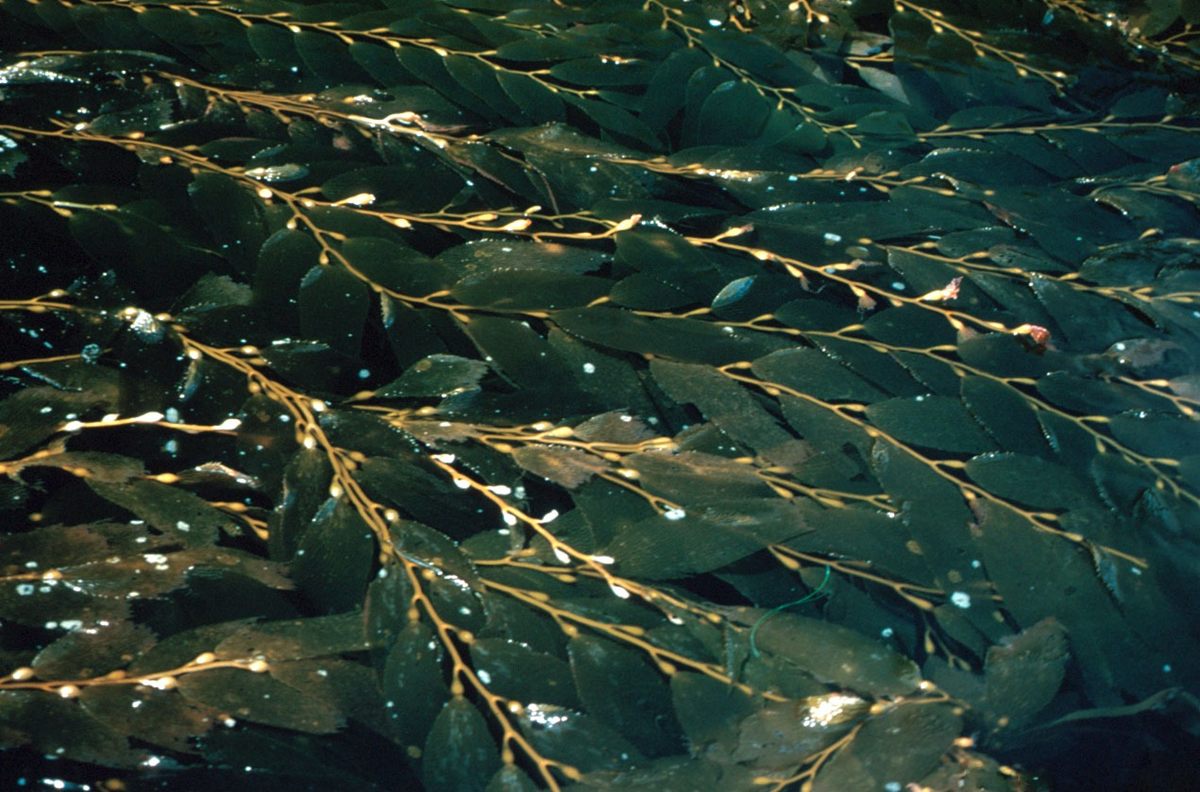
Giant kelp (Macrocystis pyrifera) is a brown alga that forms underwater forests along cool coasts of the Pacific and Southern Hemisphere.
Giant kelp (Macrocystis pyrifera) is a brown alga that forms underwater forests along cool coasts of the Pacific and Southern Hemisphere. Fronds can reach tens of meters, and the plant can grow up to half a meter in a day, among the fastest growth rates of any organism.
🧬 Field Guide Specimen: Open Giant Kelp in the CRV Science Field Guide to log the specimen, see its place among the Diaphoretickes lineages in the Cladogram Explorer, and test your recall in the Red List conservation game.
Not a Plant: What Is a Brown Alga?
Kelps belong to the Stramenopiles, a lineage that also includes diatoms, and are only distantly related to land plants. Gas-filled bladders (pneumatocysts) float the fronds toward the light, a root-like holdfast anchors the plant to rock, and the blades absorb nutrients directly from seawater.
Forests of the Sea: Why Do Sea Otters Matter?
Kelp forests shelter fish, invertebrates and marine mammals. Sea otters eat sea urchins, which graze kelp; where otters are removed, urchins can mow the forest down to bare "urchin barrens". The otter-urchin-kelp chain is a textbook trophic cascade. See Food web.
Heat, Storms and Human Uses
Kelp needs cold, nutrient-rich water, and marine heatwaves have caused large losses, as on the northern California coast after 2014. Giant kelp is also harvested for alginate, a thickener used in foods and medicines.
Giant Kelp at a Glance
| Property | Value |
|---|---|
| Scientific name | Macrocystis pyrifera |
| Kingdom | Chromista |
| Phylum | Heterokontophyta |
| Class | Phaeophyceae |
| Order | Laminariales |
| Field Guide group | Diaphoretickes: Plants & Algae |
| Diagnostic feature (Field Guide) | Gas-filled pneumatocyst bladders lifting fronds to sunlight, reach 45m length, fucoxanthin pigment. |
| Growth rate | Up to about half a meter per day |
| Lineage | Stramenopiles (brown algae) |
See Also
- Marine heatwave — a major threat to kelp forests
- Sea surface temperature — cold water and kelp growth
- Photosynthesis — how algae capture light