Sunflower Sea Star
The sunflower sea star (Pycnopodia helianthoides) is the largest sea star in the world, with up to about 24 arms and a span of a meter, found along the Pacific coast of North America.
The sunflower sea star (Pycnopodia helianthoides) is the largest sea star in the world, with up to about 24 arms and a span of a meter, found along the Pacific coast of North America. A wasting disease wiped out most of its population, and it is listed as Critically Endangered.
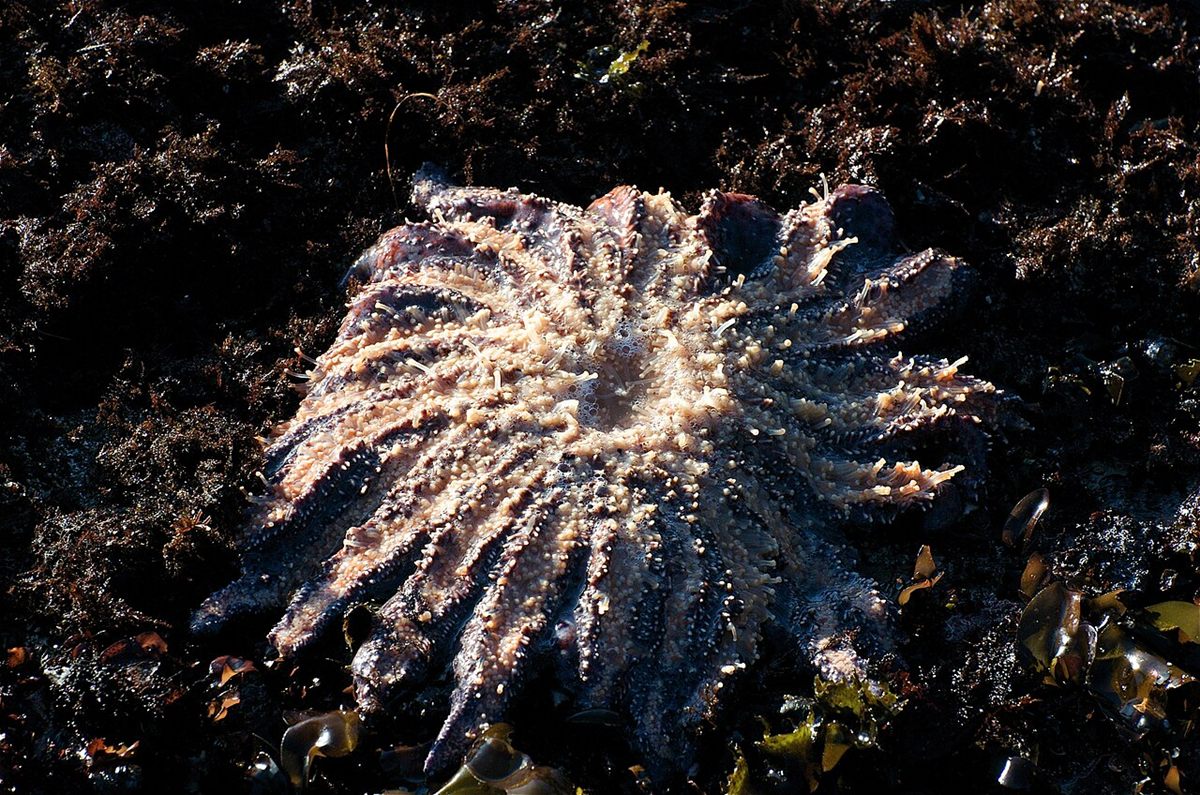
🧬 Field Guide Specimen: Open Sunflower Sea Star in the CRV Science Field Guide to log the specimen, see its place among the Deuterostomia lineages in the Cladogram Explorer, and test your recall in the Red List conservation game.
A Fast Hunter
Using thousands of tube feet, it moves at about a meter per minute, fast for a sea star. It hunts sea urchins, clams and snails and is a key predator of urchins on kelp forests. See Purple Sea Urchin.
Disaster Starting in 2013
Sea star wasting disease began in 2013 and killed the great majority of sunflower stars from Alaska to Baja California within a few years. With fewer predators, urchin populations boomed and helped to destroy kelp forests in northern California.
Rescue Efforts
The species was assessed as critically endangered in 2020, and captive breeding programs have raised young stars to restore populations. See Giant Kelp.
Sunflower Sea Star at a Glance
| Property | Value |
|---|---|
| Scientific name | Pycnopodia helianthoides |
| Kingdom | Animalia |
| Phylum | Echinodermata |
| Class | Asteroidea |
| Order | Forcipulatida |
| Family | Asteriidae |
| Field Guide group | Deuterostomia: Echinodermata (Sea Stars & Allies) |
| Diagnostic feature (Field Guide) | Soft, fast-moving predator up to a meter across with as many as 24 arms and 15,000 tube feet; nearly wiped out by wasting disease. |
| IUCN Red List status | Critically Endangered (CR), assessed 2021 |
| Arm span | Up to about 1 meter |
See Also
- Ochre Sea Star — a keystone sea star
- Giant Kelp — the forest it protects