Bull Kelp
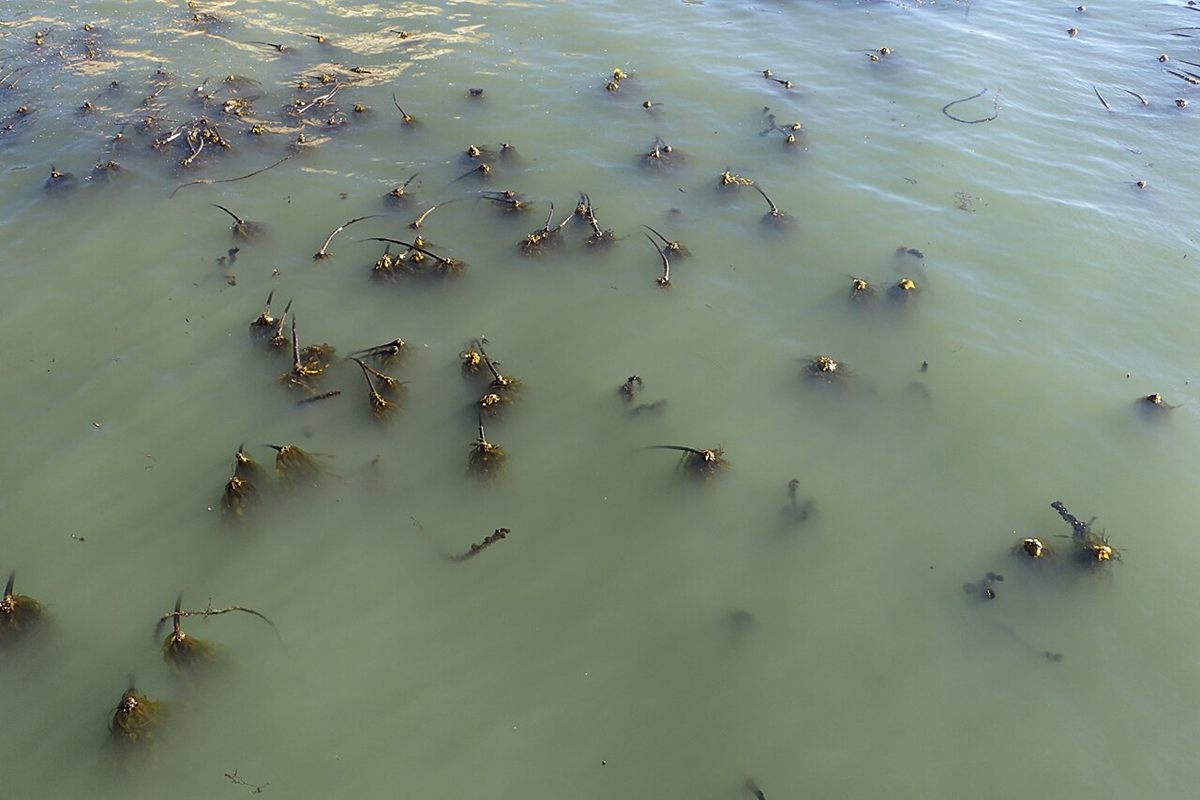
Bull kelp (Nereocystis luetkeana) is a giant annual kelp of the Pacific coast of North America. A single long stalk, up to 30 meters or more, ends in a gas-filled float topped with a crown of blades.
Bull kelp (Nereocystis luetkeana) is a giant annual kelp of the Pacific coast of North America. A single long stalk, up to 30 meters or more, ends in a gas-filled float topped with a crown of blades.
🧬 Field Guide Specimen: Open Bull Kelp in the CRV Science Field Guide to log the specimen, see its place among the Diaphoretickes lineages in the Cladogram Explorer, and test your recall in the Red List conservation game.
Growing Fast
Bull kelp grows from a spore to a canopy-forming plant in a single season, adding many centimeters a day. The float contains carbon monoxide gas among others, and holds the blades at the surface.
A Collapse in California
After a marine heatwave in 2014 and 2015 and the loss of sea stars to wasting disease, purple sea urchins multiplied and bull kelp forests in northern California declined by more than 90 percent. See Sunflower Sea Star.
Coastal Habitat
Bull kelp beds shelter young fish and invertebrates and provide food for coastal peoples. See Giant Kelp.
Bull Kelp at a Glance
| Property | Value |
|---|---|
| Scientific name | Nereocystis luetkeana |
| Kingdom | Chromista |
| Phylum | Heterokontophyta |
| Class | Phaeophyceae |
| Order | Laminariales |
| Family | Laminariaceae |
| Field Guide group | Diaphoretickes: Plants & Algae |
| Diagnostic feature (Field Guide) | A single hollow stalk up to 36 meters long ending in a gas-filled float from which dozens of long blades stream; grows a full forest in one season. |
| IUCN Red List status | Not Evaluated (NE): no global IUCN assessment |
| Group | Brown algae (Laminariales) |
| Life span | One year |
See Also
- Giant Kelp — a perennial kelp
- Purple Sea Urchin — an urchin that grazes kelp
- Marine heatwave — heat stress on kelp