Irukandji Jellyfish
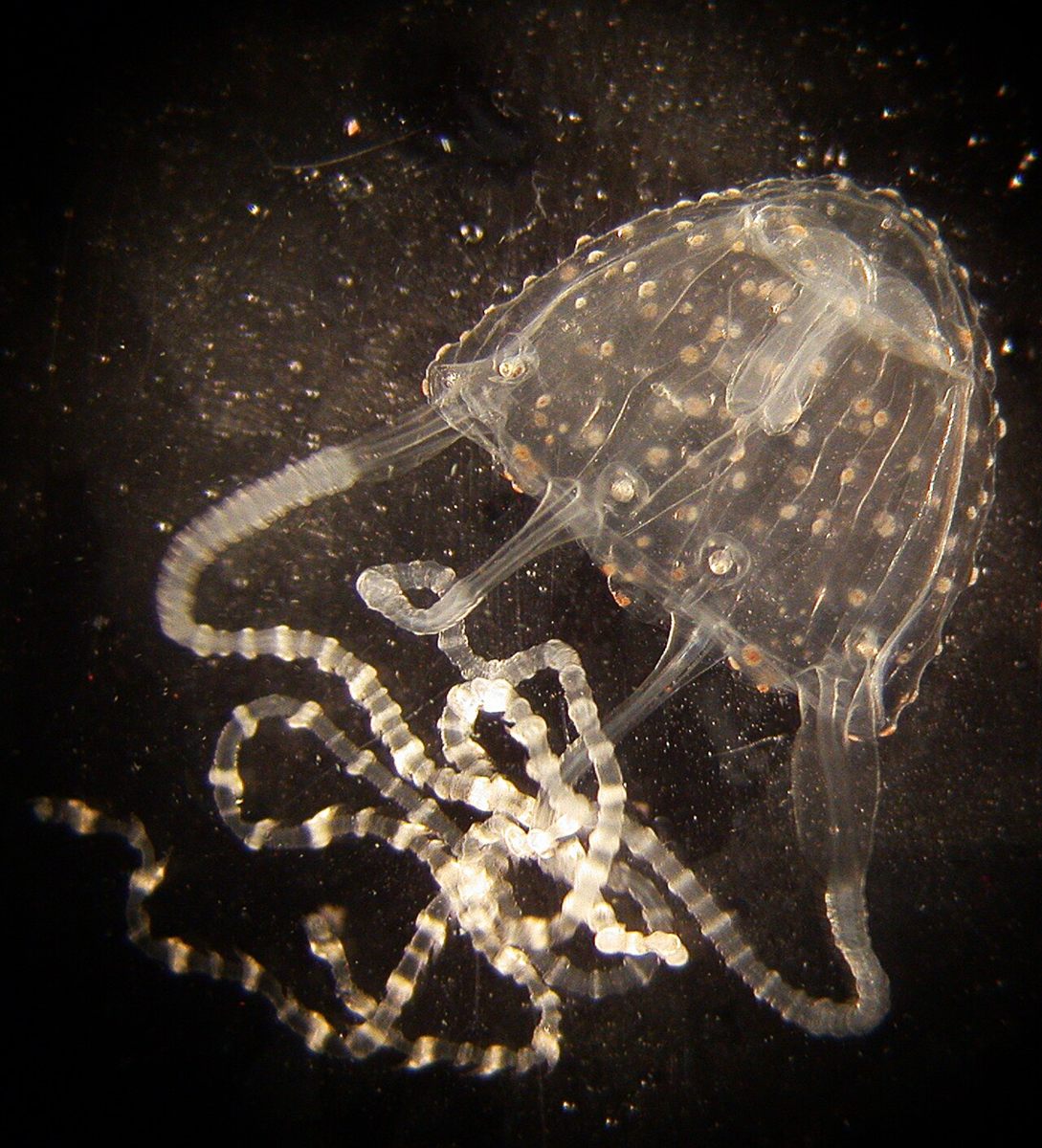
The Irukandji jellyfish (Carukia barnesi) is a transparent box jellyfish about a centimeter across, from the waters of northern Australia. Its sting is barely noticed at first but can lead to a severe condition called Irukandji syndrome.
The Irukandji jellyfish (Carukia barnesi) is a transparent box jellyfish about a centimeter across, from the waters of northern Australia. Its sting is barely noticed at first but can lead to a severe condition called Irukandji syndrome.
🧬 Field Guide Specimen: Open Irukandji Jellyfish in the CRV Science Field Guide to log the specimen, see its place among the Cnidaria+Ctenophora lineages in the Cladogram Explorer, and test your recall in the Red List conservation game.
A Delayed, Severe Reaction
Roughly half an hour after the sting, victims develop severe back and muscle pain, nausea, anxiety and high blood pressure. Some need intensive care, and rare deaths from brain hemorrhage have been reported. The venom acts on sodium channels in nerves.
A Self-Experiment
In 1964 the physician Jack Barnes proved that this tiny jellyfish caused the syndrome by letting it sting himself, his young son and a lifeguard. The species is named after him.
Stinger Season
Beaches in north Queensland close in summer when jellyfish are present, and swimmers wear protective suits. See Sea Wasp.
Irukandji Jellyfish at a Glance
| Property | Value |
|---|---|
| Scientific name | Carukia barnesi |
| Kingdom | Animalia |
| Phylum | Cnidaria |
| Class | Cubozoa |
| Order | Carybdeida |
| Family | Carukiidae |
| Field Guide group | Cnidaria + Ctenophora (Radiata & Jellies) |
| Diagnostic feature (Field Guide) | Transparent bell only about 1 cm across with four thread-like tentacles; its tiny sting can cause severe pain and life-threatening Irukandji syndrome. |
| Class | Cubozoa |
| Bell size | About 1 centimeter |
See Also
- Sea Wasp — a larger box jellyfish
- Geography Cone Snail — another venomous marine animal