Ginkgo
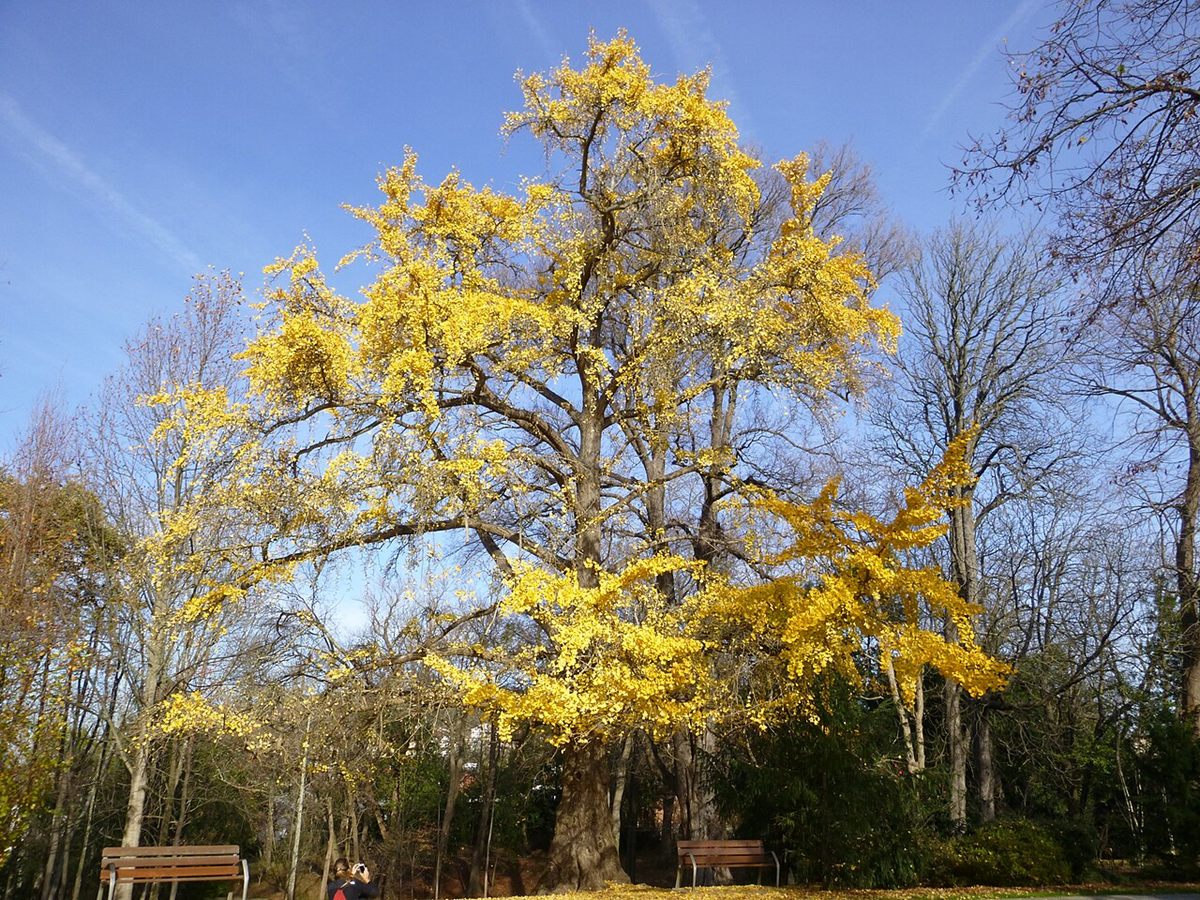
Ginkgo (Ginkgo biloba) is a tree with fan-shaped leaves, the only surviving species of a lineage of seed plants that dates back some 270 million years. It is listed as Endangered in the wild, but it thrives as a street tree in cities around the world.
Ginkgo (Ginkgo biloba) is a tree with fan-shaped leaves, the only surviving species of a lineage of seed plants that dates back some 270 million years. It is listed as Endangered in the wild, but it thrives as a street tree in cities around the world.
🧬 Field Guide Specimen: Open Ginkgo in the CRV Science Field Guide to log the specimen, see its place among the Diaphoretickes lineages in the Cladogram Explorer, and test your recall in the Red List conservation game.
A Living Fossil with Swimming Sperm
Ginkgo is a gymnosperm, with naked seeds, like conifers and cycads. In 1896 Sakugoro Hirase discovered that its pollen produces motile, flagellated sperm that swim a short distance to the egg, a trait that links seed plants to their fern-like ancestors.
Tough in Cities
The tree tolerates pollution, disease and pests, and some specimens near Hiroshima survived the 1945 atomic bomb and resprouted. Female trees produce fleshy seeds that smell of butyric acid, so city planters usually choose male trees.
Endangered in the Wild
The only natural populations survive in a few spots in China, and even those are debated. Extracts of the leaves are sold as a supplement, but clinical trials have not shown that they prevent dementia.
Ginkgo at a Glance
| Property | Value |
|---|---|
| Scientific name | Ginkgo biloba |
| Kingdom | Plantae |
| Phylum | Ginkgophyta |
| Class | Ginkgoopsida |
| Order | Ginkgoales |
| Family | Ginkgoaceae |
| Field Guide group | Diaphoretickes: Plants & Algae |
| Diagnostic feature (Field Guide) | Distinctive fan-shaped two-lobed leaves with open dichotomous venation, dioecious naked ovules, motile swimming sperm. |
| IUCN Red List status | Endangered (EN), assessed 1998 |
| Lineage age | About 270 million years |