Sago Palm Cycad
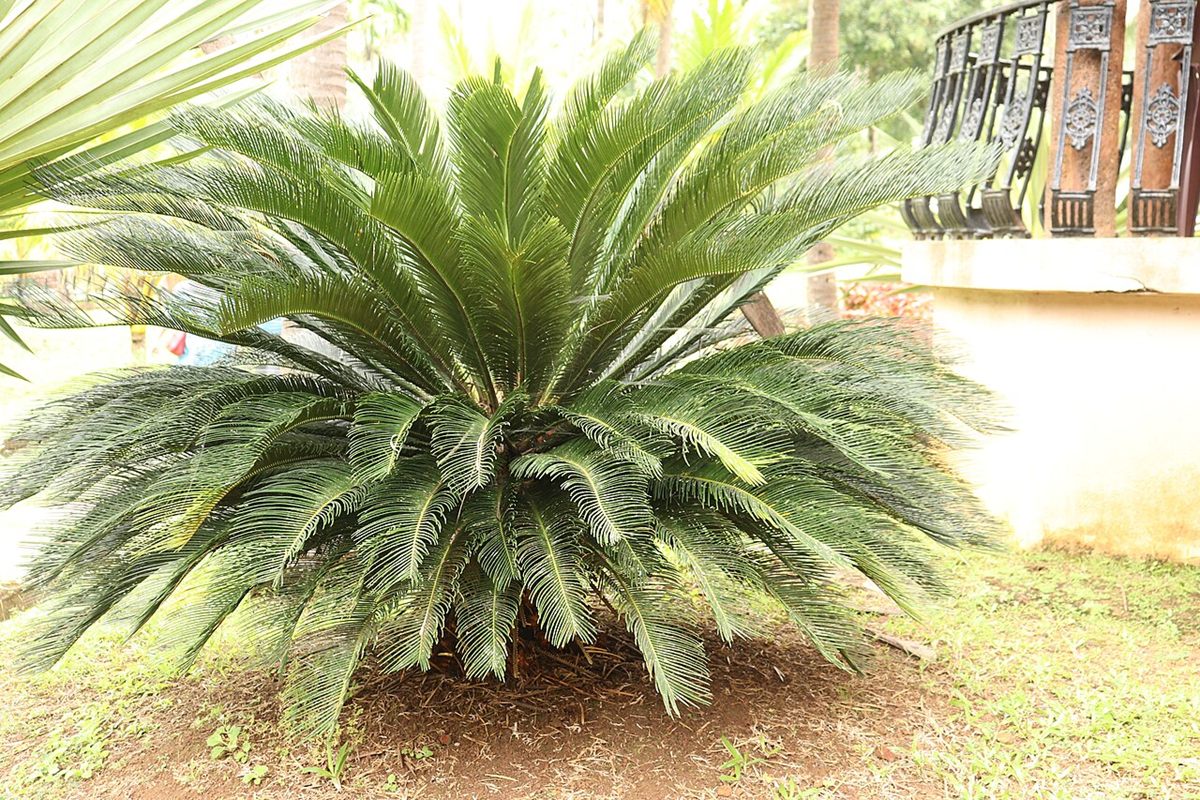
The sago palm (Cycas revoluta) is a stout cycad from southern Japan with a crown of stiff, glossy fronds. Despite the name it is not a palm: cycads are an ancient group of seed plants that flourished in the age of dinosaurs.
The sago palm (Cycas revoluta) is a stout cycad from southern Japan with a crown of stiff, glossy fronds. Despite the name it is not a palm: cycads are an ancient group of seed plants that flourished in the age of dinosaurs.
🧬 Field Guide Specimen: Open Sago Palm Cycad in the CRV Science Field Guide to log the specimen, see its place among the Diaphoretickes lineages in the Cladogram Explorer, and test your recall in the Red List conservation game.
Plants of the Mesozoic
Cycads were abundant during the Triassic and Jurassic periods. About 300 species survive today. They bear seeds in cones or cone-like structures, and have separate male and female plants. Like ginkgo, they have motile sperm. See Ginkgo.
Nitrogen-Fixing Roots
Coralloid roots growing near the surface house cyanobacteria that fix nitrogen, an uncommon partnership that helps the plant live on poor soils.
Toxic Seeds
All parts, especially the seeds, contain toxins such as cycasin and are poisonous to dogs and livestock. A related neurotoxin in cycad seeds has been linked to a neurological disease in Guam.
Sago Palm Cycad at a Glance
| Property | Value |
|---|---|
| Scientific name | Cycas revoluta |
| Kingdom | Plantae |
| Phylum | Tracheophyta |
| Class | Cycadopsida |
| Order | Cycadales |
| Family | Cycadaceae |
| Field Guide group | Diaphoretickes: Plants & Algae |
| Diagnostic feature (Field Guide) | Palm-like stiff feathery leaves on a thick trunk, but no flowers: separate male and female plants make large cones. |
| IUCN Red List status | Least Concern (LC), assessed 2010 |
| Group | Cycads (Cycadales) |
| Root symbiont | Nitrogen-fixing cyanobacteria |