Giraffe
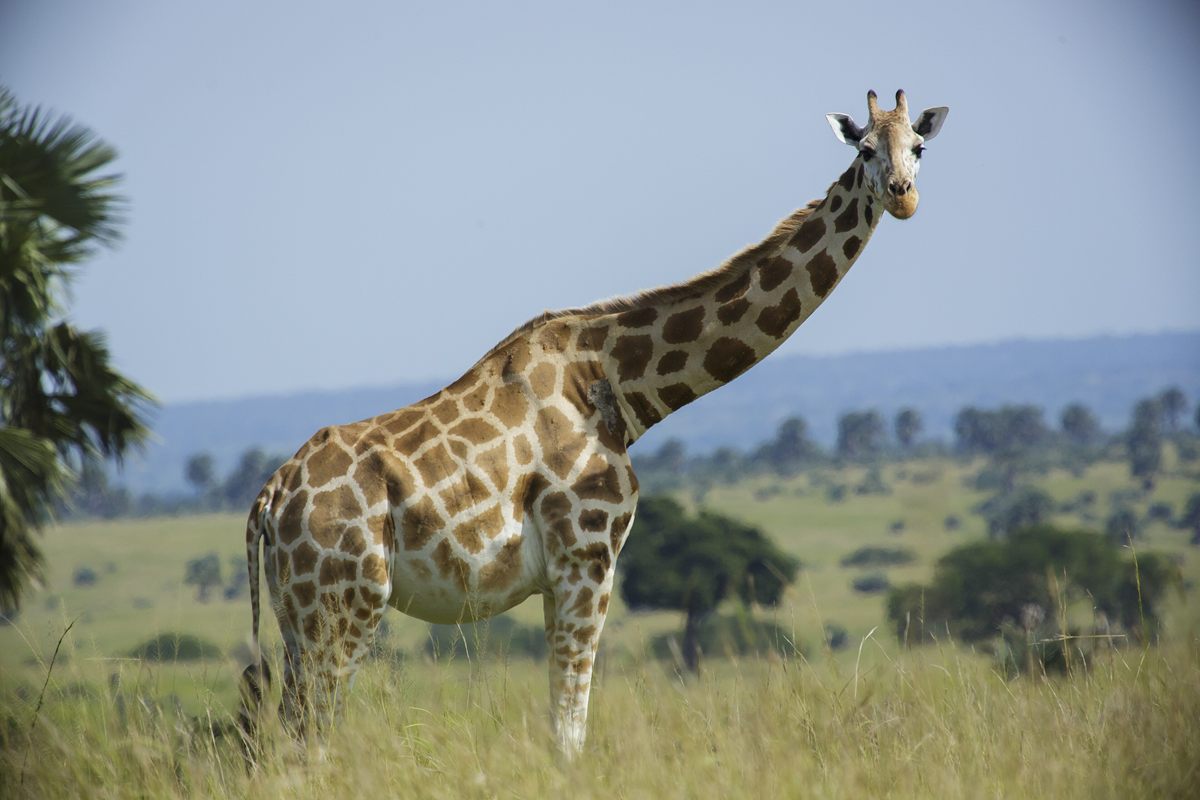
The giraffe (Giraffa camelopardalis) is the tallest living land animal, reaching about 5 to 6 meters. Genetic studies suggest several distinct giraffe species, and the group is listed as Vulnerable after population declines of roughly a third in a few decades.
The giraffe (Giraffa camelopardalis) is the tallest living land animal, reaching about 5 to 6 meters. Genetic studies suggest several distinct giraffe species, and the group is listed as Vulnerable after population declines of roughly a third in a few decades.
🧬 Field Guide Specimen: Open Giraffe in the CRV Science Field Guide to log the specimen, see its place among the Mammals lineages in the Cladogram Explorer, and test your recall in the Red List conservation game.
Neck and Circulation: How Does the Giraffe Cope With Gravity?
Giraffes have the same seven neck vertebrae as other mammals, each elongated to over 25 centimeters. A large, powerful heart and thick-walled arteries maintain a blood pressure about double that of humans so blood reaches the brain, and valves and elastic vessels protect the head when it lowers to drink.
The Recurrent Laryngeal Nerve: Evolution's Detour
The nerve that serves the larynx loops under the aorta in the chest before returning to the neck, a legacy of fish ancestry. In giraffes the detour is several meters long. It is a classic example of evolution modifying existing structures rather than designing from scratch. See Natural selection.
Status: One Species or Four?
DNA analyses indicate four giraffe lineages, northern, reticulated, Masai and southern, though the number of species is still debated. All have suffered from habitat loss, poaching and civil unrest.
Giraffe at a Glance
| Property | Value |
|---|---|
| Scientific name | Giraffa camelopardalis |
| Kingdom | Animalia |
| Phylum | Chordata |
| Class | Mammalia |
| Order | Cetartiodactyla |
| Family | Giraffidae |
| Field Guide group | Mammals: Eutheria (Placentals) |
| Diagnostic feature (Field Guide) | Extreme cervical vertebra elongation, skin-covered ossicones, prehensile purplish tongue. |
| IUCN Red List status | Vulnerable (VU), assessed 2018 |
| Height | About 5 to 6 meters |
See Also
- Natural selection — why the laryngeal nerve takes a detour
- Hippopotamus — another member of the same order