Glauconitic Greensand
Glauconitic greensand is a sand or sandstone colored by pellets of glauconite, a green iron- and potassium-bearing clay mineral of the mica family that forms on the sea floor. Greensands mark places where sediment piled up very slowly.
Glauconitic greensand is a sand or sandstone colored by pellets of glauconite, a green iron- and potassium-bearing clay mineral of the mica family that forms on the sea floor. Greensands mark places where sediment piled up very slowly.
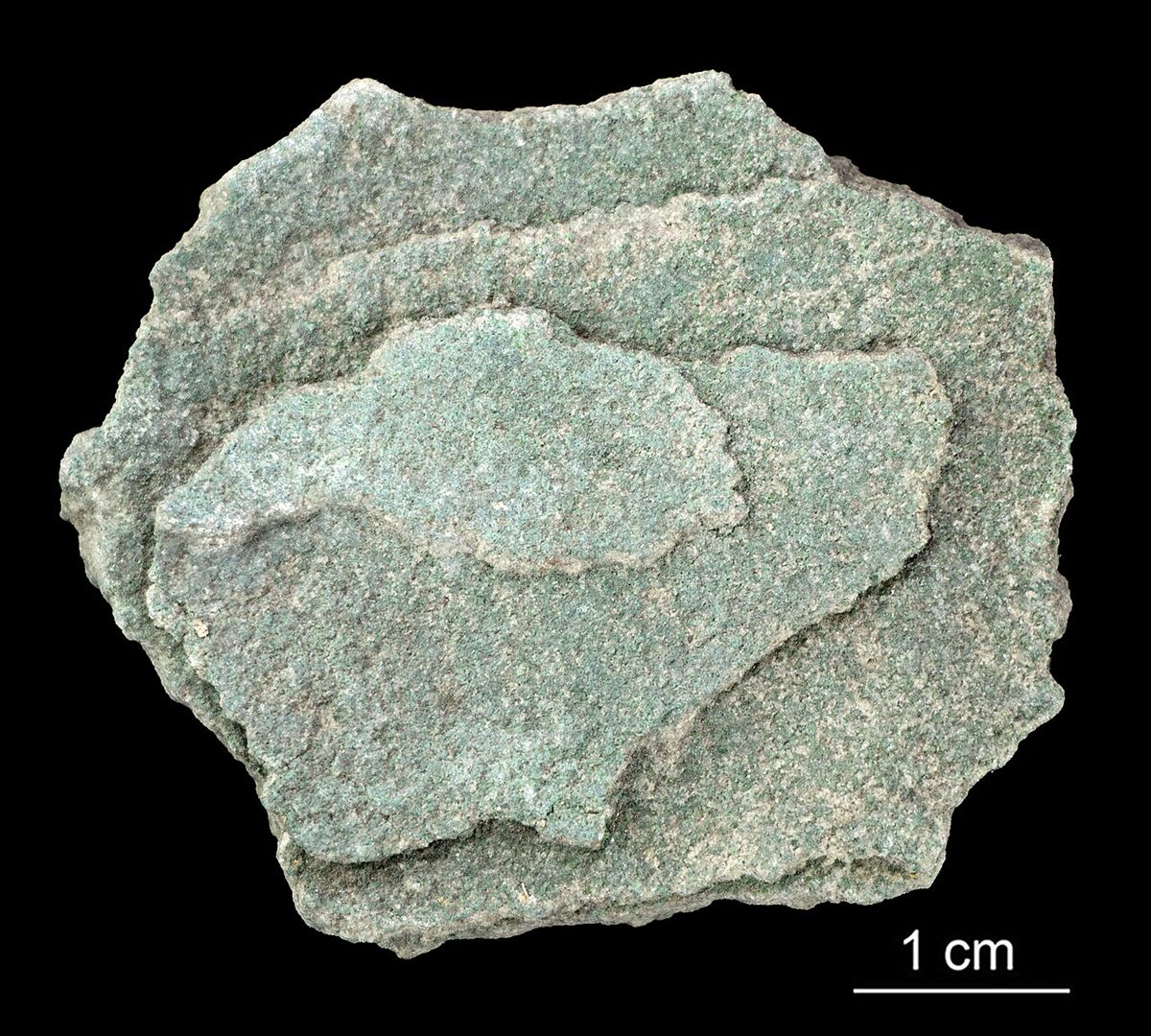
🪨 Geology Guide Specimen: Open Glauconitic Greensand in the CRV Science Rock & Mineral ID Guide to log the specimen, compare it with the other 6 subgroups of Sedimentary, and test your eye in LithoClade.
Glauconite: How Does a Mineral Form on the Sea Floor?
Glauconite forms in place, by alteration of fecal pellets, shell fragments and clay on continental shelves in mildly reducing conditions, where iron is available. The process takes thousands to hundreds of thousands of years, which is why glauconite needs low sedimentation rates.
Condensed Sections: Why Does Slow Deposition Matter?
A thin, glauconite-rich bed can represent a long time. Greensand layers often mark pauses or rises in sea level, and geologists use them as stratigraphic markers, for example in the Cretaceous Greensand formations of southern England.
Uses: What Was Greensand Used For?
Glauconite contains potassium, and greensand marl was historically spread on farmland as a mild fertilizer and soil conditioner. A manganese-coated glauconite called manganese greensand is still used in water treatment to remove dissolved iron and manganese.
Glauconitic Greensand at a Glance
| Property | Value |
|---|---|
| Type / variety | Marine Glauconite-Bearing Arenite |
| Composition | Detrital Quartz Grains + Rounded Olive-Green Authigenic Glauconite Pellets |
| Geology Guide group | Sedimentary Rocks (Clastic, Chemical & Biogenic) |
| Rock Classification | Medium Clastic (Sandstones) |
| Mohs hardness | Mohs 4–6 |
| Texture / habit | Medium-grained (0.1–1 mm) peloidal and quartzose fabric |
| Density | 2.45–2.65 g/cm³ |
| Lustre and cleavage | Distinctive olive-green speckled appearance |
| Geological setting | Slow-sedimentation outer continental shelves under mildly reducing marine waters |
| Diagnostic feature (Geology Guide) | Olive-green granular marine rock (0.1–1 mm grain size) speckled with rounded pellets of glauconite—an iron-potassium phyllosilicate that forms on outer continental shelves with slow sedimentation. |
| Key mineral | Glauconite |
| Typical setting | Slowly accumulating marine shelf |
See Also
- Quartz Arenite — a quartz-only sandstone
- Potassium — an essential element in glauconite
- Foraminifera — shelled marine organisms whose chambers glauconite often fills