Goblet Glass Sponge
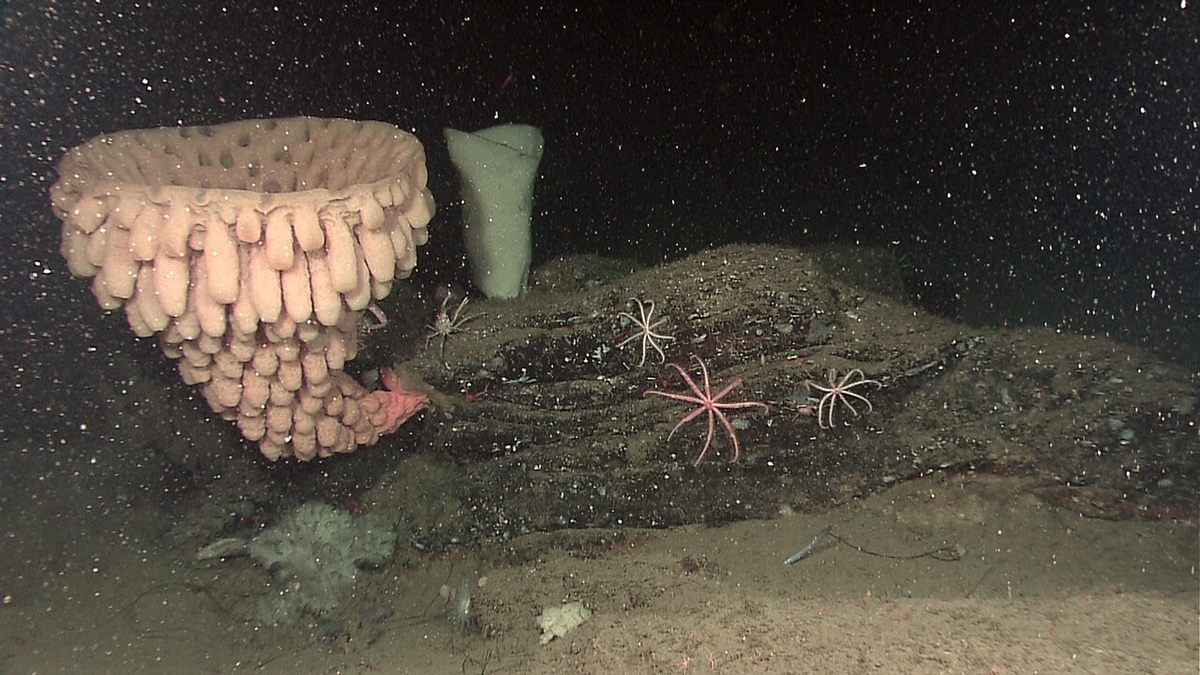
The goblet glass sponge (Heterochone calyx) is a vase-shaped glass sponge of the cold northeastern Pacific, and one of the species that build glass sponge reefs off British Columbia. Its thin walls are supported by a lattice of silica.
The goblet glass sponge (Heterochone calyx) is a vase-shaped glass sponge of the cold northeastern Pacific, and one of the species that build glass sponge reefs off British Columbia. Its thin walls are supported by a lattice of silica.
🧬 Field Guide Specimen: Open Goblet Glass Sponge in the CRV Science Field Guide to log the specimen, see its place among the Metazoa lineages in the Cladogram Explorer, and test your recall in the Red List conservation game.
A Glass Goblet: Syncytial Tissue
Glass sponges differ from other sponges in having a tissue made of a few giant, multinucleate cells that share cytoplasm. Signals travel quickly through this network, and the sponge can stop its pumping when sediment is stirred up.
Building Reefs With Other Species
Together with the cloud sponge and others, goblet sponges form reefs on the seafloor, and the reefs are especially well developed in fjords such as Howe Sound, near Vancouver. See Cloud Sponge.
A Living Water Filter
Each sponge draws water through flagellated chambers, removing bacteria and tiny particles, and may also take up dissolved silica from seawater to grow its skeleton. Warming and low-oxygen conditions could limit its range.
Goblet Glass Sponge at a Glance
| Property | Value |
|---|---|
| Scientific name | Heterochone calyx |
| Kingdom | Animalia |
| Phylum | Porifera |
| Class | Hexactinellida |
| Order | Sceptrulophora |
| Family | Aphrocallistidae |
| Field Guide group | Porifera: Sponges (Basal Metazoans) |
| Diagnostic feature (Field Guide) | Goblet- or chalice-shaped sponge with thin walls and finger-like lobes, built from a rigid lattice of fused six-rayed silica spicules; a North Pacific reef-builder. |
| Class | Hexactinellida |
| Skeleton | Silica |