Greater Bilby
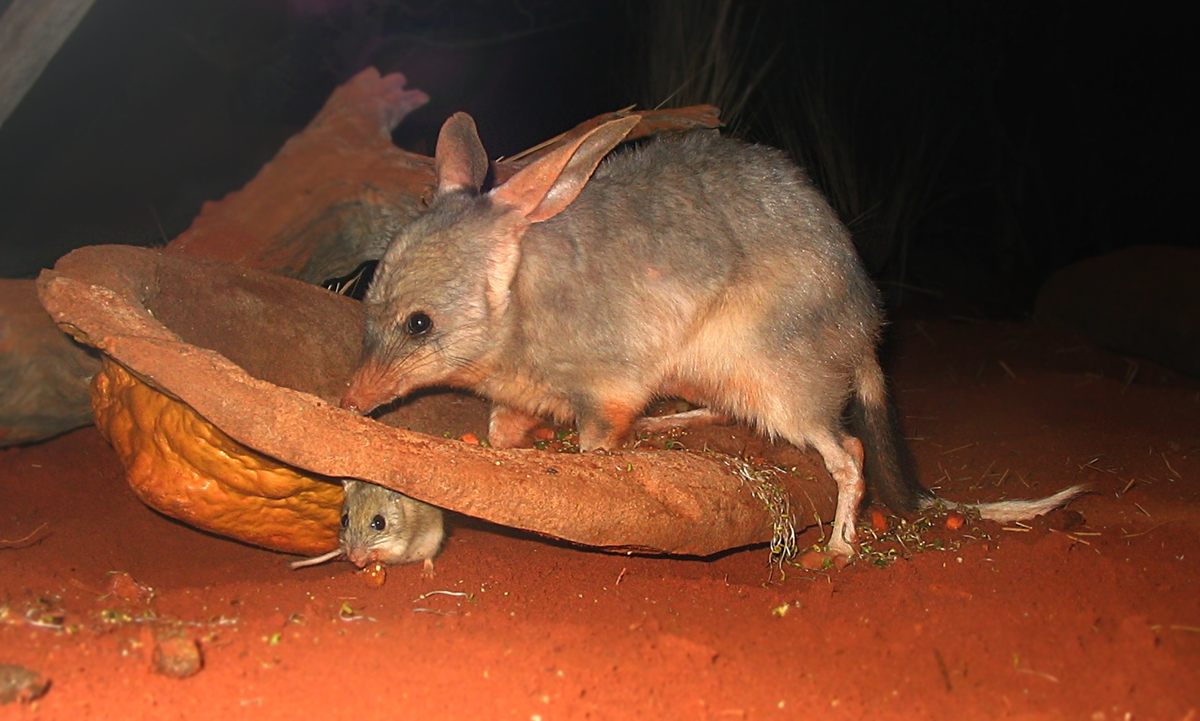
The greater bilby (Macrotis lagotis) is a burrowing, nocturnal marsupial of the Australian deserts, easy to recognize by its long ears and pointed snout. It is listed as Vulnerable, having disappeared from most of its former range.
The greater bilby (Macrotis lagotis) is a burrowing, nocturnal marsupial of the Australian deserts, easy to recognize by its long ears and pointed snout. It is listed as Vulnerable, having disappeared from most of its former range.
🧬 Field Guide Specimen: Open Greater Bilby in the CRV Science Field Guide to log the specimen, see its place among the Mammals lineages in the Cladogram Explorer, and test your recall in the Red List conservation game.
A Desert Engineer
Bilbies dig spiral burrows up to a couple of meters deep, where they shelter from heat during the day. Their digging aerates soil, buries seed and creates microhabitats used by other species. They eat insects, seeds, bulbs and fungi.
Introduced Predators and Fire
Foxes and feral cats, introduced by Europeans, are the main cause of the decline, together with rabbits that compete for burrows and changes in fire regimes. Fenced reserves free of predators now shelter growing populations.
Reproduction and Culture
The pouch opens backward, and gestation lasts only about two weeks. In Australia bilbies are promoted as a native alternative to the Easter bunny.
Greater Bilby at a Glance
| Property | Value |
|---|---|
| Scientific name | Macrotis lagotis |
| Kingdom | Animalia |
| Phylum | Chordata |
| Class | Mammalia |
| Order | Peramelemorphia |
| Family | Thylacomyidae |
| Field Guide group | Mammals: Marsupialia (Metatherians) |
| Diagnostic feature (Field Guide) | Long rabbit-like ears, pointed snout, burrowing forelimbs, backward-opening pouch. |
| IUCN Red List status | Vulnerable (VU), assessed 2016 |
| Order | Peramelemorphia |