European Rabbit
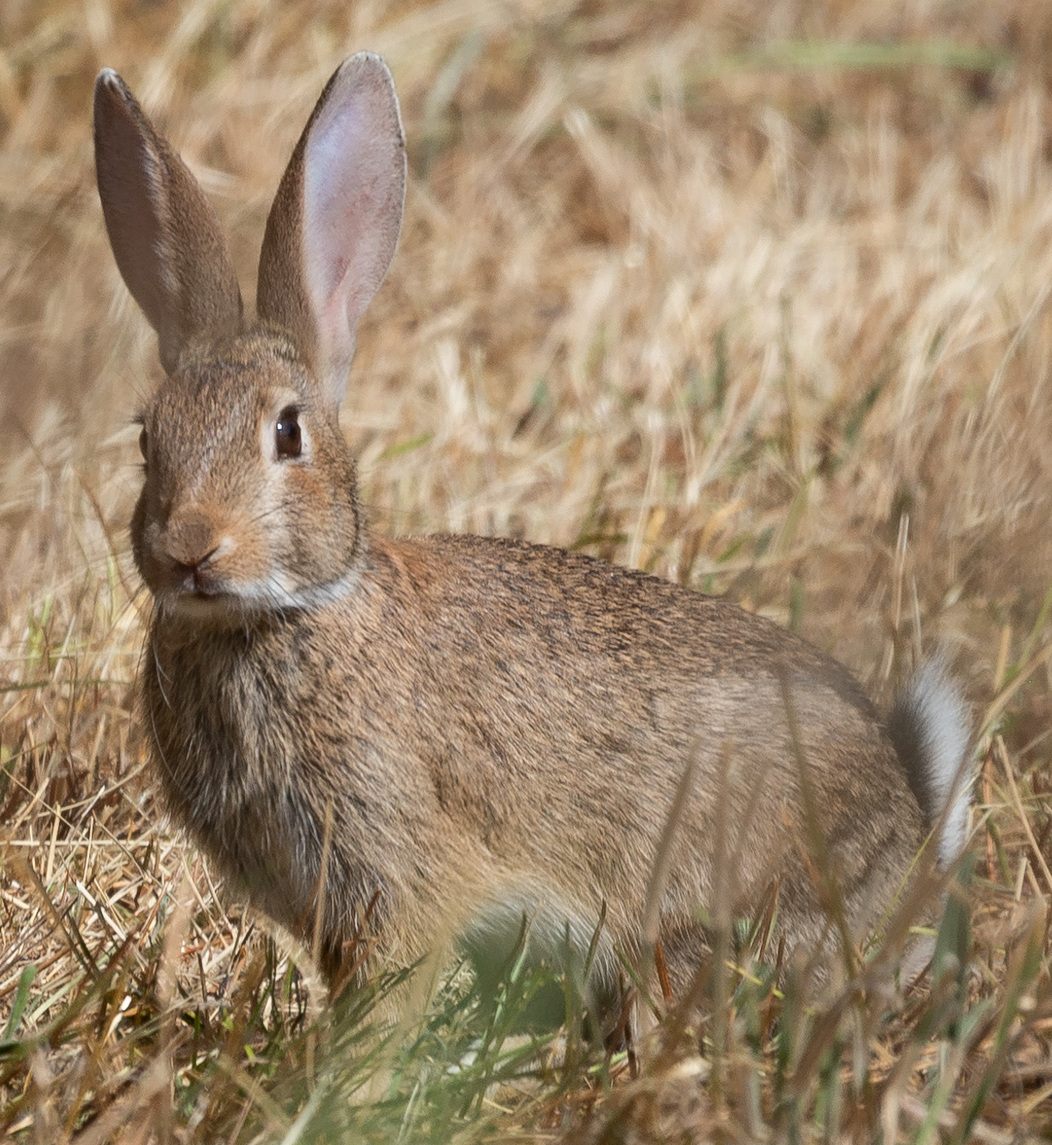
The European rabbit (Oryctolagus cuniculus) is a burrowing lagomorph native to the Iberian Peninsula and the source of all domestic rabbits.
The European rabbit (Oryctolagus cuniculus) is a burrowing lagomorph native to the Iberian Peninsula and the source of all domestic rabbits. In its native range it is listed as Endangered because of disease, while introduced populations are among the most damaging invasive mammals in Australia.
🧬 Field Guide Specimen: Open European Rabbit in the CRV Science Field Guide to log the specimen, see its place among the Mammals lineages in the Cladogram Explorer, and test your recall in the Red List conservation game.
Not a Rodent: What Sets Lagomorphs Apart?
Rabbits have two pairs of upper incisors, a large "peg tooth" behind the main pair, whereas rodents have one. They digest plant food twice, producing soft cecotropes that they re-eat to extract more nutrients. Lagomorphs and rodents together form the clade Glires.
An Invasive Success: Australia's Rabbit Plague
Rabbits released in Victoria in 1859 multiplied across the continent, devastating native vegetation and marsupials. Control efforts included fences and the deliberate release of myxoma virus in 1950 and rabbit hemorrhagic disease virus in 1996, each of which initially cut numbers sharply before resistance evolved.
Decline at Home
In Iberia, myxomatosis, rabbit hemorrhagic disease and habitat change have reduced wild rabbits, which in turn threatens predators such as the Iberian lynx and Spanish imperial eagle that depend on them.
European Rabbit at a Glance
| Property | Value |
|---|---|
| Scientific name | Oryctolagus cuniculus |
| Kingdom | Animalia |
| Phylum | Chordata |
| Class | Mammalia |
| Superorder | Euarchontoglires |
| Order | Lagomorpha |
| Field Guide group | Mammals: Eutheria (Placentals) |
| Diagnostic feature (Field Guide) | Two pairs of upper incisors (second pair peg-like behind front pair), fenestrated maxillae bones. |
| IUCN Red List status | Endangered (EN), assessed 2018 |
| Introduced range | Australia, New Zealand, South America and elsewhere |