Green Anaconda
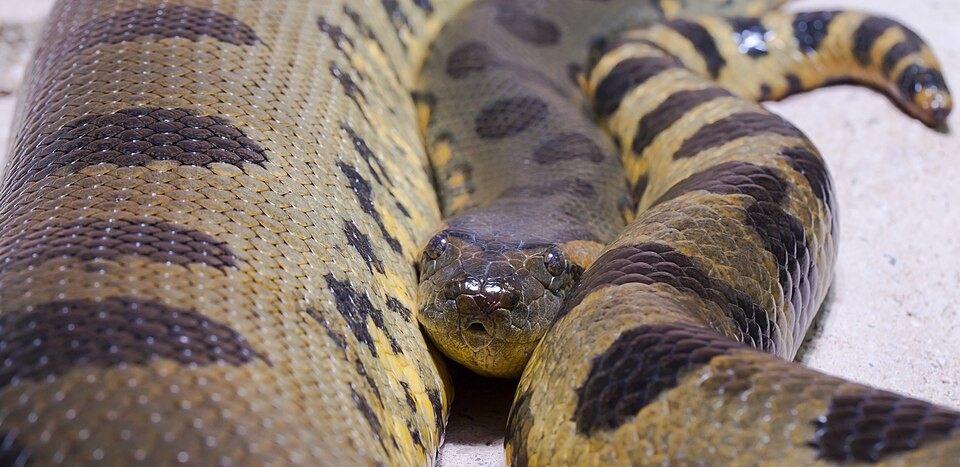
The green anaconda (Eunectes murinus) is the heaviest snake in the world, with big females weighing over 100 kilograms. It lives in the swamps and slow rivers of tropical South America.
The green anaconda (Eunectes murinus) is the heaviest snake in the world, with big females weighing over 100 kilograms. It lives in the swamps and slow rivers of tropical South America.
🧬 Field Guide Specimen: Open Green Anaconda in the CRV Science Field Guide to log the specimen, see its place among the Reptilia lineages in the Cladogram Explorer, and test your recall in the Red List conservation game.
Ambush From the Water
The eyes and nostrils sit on top of the head, so the snake can lie almost submerged. It seizes prey such as capybaras, caimans and birds and suffocates them by constriction before swallowing them whole.
Size Differences Between Sexes
Females are far larger than males, an uncommon dimorphism in vertebrates, probably because large size lets them produce many offspring. Males gather around a female in a "breeding ball". The female gives birth to live young, often several dozen.
Slow Digestion
After a large meal, the snake's organs enlarge dramatically to digest, and it may not eat again for weeks. See Capybara for typical prey.
Green Anaconda at a Glance
| Property | Value |
|---|---|
| Scientific name | Eunectes murinus |
| Kingdom | Animalia |
| Phylum | Chordata |
| Class | Reptilia |
| Order | Squamata |
| Family | Boidae |
| Field Guide group | Reptilia (Reptiles) |
| Diagnostic feature (Field Guide) | Massive limbless olive-green body with dark oval spots, and high-set eyes and nostrils for ambushing prey from the water. |
| IUCN Red List status | Least Concern (LC), assessed 2021 |
| Reproduction | Live birth |
| Prey | Capybaras, caimans, birds and fish |