Indonesian Coelacanth
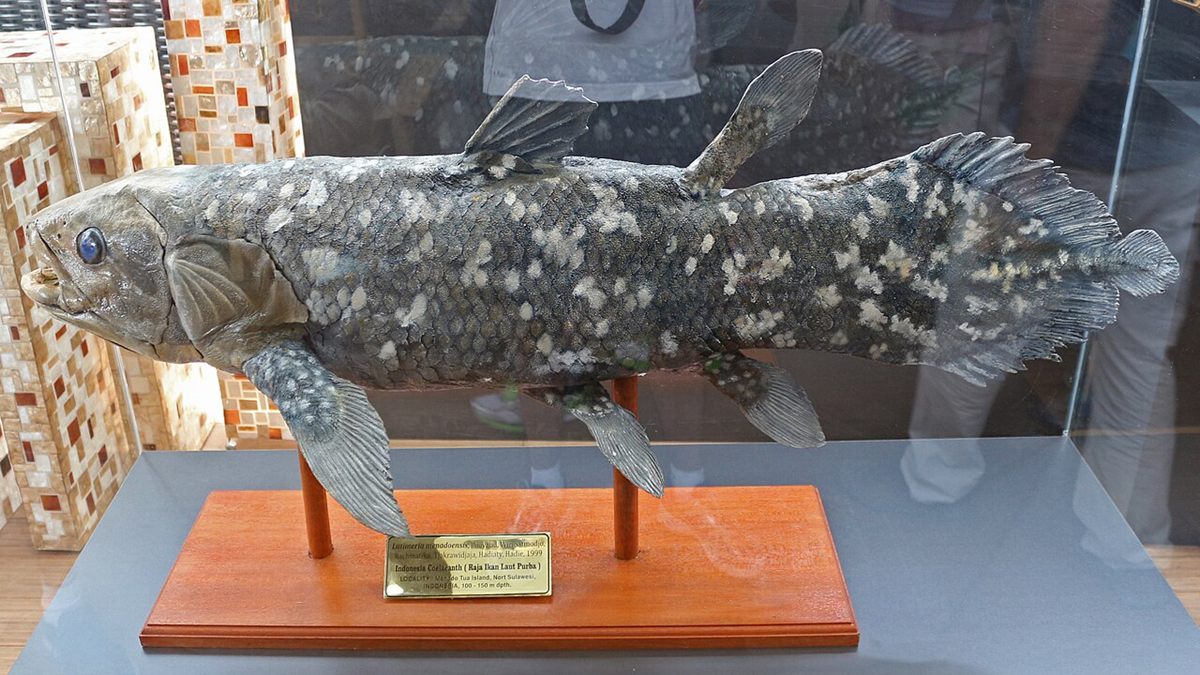
The Indonesian coelacanth (Latimeria menadoensis) is a second living species of coelacanth, discovered in 1997 near Manado on the island of Sulawesi, thousands of kilometers from the Comoros population.
The Indonesian coelacanth (Latimeria menadoensis) is a second living species of coelacanth, discovered in 1997 near Manado on the island of Sulawesi, thousands of kilometers from the Comoros population.
🧬 Field Guide Specimen: Open Indonesian Coelacanth in the CRV Science Field Guide to log the specimen, see its place among the Vertebrates lineages in the Cladogram Explorer, and test your recall in the Red List conservation game.
Found in a Fish Market
Marine biologist Mark Erdmann and his wife saw an unusual brown fish being carried through a market in Manado in 1997. Realizing it was a coelacanth, he found more, and a second fish was caught the next year. Genetic tests showed it to be a separate species.
Brown, Not Blue
Indonesian coelacanths are brown with gold flecks, in contrast to the bluish African form. Both live in deep caves and along steep reef slopes at about 150 to 200 meters.
A Living Fossil in Two Oceans
The two species diverged millions of years ago. See Coelacanth.
Indonesian Coelacanth at a Glance
| Property | Value |
|---|---|
| Scientific name | Latimeria menadoensis |
| Kingdom | Animalia |
| Phylum | Chordata |
| Class | Sarcopterygii |
| Subclass | Actinistia |
| Order | Coelacanthiformes |
| Family | Latimeriidae |
| Field Guide group | Marine and Freshwater Fish |
| Diagnostic feature (Field Guide) | Brown fish flecked with gold, with fleshy lobed fins that move in a diagonal walking pattern and a three-lobed tail; first found by scientists at an Indonesian fish market in 1997. |
| IUCN Red List status | Vulnerable (VU), assessed 2008 |
| Discovered | 1997, Sulawesi |
| Color | Brown |