Kakapo
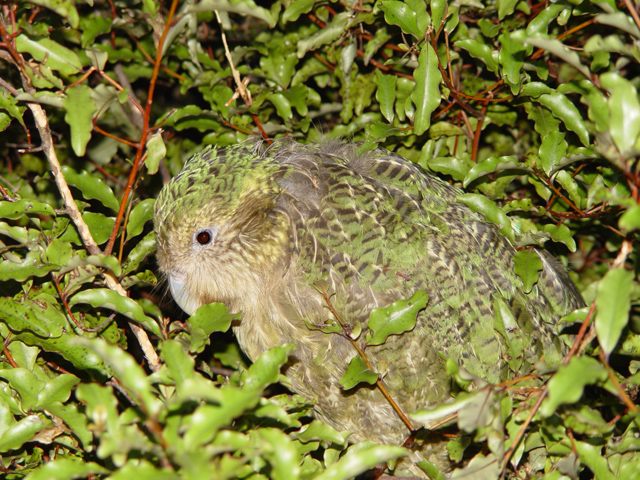
The kakapo (Strigops habroptilus) is a large, flightless, nocturnal parrot of New Zealand and the heaviest parrot in the world. Critically endangered, it numbers only around 250 birds, all intensively managed.
The kakapo (Strigops habroptilus) is a large, flightless, nocturnal parrot of New Zealand and the heaviest parrot in the world. Critically endangered, it numbers only around 250 birds, all intensively managed.
🧬 Field Guide Specimen: Open Kakapo in the CRV Science Field Guide to log the specimen, see its place among the Reptilia lineages in the Cladogram Explorer, and test your recall in the Red List conservation game.
A Parrot That Booms
Males gather in a lek, dig bowls in the ground and make deep booming calls that carry for kilometers at night to attract females. The booming can go on for hours, and females choose a mate and raise the chicks alone.
Boom and Bust Breeding
Kakapo breed only in years when the rimu trees produce a mass of fruit (a mast year), which happens every few years. In those years, the female needs plenty of food to raise chicks.
The Last Birds
Introduced predators nearly wiped out the species. Every living kakapo is on a predator-free island and is tracked and fed by conservation staff. The population has grown from about 50 in the 1990s, but low genetic diversity and the fertility of eggs remain challenges. See Dodo.
Kakapo at a Glance
| Property | Value |
|---|---|
| Scientific name | Strigops habroptilus |
| Kingdom | Animalia |
| Phylum | Chordata |
| Class | Aves |
| Order | Psittaciformes |
| Family | Strigopidae |
| Field Guide group | Reptilia: Aves (Birds) |
| Diagnostic feature (Field Guide) | Heaviest member of its order: flightless, nocturnal, and moss-green with an owl-like facial disc, a hooked beak, and two-forward/two-back toes; critically endangered. |
| IUCN Red List status | Critically Endangered (CR), assessed 2018 |
| Population | About 250 birds |
See Also
- Kea — a related alpine parrot
- North Island Brown Kiwi — another flightless New Zealand bird