King Penguin
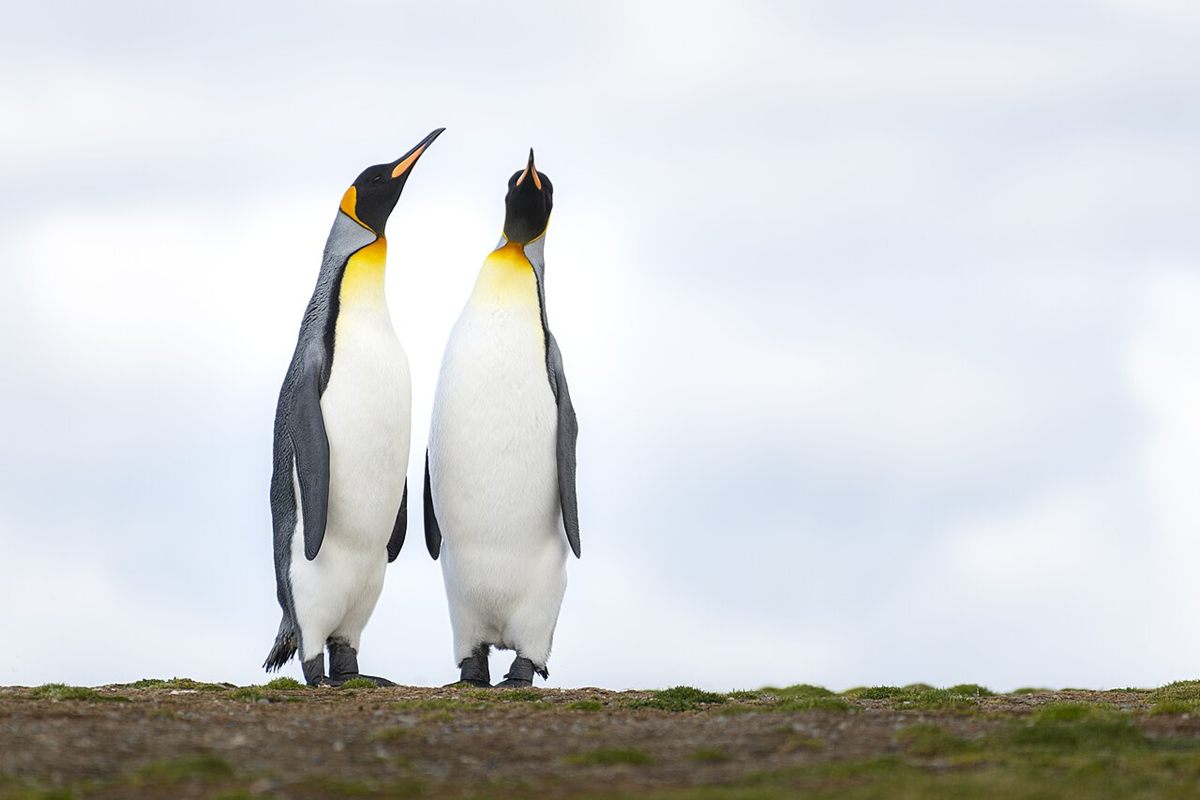
The king penguin (Aptenodytes patagonicus) is the second-largest penguin, after the emperor, and breeds in huge colonies on sub-Antarctic islands. Its orange ear patches and neck give it a regal look.
The king penguin (Aptenodytes patagonicus) is the second-largest penguin, after the emperor, and breeds in huge colonies on sub-Antarctic islands. Its orange ear patches and neck give it a regal look.
🧬 Field Guide Specimen: Open King Penguin in the CRV Science Field Guide to log the specimen, see its place among the Reptilia lineages in the Cladogram Explorer, and test your recall in the Red List conservation game.
A Very Long Breeding Cycle
King penguins build no nest. A single egg is balanced on the parent's feet and covered by a fold of skin for about two months, with parents taking turns. Chicks are fed through the winter and fledge after about a year, so a pair raises at most two chicks in three years.
Deep Divers
They hunt lanternfish and squid at depths of over 300 meters, diving for several minutes at a time. See Emperor Penguin.
Growing Colonies
The species has recovered from hunting for oil in the 1800s, and the huge colonies on Crozet and South Georgia number hundreds of thousands. Warming of the ocean may shift the fish on which they depend.
King Penguin at a Glance
| Property | Value |
|---|---|
| Scientific name | Aptenodytes patagonicus |
| Kingdom | Animalia |
| Phylum | Chordata |
| Class | Aves |
| Order | Sphenisciformes |
| Family | Spheniscidae |
| Field Guide group | Reptilia: Aves (Birds) |
| Diagnostic feature (Field Guide) | Tall upright flightless seabird with bright orange ear patches and a dagger-like bill; parents incubate a single egg on their feet under a fold of belly skin. |
| IUCN Red List status | Least Concern (LC), assessed 2020 |
| Family | Spheniscidae |
| Egg incubation | On the parent's feet |
See Also
- Emperor Penguin — the largest penguin
- Gentoo Penguin — a sub-Antarctic penguin