Malayan Filarial Worm
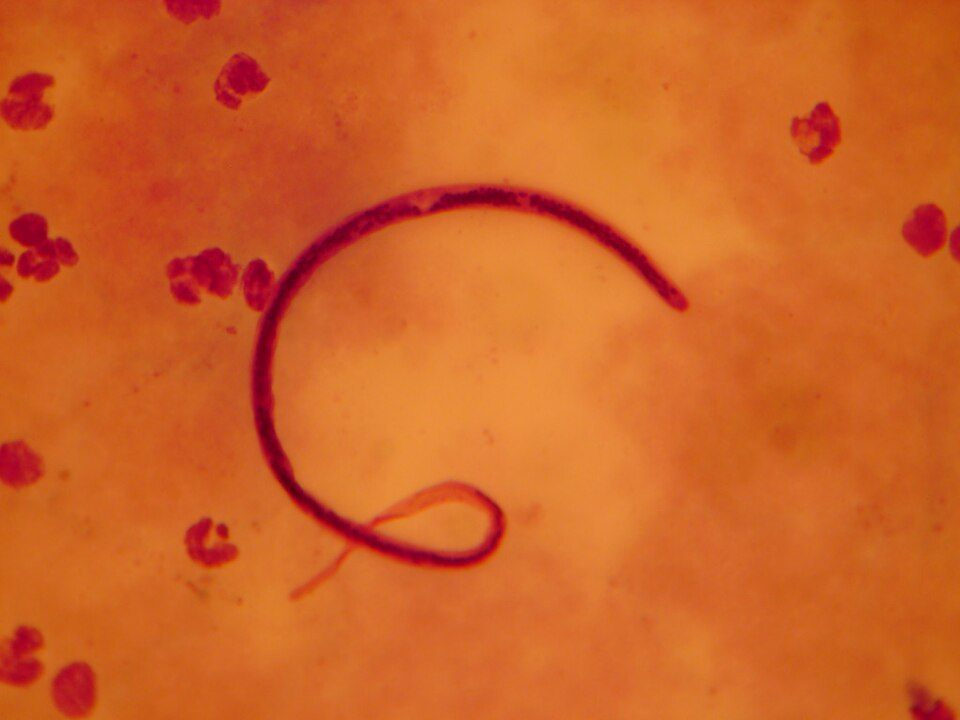
The Malayan filarial worm (Brugia malayi) causes lymphatic filariasis in South and Southeast Asia. It is transmitted by mosquitoes and is also a standard laboratory model for studying filarial parasites.
The Malayan filarial worm (Brugia malayi) causes lymphatic filariasis in South and Southeast Asia. It is transmitted by mosquitoes and is also a standard laboratory model for studying filarial parasites.
🧬 Field Guide Specimen: Open Malayan Filarial Worm in the CRV Science Field Guide to log the specimen, see its place among the Ecdysozoa lineages in the Cladogram Explorer, and test your recall in the Red List conservation game.
A Second Cause of Elephantiasis
Like Bancroft's filarial worm, it lodges in lymphatic vessels. Infections tend to cause swelling below the knee rather than genital swelling. Mosquitoes including Mansonia transmit it, and it also occurs in animals such as cats and monkeys.
A Genome and a Model
The genome was published in 2007 and revealed the worm's dependence on the bacterium Wolbachia for key nutrients and reproduction. Brugia can be maintained in laboratory animals, which makes it practical for drug testing. See Wolbachia.
Elimination Campaigns
National programs treat entire populations at risk to interrupt transmission. See Bancroft's Filarial Worm.
Malayan Filarial Worm at a Glance
| Property | Value |
|---|---|
| Scientific name | Brugia malayi |
| Kingdom | Animalia |
| Phylum | Nematoda |
| Class | Chromadorea |
| Order | Spirurida |
| Family | Onchocercidae |
| Field Guide group | Ecdysozoa: Nematoda (Roundworms & Parasites) |
| Diagnostic feature (Field Guide) | Slender lymph-dwelling roundworm whose sheathed larvae are picked up by mosquitoes; first parasitic roundworm to have its genome sequenced. |
| Disease | Lymphatic filariasis |
| Genome published | 2007 |
See Also
- Bancroft's Filarial Worm — a related filarial worm
- Wolbachia — a bacterial partner