Marine Iguana
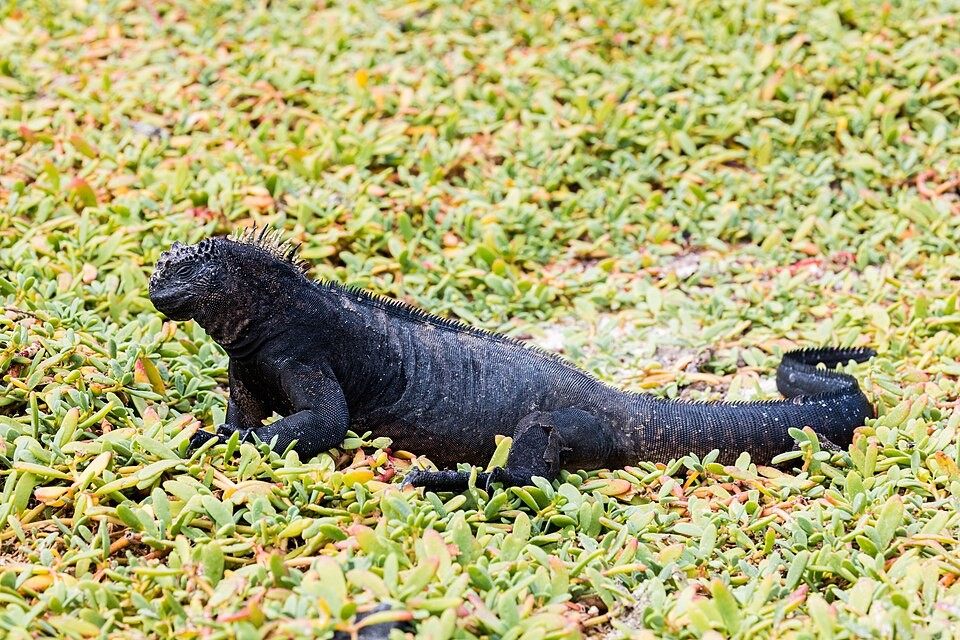
The marine iguana (Amblyrhynchus cristatus) is the only lizard that feeds in the sea. It lives only on the Galápagos Islands, where it grazes algae on rocks along the shore. It is listed as Vulnerable.
The marine iguana (Amblyrhynchus cristatus) is the only lizard that feeds in the sea. It lives only on the Galápagos Islands, where it grazes algae on rocks along the shore. It is listed as Vulnerable.
🧬 Field Guide Specimen: Open Marine Iguana in the CRV Science Field Guide to log the specimen, see its place among the Reptilia lineages in the Cladogram Explorer, and test your recall in the Red List conservation game.
A Lizard That Dives
Marine iguanas dive to feed on seaweed and then bask on the black lava to warm up. They sneeze out excess salt from special glands in the nose, which leaves white crusts on their heads. Darwin visited the islands in 1835 and thought them ugly.
Shrinking in El Niño Years
When El Niño warms the water and kills the algae, the iguanas starve. Researchers found that they can shrink their bodies by up to a fifth, including the bones, to reduce their needs, and regrow when food returns. See Oceanic Niño Index.
Island by Island
Different islands have different subspecies with different sizes and colors, an example of evolution on islands. Oil spills, introduced predators and climate swings threaten them.
Marine Iguana at a Glance
| Property | Value |
|---|---|
| Scientific name | Amblyrhynchus cristatus |
| Kingdom | Animalia |
| Phylum | Chordata |
| Class | Reptilia |
| Order | Squamata |
| Family | Iguanidae |
| Field Guide group | Reptilia (Reptiles) |
| Diagnostic feature (Field Guide) | Only extant marine lizard, laterally flattened swimming tail, blunt snout for scraping intertidal algae, cranial salt-excretion glands. |
| IUCN Red List status | Vulnerable (VU), assessed 2004 |
| Range | Galápagos Islands (endemic) |