Green Iguana
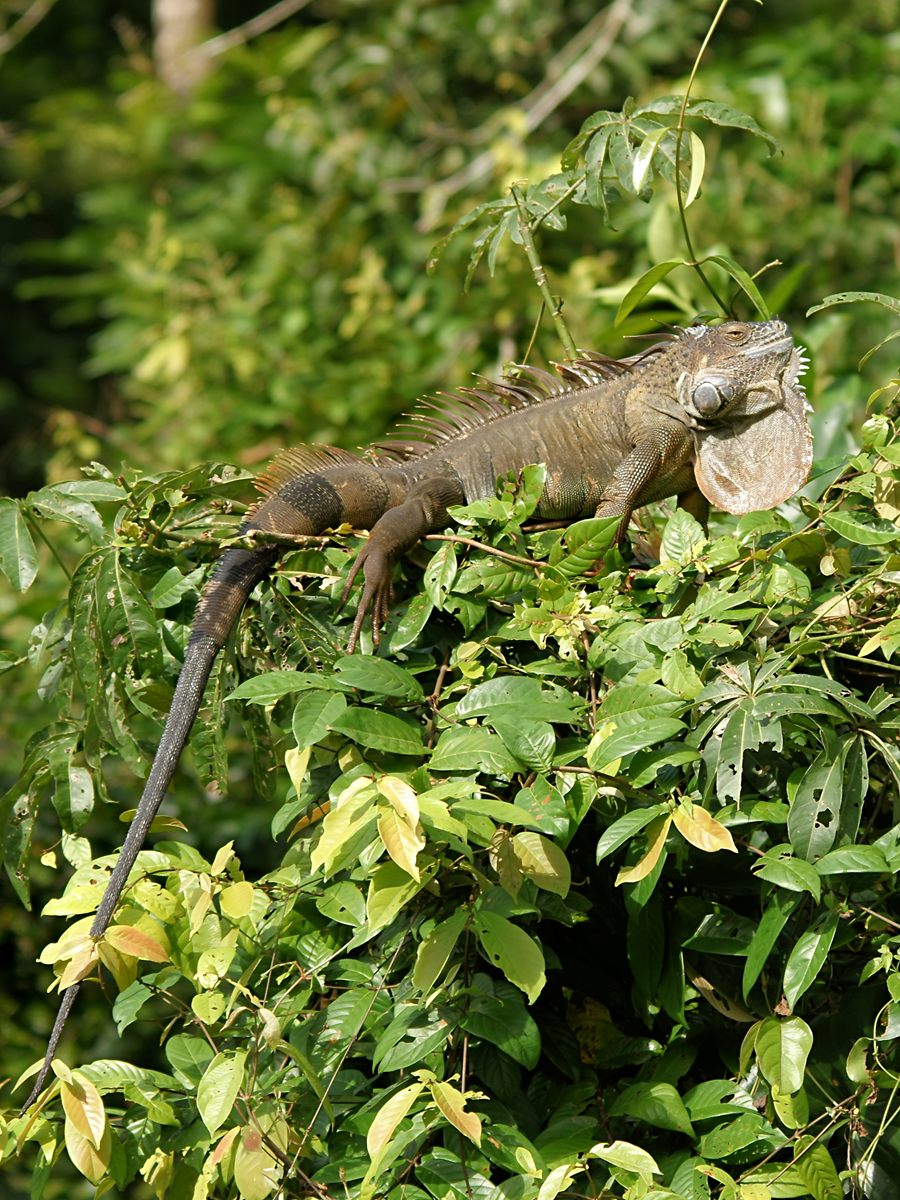
The green iguana (Iguana iguana) is a large, tree-dwelling lizard of Central and South America. It is a vegetarian, grows to about two meters including the tail, and has become an invasive species in Florida and parts of the Caribbean.
The green iguana (Iguana iguana) is a large, tree-dwelling lizard of Central and South America. It is a vegetarian, grows to about two meters including the tail, and has become an invasive species in Florida and parts of the Caribbean.
🧬 Field Guide Specimen: Open Green Iguana in the CRV Science Field Guide to log the specimen, see its place among the Reptilia lineages in the Cladogram Explorer, and test your recall in the Red List conservation game.
A Herbivorous Lizard: How Does It Digest Leaves?
Most lizards eat animals, but adult iguanas feed on leaves, flowers and fruit, digesting them with microbes in a fermenting hindgut. Young iguanas eat more insects. A warm body is needed for the digestive process, so iguanas bask in the sun for much of the day.
Cold Stun
In Florida, cold snaps can paralyze iguanas, so that they fall from trees but often recover as temperatures rise. Winter cold events are a natural limit to their northward spread.
A Threat to a Native Relative
In the Lesser Antilles, introduced green iguanas hybridize with the native Lesser Antillean iguana, a critically endangered species, threatening it with genetic swamping.
Green Iguana at a Glance
| Property | Value |
|---|---|
| Scientific name | Iguana iguana |
| Kingdom | Animalia |
| Phylum | Chordata |
| Class | Reptilia |
| Order | Squamata |
| Family | Iguanidae |
| Field Guide group | Reptilia (Reptiles) |
| Diagnostic feature (Field Guide) | Standard model for squamate herbivory, caudal autotomy, and hindgut fermentation. |
| IUCN Red List status | Least Concern (LC), assessed 2022 |
| Diet | Leaves, flowers and fruit |
| Maximum length | About 2 meters |
See Also
- Tuatara — another reptile with a parietal eye
- Biodiversity — hybridization with native species