Tuatara
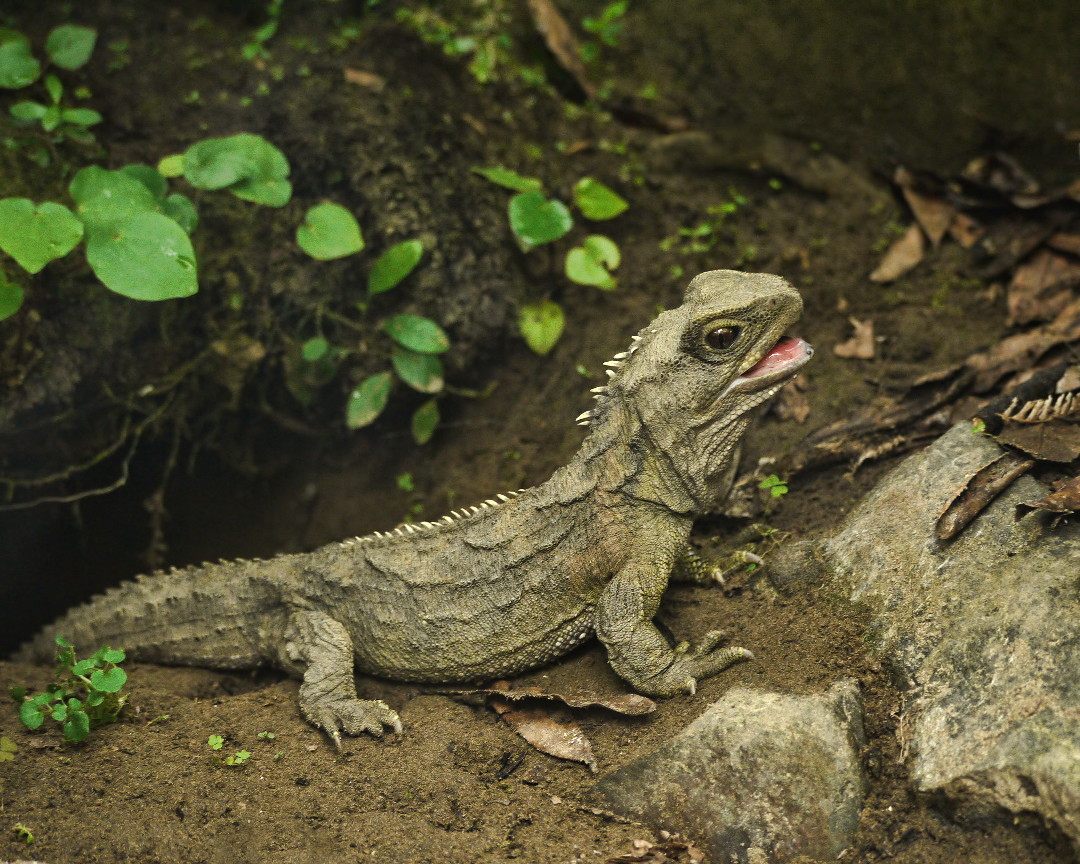
The tuatara (Sphenodon punctatus) is a lizard-like reptile found only on offshore islands of New Zealand. It is the sole survivor of Rhynchocephalia, an order that flourished with the dinosaurs, and is not a lizard at all.
The tuatara (Sphenodon punctatus) is a lizard-like reptile found only on offshore islands of New Zealand. It is the sole survivor of Rhynchocephalia, an order that flourished with the dinosaurs, and is not a lizard at all.
🧬 Field Guide Specimen: Open Tuatara in the CRV Science Field Guide to log the specimen, see its place among the Evolutionary lineages in the Cladogram Explorer, and test your recall in the Red List conservation game.
Not a Lizard: What Sets It Apart?
Tuatara have teeth fused to the jawbone rather than set in sockets, and their upper jaw closes over the lower in a slicing motion. They have a distinctive skull with two openings behind the eye. Their genome, sequenced in 2020, is large and shows several unusual features.
A Third Eye
On top of the head is a parietal eye with a lens and retina, which is visible in hatchlings and covered by scales in adults. It senses light and may help regulate daily and seasonal cycles.
Slow and Cold
Tuatara are active at temperatures as low as about 6 °C, grow slowly and may live for a century. Eggs take more than a year to hatch, and incubation temperature decides sex. Rats nearly wiped them out on the main islands, and island eradication of rats and reintroductions have restored populations.
Tuatara at a Glance
| Property | Value |
|---|---|
| Scientific name | Sphenodon punctatus |
| Kingdom | Animalia |
| Phylum | Chordata |
| Class | Reptilia |
| Order | Rhynchocephalia |
| Field Guide group | Evolutionary Oddities (Unique & Disputed Lineages) |
| Diagnostic feature (Field Guide) | Sole survivor of Rhynchocephalia; retains a prominent parietal 'third' eye. |
| IUCN Red List status | Least Concern (LC), assessed 2019 |
| Order | Rhynchocephalia |
| Parietal eye | Present |
See Also
- Evolution — relict lineages
- Green Iguana — a lizard with a parietal eye