Naked Mole-rat
The naked mole-rat (Heterocephalus glaber) is a hairless, burrowing rodent of East Africa that lives in colonies ruled by a single breeding queen.
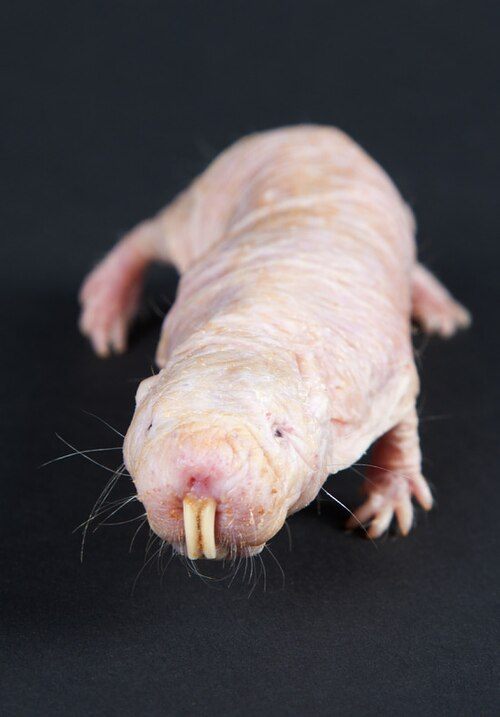
The naked mole-rat (Heterocephalus glaber) is a hairless, burrowing rodent of East Africa that lives in colonies ruled by a single breeding queen. It is famous for living more than 30 years, much longer than other rodents of its size, and for its resistance to cancer.
🧬 Field Guide Specimen: Open Naked Mole-rat in the CRV Science Field Guide to log the specimen, see its place among the Mammals lineages in the Cladogram Explorer, and test your recall in the Red List conservation game.
A Eusocial Mammal
Like bees and ants, naked mole-rats have a caste system, with a queen, a few breeding males and many sterile workers and soldiers. Colonies live in tunnel networks and dig for tubers. It is one of only two eusocial mammals known.
Long Life, Little Cancer
Naked mole-rats show little increase in death rates with age and rarely develop cancer. One factor is a very high-molecular-weight form of hyaluronan, a sugar polymer in the tissues, which prevents cells from crowding. See Cancer.
Surviving Without Oxygen
The animals tolerate low oxygen in crowded burrows, and when deprived of oxygen they switch to using fructose for energy. They also lack the pain response to acid and capsaicin on the skin.
Naked Mole-rat at a Glance
| Property | Value |
|---|---|
| Scientific name | Heterocephalus glaber |
| Kingdom | Animalia |
| Phylum | Chordata |
| Class | Mammalia |
| Order | Rodentia |
| Family | Heterocephalidae |
| Field Guide group | Mammals: Eutheria (Placentals) |
| Diagnostic feature (Field Guide) | Wrinkled hairless pink skin, huge protruding incisors outside lips, eusocial colony structure with a single fertile queen. |
| IUCN Red List status | Least Concern (LC) |
| Lifespan | More than 30 years |
| Social system | Eusocial colonies with a queen |
See Also
- Cancer — cancer resistance
- Western Honeybee — another eusocial animal