Western Honeybee
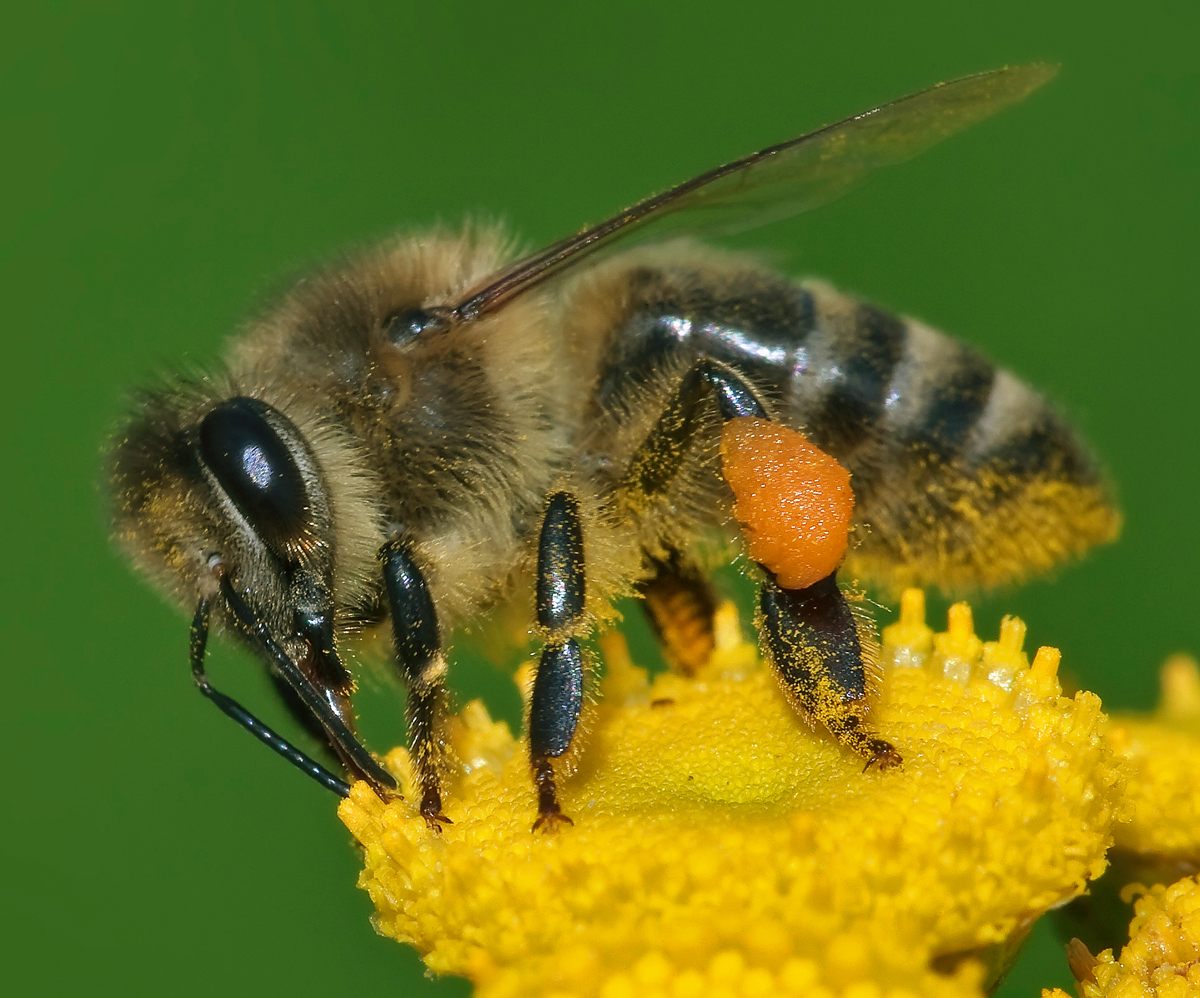
The western honeybee (Apis mellifera) is the most widely managed pollinator in the world, a eusocial insect native to Europe, Africa and western Asia. Bees are not a separate branch from wasps: they are wasps that switched to a diet of pollen and nectar.
The western honeybee (Apis mellifera) is the most widely managed pollinator in the world, a eusocial insect native to Europe, Africa and western Asia. Bees are not a separate branch from wasps: they are wasps that switched to a diet of pollen and nectar.
🧬 Field Guide Specimen: Open Western Honeybee in the CRV Science Field Guide to log the specimen, see its place among the Ecdysozoa lineages in the Cladogram Explorer, and test your recall in the Red List conservation game.
Colony Life: Queens, Workers and Drones
A colony of tens of thousands of workers is headed by a single queen who may lay well over a thousand eggs a day. Sex is determined by haplodiploidy: fertilized eggs become diploid females, while unfertilized eggs become haploid males (drones). This genetic arrangement makes sisters more closely related to each other than to their own offspring, a classic explanation for the evolution of worker sterility.
The Waggle Dance
Karl von Frisch showed that a forager returning to the hive communicates the direction and distance of a food source by a figure-eight "waggle" run, using the angle to vertical to encode the angle to the sun. He shared the 1973 Nobel Prize in Physiology or Medicine for this and related work.
Pressures on Pollinators
Managed colonies face the parasitic mite Varroa destructor and the viruses it spreads, pesticide exposure, poor nutrition and habitat loss, which together contribute to heavy winter losses in many regions. Honeybees pollinate many crops, though wild bees contribute substantially too.
Western Honeybee at a Glance
| Property | Value |
|---|---|
| Scientific name | Apis mellifera |
| Kingdom | Animalia |
| Phylum | Arthropoda |
| Class | Insecta |
| Order | Hymenoptera |
| Suborder | Apocrita |
| Field Guide group | Ecdysozoa: Hexapoda (Insects) |
| Diagnostic feature (Field Guide) | Haplodiploid sex determination, propodeal petiole waist, hind leg corbicula pollen basket. |
| IUCN Red List status | Data Deficient (DD), assessed 2025 |
| Sex determination | Haplodiploid |
| Famous behavior | Waggle dance |
See Also
- Natural selection — kin selection and eusociality
- Biodiversity — pollinators and ecosystem services