Red Harvester Ant
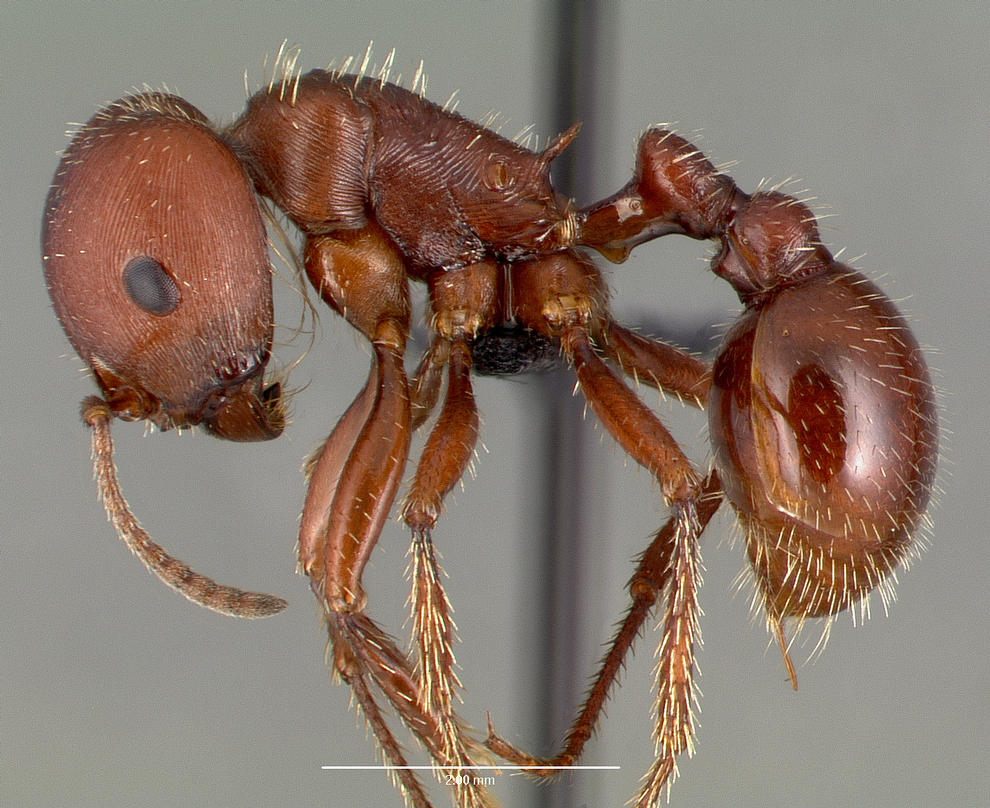
The red harvester ant (Pogonomyrmex barbatus) is a seed-eating ant of the deserts of the southwestern United States and Mexico.
The red harvester ant (Pogonomyrmex barbatus) is a seed-eating ant of the deserts of the southwestern United States and Mexico. Ants are wasps that lost their wings as workers and evolved complex societies, and harvester ant colonies have become a model for how groups make decisions without a leader.
🧬 Field Guide Specimen: Open Red Harvester Ant in the CRV Science Field Guide to log the specimen, see its place among the Ecdysozoa lineages in the Cladogram Explorer, and test your recall in the Red List conservation game.
Colonies Without Bosses: How Does Foraging Get Organized?
Research by Deborah Gordon has shown that the number of foragers leaving the nest depends on the rate at which they meet returning ants carrying food. This simple rule lets a colony match its foraging to food supply with no central control. Queens live for decades while workers live about a year.
Venom and Defense
The sting of harvester ants contains one of the most toxic insect venoms known by lethal dose in mice, although it is delivered in tiny quantities. The nest entrance sits in a cleared disk, often several meters wide, that helps the colony manage temperature and detect rivals.
A Remarkable Genetic System
In some populations, colonies rely on two genetically distinct lineages: queens mate with males of the other lineage to produce workers, while daughter queens come from within the lineage. This "dependent lineage" arrangement is an unusual example of social evolution.
Red Harvester Ant at a Glance
| Property | Value |
|---|---|
| Scientific name | Pogonomyrmex barbatus |
| Kingdom | Animalia |
| Phylum | Arthropoda |
| Class | Insecta |
| Order | Hymenoptera |
| Family | Formicidae |
| Field Guide group | Ecdysozoa: Hexapoda (Insects) |
| Diagnostic feature (Field Guide) | Metapleural glands, elbowed geniculate antennae, petiole node between thorax and gaster abdomen. |
| Diet | Seeds |
| Habitat | Southwestern North American deserts |
See Also
- Western Honeybee — another eusocial hymenopteran
- Natural selection — the evolution of sociality