Narwhal
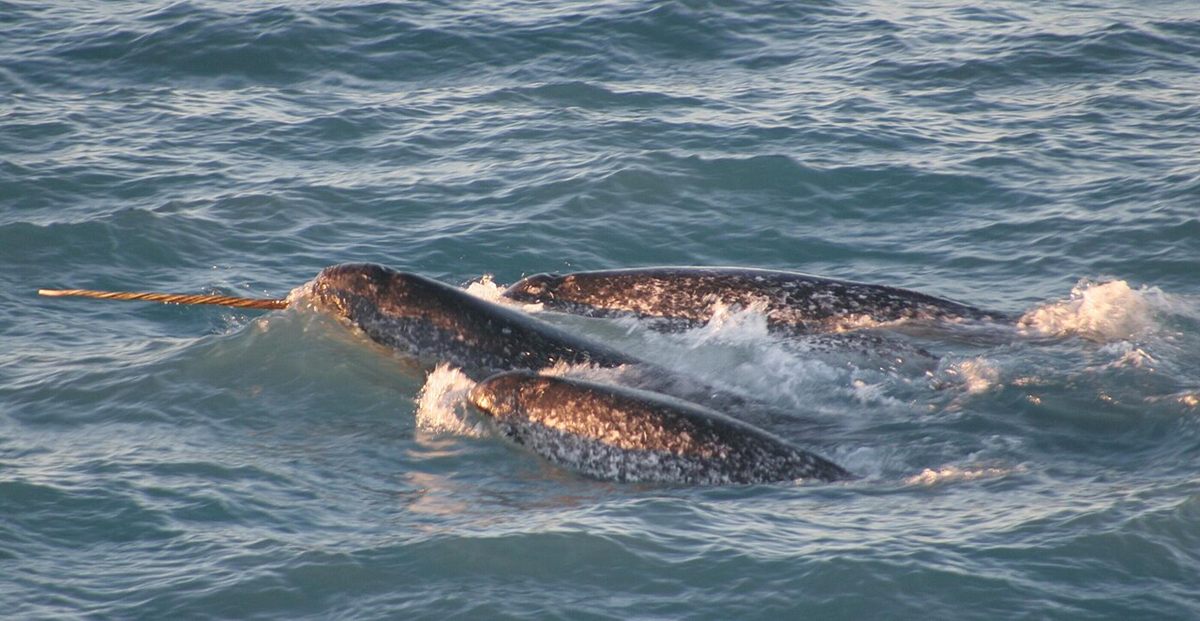
The narwhal (Monodon monoceros) is a medium-sized Arctic whale, famed for the long spiral tusk of the male, which is actually an enlarged canine tooth.
The narwhal (Monodon monoceros) is a medium-sized Arctic whale, famed for the long spiral tusk of the male, which is actually an enlarged canine tooth. It lives among the sea ice and is listed as Least Concern (2017), although the loss of sea ice is a growing concern.
🧬 Field Guide Specimen: Open Narwhal in the CRV Science Field Guide to log the specimen, see its place among the Mammals lineages in the Cladogram Explorer, and test your recall in the Red List conservation game.
A Tusk With Nerves: What Is It For?
The tusk grows through the upper lip, up to about three meters. It contains millions of nerve endings that connect to the outside through tiny pores, and may sense changes in temperature, pressure or salinity. Its use in mate competition and in stunning fish has also been proposed.
Deep Divers Under the Ice
Narwhals dive more than a kilometer deep to hunt halibut and squid, returning to breathe at gaps in the ice. They are highly sensitive to noise.
A Changing Arctic
Loss of sea ice opens the Arctic to ships and killer whales, and changes prey. Narwhals have a limited range of habitats and are likely to be affected. See Climate change.
Narwhal at a Glance
| Property | Value |
|---|---|
| Scientific name | Monodon monoceros |
| Kingdom | Animalia |
| Phylum | Chordata |
| Class | Mammalia |
| Order | Cetartiodactyla |
| Family | Monodontidae |
| Field Guide group | Mammals: Eutheria (Placentals) |
| Diagnostic feature (Field Guide) | Arctic toothed whale possessing an elongated, counterclockwise-spiraled sensory maxillary tusk up to 3 meters long in males. |
| IUCN Red List status | Least Concern (LC), assessed 2017 |
| Tusk | Elongated left upper canine in males |
See Also
- Orca — a predator in the Arctic
- Climate change — sea-ice loss