Olive Baboon
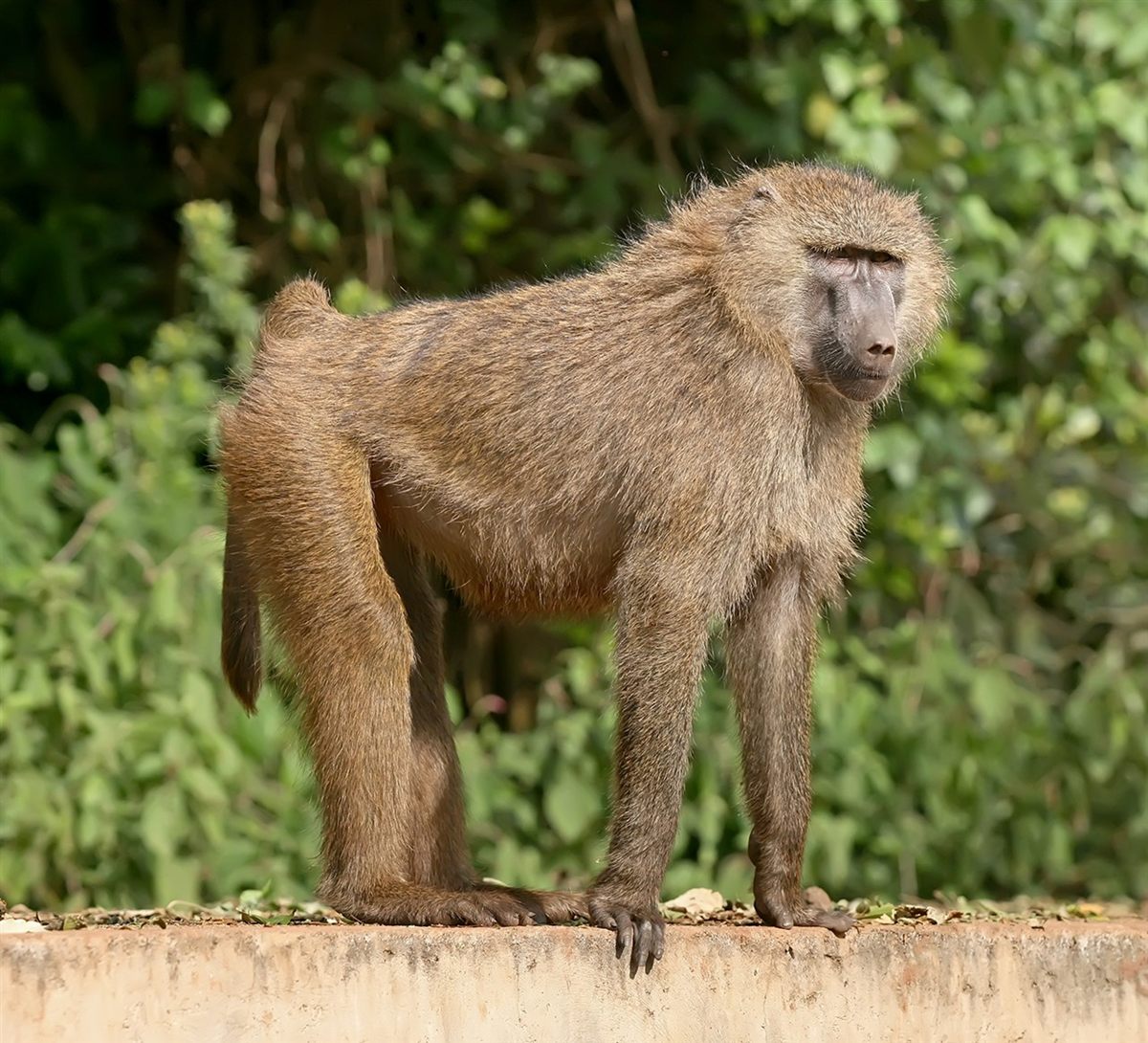
The olive baboon (Papio anubis) is a large Old World monkey that lives in troops across the savannas and woodlands of central Africa. It is the most widespread baboon and has been central to studies of stress and social behavior.
The olive baboon (Papio anubis) is a large Old World monkey that lives in troops across the savannas and woodlands of central Africa. It is the most widespread baboon and has been central to studies of stress and social behavior.
🧬 Field Guide Specimen: Open Olive Baboon in the CRV Science Field Guide to log the specimen, see its place among the Mammals lineages in the Cladogram Explorer, and test your recall in the Red List conservation game.
Stress and Rank: What Did Baboons Teach Us?
Robert Sapolsky's decades of field work with baboons in Kenya showed that social rank and personality shape stress hormone levels. Animals in unstable hierarchies and those lacking social support tend to have higher glucocorticoids, which can harm health.
Social Lives
Baboon troops are complex societies in which females stay in their natal group and males transfer. Alliances, grooming and friendships between males and females influence reproductive success and infant survival.
Medicine
Baboons have been used for biomedical research, including xenotransplantation: in 1984 an infant known as Baby Fae received a baboon heart. The species also forms a hybrid zone with the hamadryas baboon in Ethiopia.
Olive Baboon at a Glance
| Property | Value |
|---|---|
| Scientific name | Papio anubis |
| Kingdom | Animalia |
| Phylum | Chordata |
| Class | Mammalia |
| Order | Primates |
| Family | Cercopithecidae |
| Field Guide group | Mammals: Eutheria (Placentals) |
| Diagnostic feature (Field Guide) | Long dog-like muzzle, opposable thumbs, forward-facing eyes, and hairless rump calluses; lives in large savanna troops with strict dominance hierarchies. |
| IUCN Red List status | Least Concern (LC), assessed 2020 |
| Group size | Troops of dozens |
| Range | Savannas of central Africa |