Rhesus Macaque
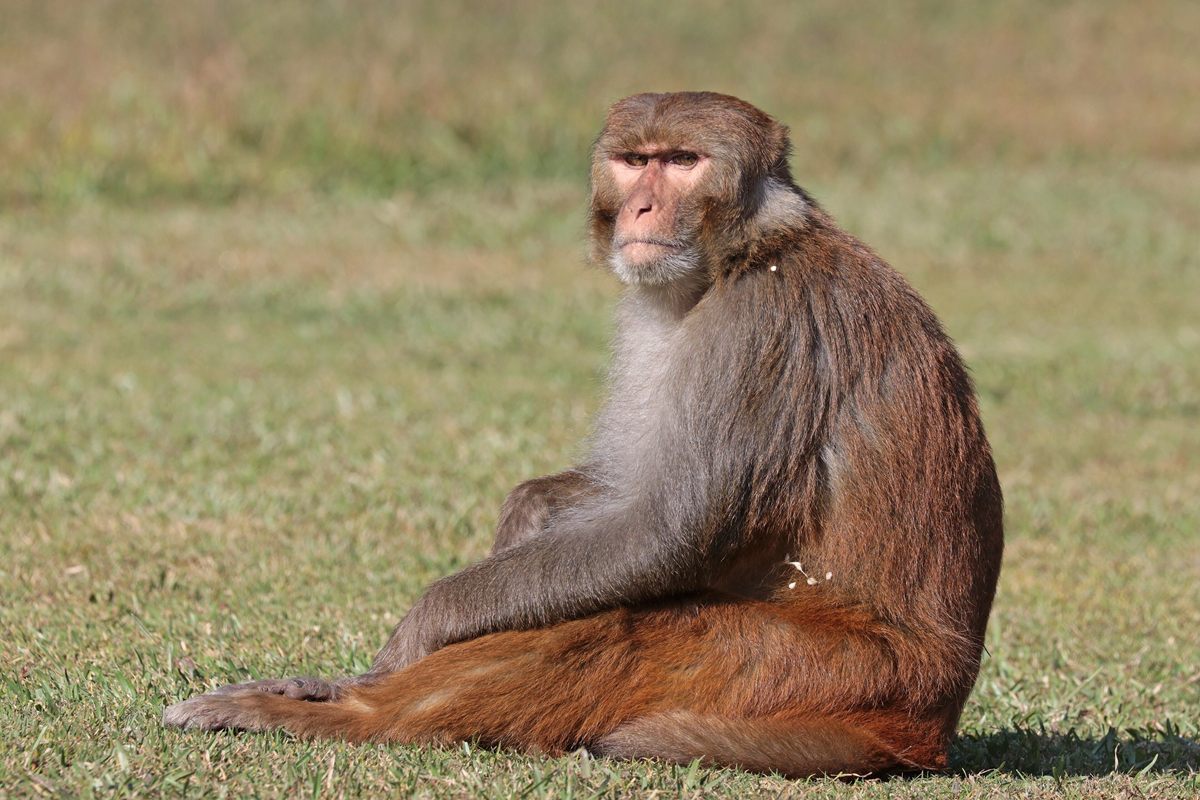
The rhesus macaque (Macaca mulatta) is a hardy Old World monkey that lives from Afghanistan to China and is the most widely used nonhuman primate in biomedical research. It adapts to forests, farms and cities.
The rhesus macaque (Macaca mulatta) is a hardy Old World monkey that lives from Afghanistan to China and is the most widely used nonhuman primate in biomedical research. It adapts to forests, farms and cities.
🧬 Field Guide Specimen: Open Rhesus Macaque in the CRV Science Field Guide to log the specimen, see its place among the Mammals lineages in the Cladogram Explorer, and test your recall in the Red List conservation game.
The Rh Factor
In 1940 Karl Landsteiner and Alexander Wiener found that an antibody raised against rhesus monkey red blood cells also reacted with the blood of most people. The antigen was named the Rh factor, which explains why some pregnancies are at risk when an Rh-negative mother carries an Rh-positive baby.
A Research Primate
Rhesus monkeys were used to develop and test polio vaccines and to study HIV through the related simian immunodeficiency virus. Their genome was sequenced in 2007 and is about 93 percent similar to that of humans. A rhesus named Albert II was the first primate in space, in 1949.
Social Behavior
They live in large troops with dominance hierarchies set by matrilines. Adaptable and opportunistic, rhesus macaques are common near temples and settlements in India.
Rhesus Macaque at a Glance
| Property | Value |
|---|---|
| Scientific name | Macaca mulatta |
| Kingdom | Animalia |
| Phylum | Chordata |
| Class | Mammalia |
| Order | Primates |
| Family | Cercopithecidae |
| Field Guide group | Mammals: Eutheria (Placentals) |
| Diagnostic feature (Field Guide) | Crucial catarrhine model for neurobiology, psychology, and the discovery of the Rh blood factor. |
| IUCN Red List status | Least Concern (LC), assessed 2020 |
| Genome sequenced | 2007 |
| Famous discovery | Rh blood group factor |