Pacific Sea Nettle
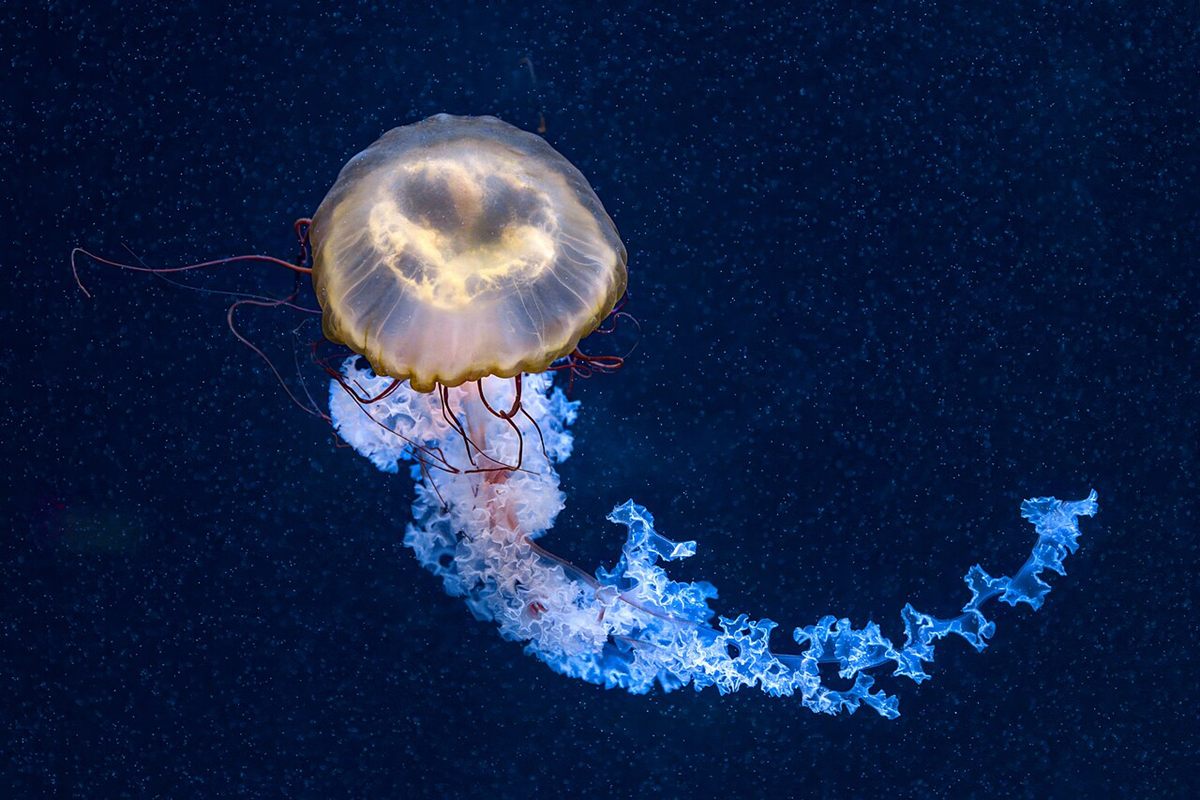
The Pacific sea nettle (Chrysaora fuscescens) is a golden-brown jellyfish of the northeastern Pacific, with a bell up to about a meter across and long, ruffled oral arms trailing beneath.
The Pacific sea nettle (Chrysaora fuscescens) is a golden-brown jellyfish of the northeastern Pacific, with a bell up to about a meter across and long, ruffled oral arms trailing beneath. It is a familiar summer visitor along the coasts of Oregon and California.
🧬 Field Guide Specimen: Open Pacific Sea Nettle in the CRV Science Field Guide to log the specimen, see its place among the Cnidaria+Ctenophora lineages in the Cladogram Explorer, and test your recall in the Red List conservation game.
Blooms on Upwelling Coasts
Cold, nutrient-rich water rising along the coast supports blooms of plankton, and the jellyfish feed on zooplankton, small fish and fish eggs. Numbers swing from year to year with ocean conditions, and swarms can clog fishing nets and cooling intakes.
A Two-Stage Life Cycle
Tiny polyps living on the seafloor bud off young jellyfish (ephyrae) in spring. Adults release eggs and sperm in the water and die in autumn. The sting is painful but seldom dangerous to people.
Aquarium Star
Sea nettles are bred at aquariums such as Monterey Bay, where their graceful pulsing is a favorite display. See Moon Jellyfish.
Pacific Sea Nettle at a Glance
| Property | Value |
|---|---|
| Scientific name | Chrysaora fuscescens |
| Kingdom | Animalia |
| Phylum | Cnidaria |
| Class | Scyphozoa |
| Order | Semaeostomeae |
| Family | Pelagiidae |
| Field Guide group | Cnidaria + Ctenophora (Radiata & Jellies) |
| Diagnostic feature (Field Guide) | Golden-amber bell with long maroon tentacles and frilly oral arms trailing below; often blooms off California. |
| Class | Scyphozoa |
| Bell diameter | Up to about 1 meter |