Potato Wart Fungus
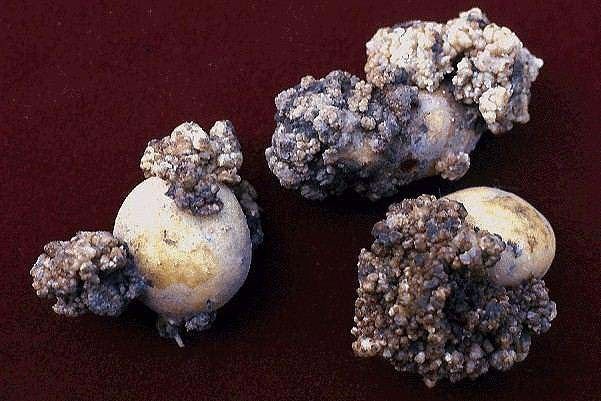
The potato wart fungus (Synchytrium endobioticum) is a chytrid that causes warty, cauliflower-like growths on potato tubers and renders them unmarketable. It is not the cause of the Irish potato famine, which was due to an unrelated oomycete.
The potato wart fungus (Synchytrium endobioticum) is a chytrid that causes warty, cauliflower-like growths on potato tubers and renders them unmarketable. It is not the cause of the Irish potato famine, which was due to an unrelated oomycete.
🧬 Field Guide Specimen: Open Potato Wart Fungus in the CRV Science Field Guide to log the specimen, see its place among the Opisthokonta lineages in the Cladogram Explorer, and test your recall in the Red List conservation game.
Long-Lived Spores: Why Is It a Quarantine Pest?
The fungus forms thick-walled resting spores that survive in soil for decades, perhaps forty years or more. Once a field is infested, potatoes cannot be grown there safely, so affected countries impose strict quarantine and require resistant varieties.
How It Infects
Swimming zoospores invade the surface cells of tubers, stimulating them to divide and form galls. The galls release more spores as they decay.
Chytrids Beyond Frogs
Chytrids are among the earliest-branching fungi, with flagellated spores, and include aquatic decomposers and pathogens of plants and amphibians. See Amphibian Chytrid Fungus.
Potato Wart Fungus at a Glance
| Property | Value |
|---|---|
| Scientific name | Synchytrium endobioticum |
| Kingdom | Fungi |
| Phylum | Chytridiomycota |
| Class | Chytridiomycetes |
| Order | Synchytriales |
| Family | Synchytriaceae |
| Field Guide group | Opisthokonta: Fungi (True Fungi & Lichens) |
| Diagnostic feature (Field Guide) | Obligate parasite with swimming flagellated spores, producing thick-walled resting sporangia that cause warty cauliflower-like growths on potato tubers. |
| Order | Synchytriales |
| Spore survival | Decades in soil |
See Also
- Amphibian Chytrid Fungus — another chytrid pathogen
- Photosynthesis — the crop plant's energy source