Proboscis Monkey
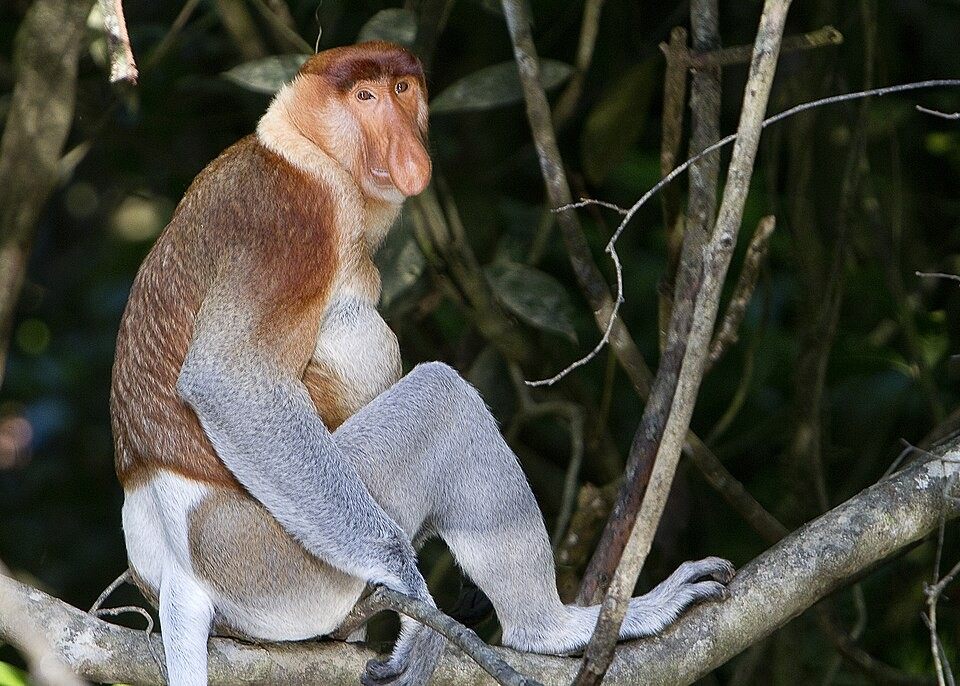
The proboscis monkey (Nasalis larvatus) is a large monkey of the mangrove and riverine forests of Borneo, known for the huge nose of the adult male. It is listed as Endangered.
The proboscis monkey (Nasalis larvatus) is a large monkey of the mangrove and riverine forests of Borneo, known for the huge nose of the adult male. It is listed as Endangered.
🧬 Field Guide Specimen: Open Proboscis Monkey in the CRV Science Field Guide to log the specimen, see its place among the Mammals lineages in the Cladogram Explorer, and test your recall in the Red List conservation game.
A Nose for Attraction
Males have noses that can reach 17 centimeters, and the nose swells when the animal is excited. Females seem to prefer males with large noses, which may also amplify the male's honking calls.
A Leaf-Fermenting Stomach
Like other leaf-eating monkeys, the proboscis monkey has a chambered stomach in which bacteria ferment leaves, which gives it a pot belly. It cannot digest ripe fruit well because the acid conditions would be disrupted.
Swimmers of the Mangroves
The monkey has partly webbed feet and swims well, even diving from trees into the water. Clearing of mangroves for plantations and aquaculture has shrunk its habitat.
Proboscis Monkey at a Glance
| Property | Value |
|---|---|
| Scientific name | Nasalis larvatus |
| Kingdom | Animalia |
| Phylum | Chordata |
| Class | Mammalia |
| Order | Primates |
| Family | Cercopithecidae |
| Field Guide group | Mammals: Eutheria (Placentals) |
| Diagnostic feature (Field Guide) | Adult males possess huge pendulous fleshy noses that resonate calls, webbed feet for swimming mangrove swamps, complex multi-chambered stomach. |
| IUCN Red List status | Endangered (EN), assessed 2021 |
| Range | Borneo (endemic) |