Aye-aye
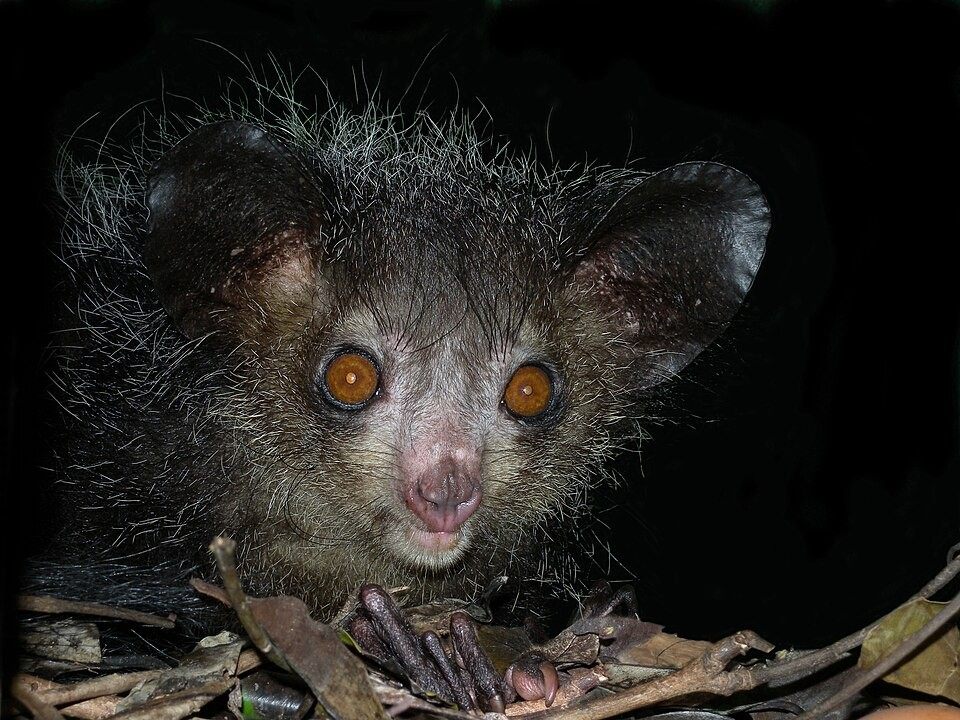
The aye-aye (Daubentonia madagascariensis) is a nocturnal lemur of Madagascar with large ears, rodent-like teeth and a long, thin middle finger. It is the largest nocturnal primate and is listed as Endangered.
The aye-aye (Daubentonia madagascariensis) is a nocturnal lemur of Madagascar with large ears, rodent-like teeth and a long, thin middle finger. It is the largest nocturnal primate and is listed as Endangered.
🧬 Field Guide Specimen: Open Aye-aye in the CRV Science Field Guide to log the specimen, see its place among the Mammals lineages in the Cladogram Explorer, and test your recall in the Red List conservation game.
Tap, Listen, Dig: How Does It Find Grubs?
The aye-aye taps on tree trunks with its long middle finger, listening with its big ears for the hollow sound of insect tunnels. It then gnaws a hole with its ever-growing incisors and extracts the grubs with the thin finger. This percussive foraging fills the niche of woodpeckers, which Madagascar lacks.
Feared and Persecuted
In some Malagasy traditions the aye-aye is considered an omen of death and is killed on sight. Habitat loss is also a major threat, and the species is protected on islands and reserves.
Where Does It Fit?
Genetic studies place aye-ayes among the lemurs, as the sister group of all other lemurs. See Ring-tailed Lemur.
Aye-aye at a Glance
| Property | Value |
|---|---|
| Scientific name | Daubentonia madagascariensis |
| Kingdom | Animalia |
| Phylum | Chordata |
| Class | Mammalia |
| Order | Primates |
| Family | Daubentoniidae |
| Field Guide group | Mammals: Eutheria (Placentals) |
| Diagnostic feature (Field Guide) | Rodent-like continuously growing incisors, extremely elongated skeletal middle tapping finger, bat-like leathery ears. |
| IUCN Red List status | Endangered (EN) |
| Foraging | Percussive tapping |