Rabbit Fish
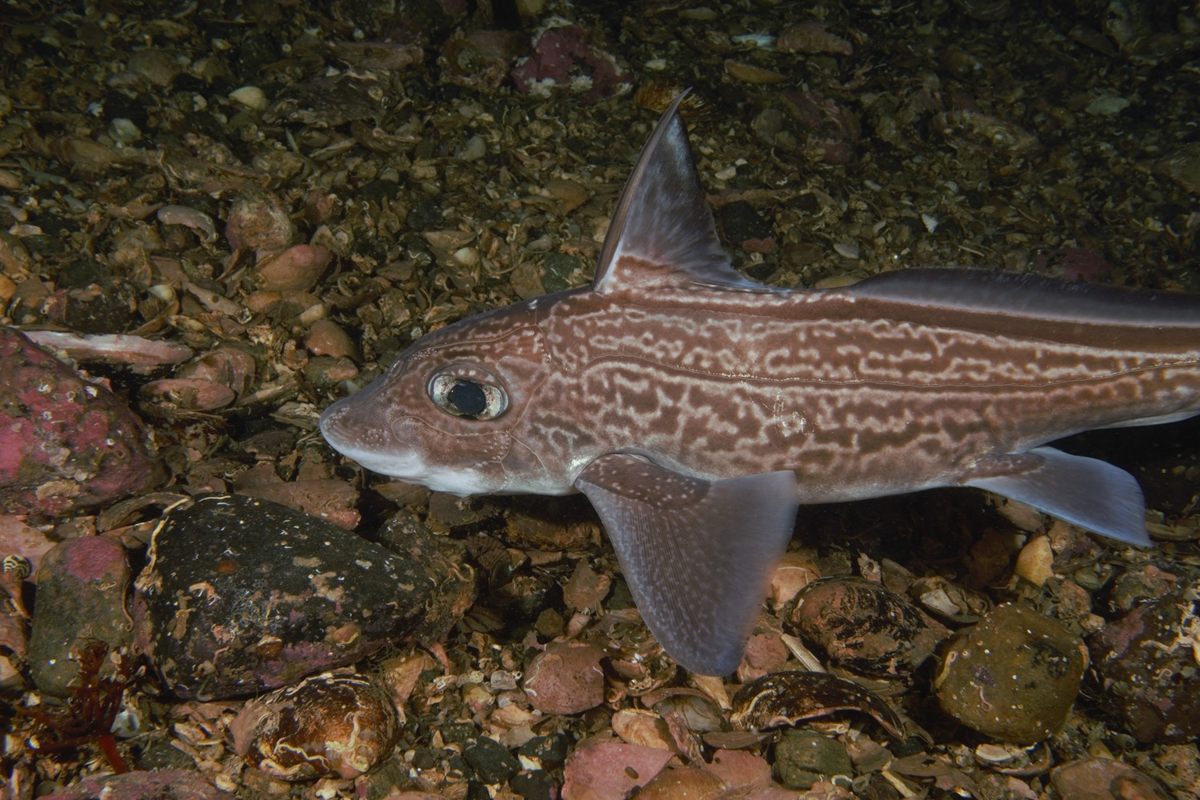
The rabbit fish or ghost shark (Chimaera monstrosa) is a deep-sea cartilaginous fish of the eastern Atlantic and Mediterranean.
The rabbit fish or ghost shark (Chimaera monstrosa) is a deep-sea cartilaginous fish of the eastern Atlantic and Mediterranean. Chimaeras are the other major living branch of cartilaginous fishes, separate from sharks, skates and rays for about 400 million years.
🧬 Field Guide Specimen: Open Chimaera / Ghost Shark in the CRV Science Field Guide to log the specimen, see its place among the Vertebrates lineages in the Cladogram Explorer, and test your recall in the Red List conservation game.
Rabbit Fish at a Glance
| Property | Value |
|---|---|
| Scientific name | Chimaera monstrosa |
| Kingdom | Animalia |
| Phylum | Chordata |
| Class | Chondrichthyes |
| Subclass | Holocephali |
| Field Guide group | Marine and Freshwater Fish |
| Diagnostic feature (Field Guide) | Big-eyed deep-sea fish with a cartilaginous skeleton, an upper jaw fused to the skull, a rat-like tapering tail, and a venomous dorsal spine. |
| IUCN Red List status | Vulnerable (VU), assessed 2020 |
| Class | Chondrichthyes (Holocephali) |
| Gill openings | One per side |
Evolutionary Systematics and Holocephalan Cranial Anatomy
The rabbit fish (Chimaera monstrosa, also known as the ratfish or ghost shark) is the type species of the genus Chimaera and the family Chimaeridae within the order Chimaeriformes, the sole surviving order of the subclass Holocephali. Within the class Chondrichthyes (cartilaginous fishes), Holocephali forms the sister clade to Elasmobranchii—the subclass encompassing modern sharks, skates, and rays such as the Spiny Dogfish (Squalus acanthias). Paleontological and molecular-clock evidence shows that holocephalans and elasmobranchs diverged during the Silurian or early Devonian roughly 400 to 420 million years ago, making chimaeras an informative outgroup for reconstructing the early evolution of jawed vertebrates (Gnathostomata). Comparative genomic sequencing of the related elephant shark (Callorhinchus milii) revealed that holocephalans possess the slowest-evolving genome known among all vertebrates, lacking the SCPP (secretory calcium-binding phosphoprotein) gene cluster required to convert endochondral cartilage into true bone.
The subclass name Holocephali ("whole head") refers to the diagnostic holostylic jaw suspension of Chimaera monstrosa, in which the palatoquadrate (upper jaw cartilage) is solidly fused to the cartilaginous neurocranium, leaving the hyomandibula non-suspensory. Unlike sharks, which continuously shed and replace serial rows of sharp teeth, C. monstrosa possesses three pairs of permanent, ever-growing hypermineralized tooth plates—two pairs (vomerine and palatine) in the upper jaw and one mandibular pair in the lower jaw—whose protruding anterior cutting edges give the fish a rabbit-like appearance. These tooth plates are reinforced with dense columns and tritors of whitlockite (β-tricalcium phosphate, Ca3(PO4)2, substituted with Mg2+) embedded in osteodentine, enabling durophagous crushing of hard-shelled benthic invertebrates. Furthermore, whereas elasmobranchs expose five to seven naked gill slits and retain rough placoid dermal denticles across the body, C. monstrosa covers its four gill clefts with a fleshy, cartilage-supported operculum that opens via a single external branchial aperture in front of each pectoral fin, and adults have smooth, naked, scaleless skin silvery-brown in color with marbled dark mottling.
Venomous Dorsal Spine, Pectoral Flight, and Sensory Biology
Standing immediately anterior to the triangular first dorsal fin of Chimaera monstrosa is a long, stout, serrated venomous spine articulated with the basal cartilage so that it can be erected defensively or folded flat against the dorsum. The posterior groove of this spine houses a glandular epithelium that secretes a proteinaceous venom capable of inflicting intense local pain, edema, and tissue necrosis if punctured into a predator or human handler. Unlike elasmobranchs that swim via axial body-caudal undulation, C. monstrosa propels itself primarily through graceful, bird-like flapping oscillations of its large, fan-shaped pectoral fins (labriform/rajiform locomotion), while the elongated, whip-like leptocercal tail (trailing a filament up to half the total length of 1.0 to 1.5 m) contributes minimal thrust.
Inhabiting cold (4 °C to 8 °C), aphotic and dysphotic continental slopes and deep fjords from northern Norway and Iceland south through the British Isles, Morocco, the Azores, and the Mediterranean Sea at depths of 300 to 1,400 meters (occasionally rising to 40–100 meters in high-latitude Norwegian fjords), Chimaera monstrosa possesses sensory specializations for life in darkness. Its disproportionately large, emerald-green eyes contain a pure-rod retina tuned to bioluminescent wavelengths (~475–485 nm) backed by a reflective guanine-crystal tapetum lucidum that reflects unabsorbed photons back through the photoreceptors. Across the fleshy conical snout and head run open grooves of the mechanosensory lateral line canals reinforced by calcified C-shaped rings, interspersed with hundreds of ampullae of Lorenzini that detect weak dipole electric fields (<5 nV cm-1) emitted by buried decapod crustaceans, ophiuroids, bivalves, and polychaetes. Like sharks, C. monstrosa maintains plasma osmolality slightly hyperosmotic to seawater by retaining high concentrations of urea (~300 to 350 mM) and trimethylamine N-oxide (TMAO) (~100 to 150 mM) alongside a rectal salt gland that excretes excess Na+ and Cl-.
Five-Claspered Reproduction and Deep-Sea Fishery Vulnerability
Chimaera monstrosa is oviparous with internal fertilization and displays a suite of male secondary sexual organs characteristic of Holocephali. In addition to the paired pelvic claspers (mixopterygia)—which in C. monstrosa are trifid (branched into three denticulate lobes)—adult males possess a pair of retractable, denticle-studded prepelvic tenacula housed in pouches anterior to the pelvic fins, as well as a club-like, curved cephalic tenaculum armed with recurved dermal denticles on the forehead between the eyes. During copulation, the male grasps the female's pectoral fin with his frontal cephalic tenaculum and anchors against her abdomen with his prepelvic tenacula while inserting a pelvic clasper into her oviduct. Females can store viable sperm in a specialized oviducal gland for months to years, extruding pairs of spindle-shaped, golden-brown collagenous egg cases (15 to 17 cm long with a long, slender terminal filament that anchors in soft mud). Embryos develop inside the leathery capsule for 9 to 12 months before hatching as miniature 11 cm juveniles.
Life-history parameters render Chimaera monstrosa highly susceptible to deep-water fishing mortality: males reach sexual maturity only at 11 to 13 years of age (~40 cm pre-supraorbital-canal length) and females at 13 to 17 years (~45 cm), with a maximum lifespan of 26 to 30 years and low annual fecundity. Throughout the northeastern Atlantic and Mediterranean, C. monstrosa is captured in large volumes as incidental bycatch in deep-water bottom trawls targeting roundnose grenadier (Coryphaenoides rupestris), blue ling (Molva dypterygia), and deep-water rose shrimp (Parapenaeus longirostris), and is also targeted for its squalene-rich liver oil (which comprises up to 25% of its body weight and serves as a hydrostatic buoyancy organ in place of a swim bladder). Because trawl surveys indicate population declines of 30% to 49% over three generations (~48 years), the IUCN Red List classifies Chimaera monstrosa as Vulnerable.
Frequently Asked Questions
How does a chimaera like the rabbit fish differ anatomically from a true shark?
Although both sharks (Elasmobranchii) and chimaeras (Holocephali) belong to the cartilaginous fish class Chondrichthyes, they split about 400 million years ago. Unlike sharks, Chimaera monstrosa has its upper jaw fused solidly to its braincase (holostyly), crushes prey with three pairs of permanent ever-growing tooth plates instead of replaceable rows of teeth, has smooth scaleless skin in adulthood, and covers its four gill arches with a single fleshy opercular flap on each side.
Why do male rabbit fishes have a hooked appendage on their foreheads?
Adult male Chimaera monstrosa possess five grasping organs for internal fertilization: a pair of three-branched pelvic claspers, a pair of prepelvic tenacula in pouches ahead of the pelvic fins, and a club-shaped cephalic tenaculum on the forehead armed with sharp, backward-pointing denticles. During mating in the dark deep sea, the male uses this forehead tenaculum to clamp onto the female's pectoral fin and hold her steady during sperm transfer.
Why is the rabbit fish vulnerable to deep-sea bottom trawling?
Chimaera monstrosa exhibits a slow "K-selected" life history typical of cold-water deep-sea chondrichthyans: females do not reach sexual maturity until 13 to 17 years of age, live up to 30 years, and lay only small numbers of large leathery egg cases that take nearly a year to hatch on the seafloor. Deep-water bottom trawls both capture slow-maturing adults as bycatch and crush or sweep up incubating egg cases from continental slope muds.
References
- Venkatesh, B., Lee, A. P., Ravi, V., Maurya, A. K., Lian, M. M., Swann, J. B., Ohta, Y., Flajnik, M. F., Sutoh, Y., Kasahara, M., Hoon, S., Gangu, V., Roy, S. W., Irimia, M., Korzh, V., Kondrychyn, I., Lim, Z. W., Tay, B.-H., Tohari, S., ... Warren, W. C. (2014). Elephant shark genome provides unique insights into gnathostome evolution. Nature, 505(7482), 174–179. https://doi.org/10.1038/nature12826
- Moura, T., Figueiredo, I., Bordalo-Machado, P., Almeida, C., & Gordo, L. S. (2004). Growth of Chimaera monstrosa L. (Pisces: Holocephali) in the Portuguese continental slope. Journal of Applied Ichthyology, 20(5), 384–389. https://doi.org/10.1111/j.1439-0426.2004.00582.x
- Calis, T., Jeal, F., & Nolan, C. P. (2005). An estimation of age, growth and length at maturity of the rabbitfish Chimaera monstrosa L. from the Rockall Trough, north-east Atlantic. Journal of Fish Biology, 66(4), 1000–1014. https://doi.org/10.1111/j.0022-1112.2005.00656.x
- Finucci, B. (2020). Chimaera monstrosa. The IUCN Red List of Threatened Species, 2020, e.T63114A124459382. https://doi.org/10.2305/IUCN.UK.2020-2.RLTS.T63114A124459382.en