Saltwater Wheel Rotifer
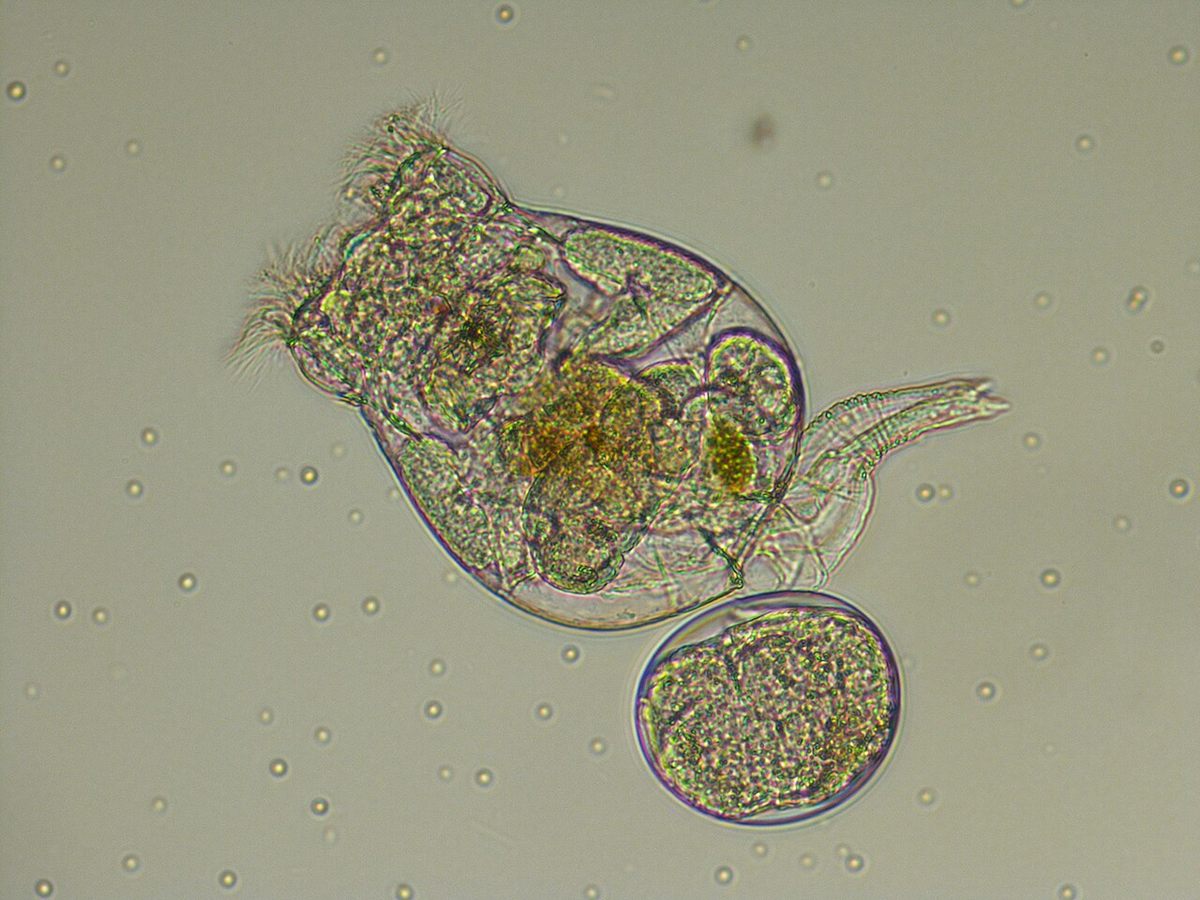
The saltwater wheel rotifer (Brachionus plicatilis) is a microscopic animal, a few tenths of a millimeter long, that lives in brackish and saline waters. Its crown of beating cilia looks like a spinning wheel, giving rotifers their name.
The saltwater wheel rotifer (Brachionus plicatilis) is a microscopic animal, a few tenths of a millimeter long, that lives in brackish and saline waters. Its crown of beating cilia looks like a spinning wheel, giving rotifers their name.
🧬 Field Guide Specimen: Open Saltwater Wheel Rotifer in the CRV Science Field Guide to log the specimen, see its place among the Lophotrochozoa lineages in the Cladogram Explorer, and test your recall in the Red List conservation game.
A Tiny Animal With Organs
Despite its size, a rotifer has a mouth, a jaw apparatus (mastax), a gut and a simple brain, and its body is built of a fixed number of cells. The cilia sweep algae and bacteria into the mouth and also propel the animal.
Aquaculture Workhorse
Brachionus is cultured in huge quantities as the first food for the larvae of marine fish and shrimp. Its rapid growth and small size are ideal for hatcheries.
Parthenogenesis and Sex
For most generations females clone themselves; when conditions deteriorate, some produce males and sexual resting eggs that survive drying and freezing. This cyclical parthenogenesis makes rotifers a model for studying why sex evolved.
Saltwater Wheel Rotifer at a Glance
| Property | Value |
|---|---|
| Scientific name | Brachionus plicatilis |
| Kingdom | Animalia |
| Phylum | Rotifera |
| Class | Eurotatoria |
| Subclass | Monogononta |
| Order | Ploima |
| Field Guide group | Lophotrochozoa: Worms, Shells & Allies |
| Diagnostic feature (Field Guide) | Rotating wheel-like ciliated corona for filter feeding, mastax grinding pharynx, armored lorica with anterior spines. |
| Phylum | Rotifera |
| Reproduction | Cyclical parthenogenesis |